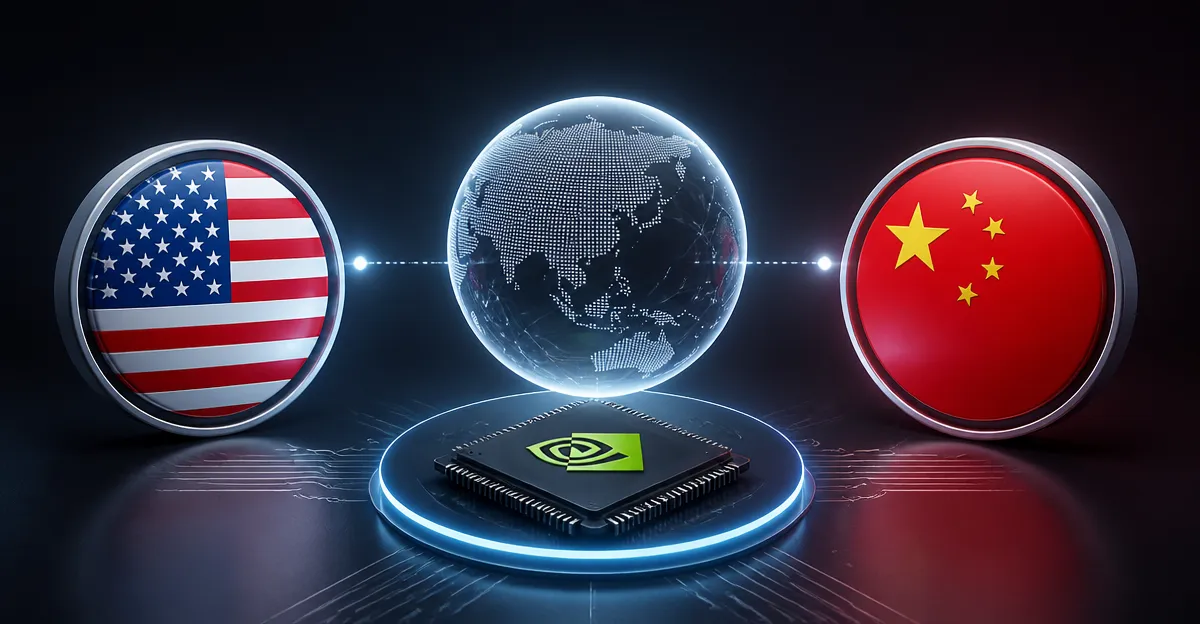
November 19, 2026, (Inside AI) — US President Donald Trump said on Tuesday that he discussed artificial intelligence with Chinese President Xi Jinping and that the situation of former Nvidia CEO Jensen Huang came up only briefly during the conversation.
The disclosure, which Trump made without offering specifics, raises immediate questions about the state of US-China relations in the AI arena and the fate of one of the tech industry's most prominent figures. It also underscores how AI has become a central pillar of bilateral dialogue between the world's two largest economies.
Trump's comment that the Huang reference was "brief" suggests the topic was not a major focus of the discussion, but the fact that it surfaced at all signals that Huang's status remains a point of interest at the highest levels of government.
Huang, who co-founded Nvidia in 1993 and built it into the world's most valuable semiconductor company, stepped down as CEO in 2025. The circumstances of his departure have not been fully disclosed, and he has largely stayed out of the public eye since. Nvidia's chips power the majority of AI workloads worldwide, making the company a linchpin of the global AI supply chain and a frequent subject of export control debates.
The US has imposed sweeping restrictions on advanced AI chip exports to China, and Nvidia has been forced to design special versions of its products for the Chinese market. The company warned in a 2024 filing that further tightening could have a material impact on its business.
Why Would Huang's Name Surface in a Presidential Call?
The mention of Huang in a presidential call is unusual. It implies that his situation, whatever it may be, has drawn attention from the Chinese government or that Trump felt it relevant to raise. Neither the White House nor the Chinese Ministry of Foreign Affairs responded to requests for comment on the substance of the discussion.
Trump did not elaborate on what was said about Huang. He also did not specify when the call took place or whether other tech issues were discussed. The White House has not released a readout of the conversation.
The call comes amid fragile negotiations over AI governance and trade. Both countries have been working to establish guardrails for AI development, but progress has been slow. In 2025, the two sides agreed to a framework for AI safety talks, but subsequent meetings have yielded little in the way of binding commitments.
Huang's legacy at Nvidia is immense. Under his leadership, the company's market capitalization crossed $1 trillion in 2023, driven by demand for its GPUs used in training large language models. His departure marked the end of an era for the company, which has since been led by a successor not yet widely known in Washington circles.
Trump's remark may also be an attempt to signal that his administration is engaged on tech issues at the highest level. However, without further details, the substance of the AI discussion remains opaque.
Industry analysts note that any mention of Huang in a US-China call could be tied to ongoing negotiations over export controls or to concerns about intellectual property. Nvidia has faced allegations of chip smuggling and has denied wrongdoing.
The broader context is one of increasing techno-nationalism. Both the US and China are racing to develop cutting-edge AI, and each views the other's advancements with suspicion. Trump's call with Xi may have been part of an effort to manage those tensions, but the brief reference to Huang suggests that no breakthrough was achieved.
For now, the AI world is left to speculate about what was said and what it means for Nvidia, for US-China tech relations, and for Huang himself. The White House has not indicated whether further calls are planned.
As the two countries continue to navigate the complex terrain of AI competition, the brief mention of Huang serves as a reminder that individual leaders can become symbols in larger geopolitical struggles. The lack of detail from the White House leaves many questions unanswered, but the fact that the conversation happened at all is significant.

Sofia spent years studying how machines parse human language before pivoting to cover the systems now rewriting it. She reads technical papers the way others read news and looking for what the numbers are actually saying beneath the headlines.