November 24, 2026, (Inside AI) — The reinstatement of Jensen Huang as CEO of Nvidia on Monday morning has done little to calm a semiconductor sell-off that began in June and deepened last week. The scandal surrounding Huang's affair with an alleged Chinese spy has intensified scrutiny over chip sales to China, a market that accounts for roughly 40% of anticipated semiconductor growth. Investors now face a volatile mix of geopolitical risk, shifting competitive dynamics, and a Federal Reserve that is tightening into an AI-driven boom.
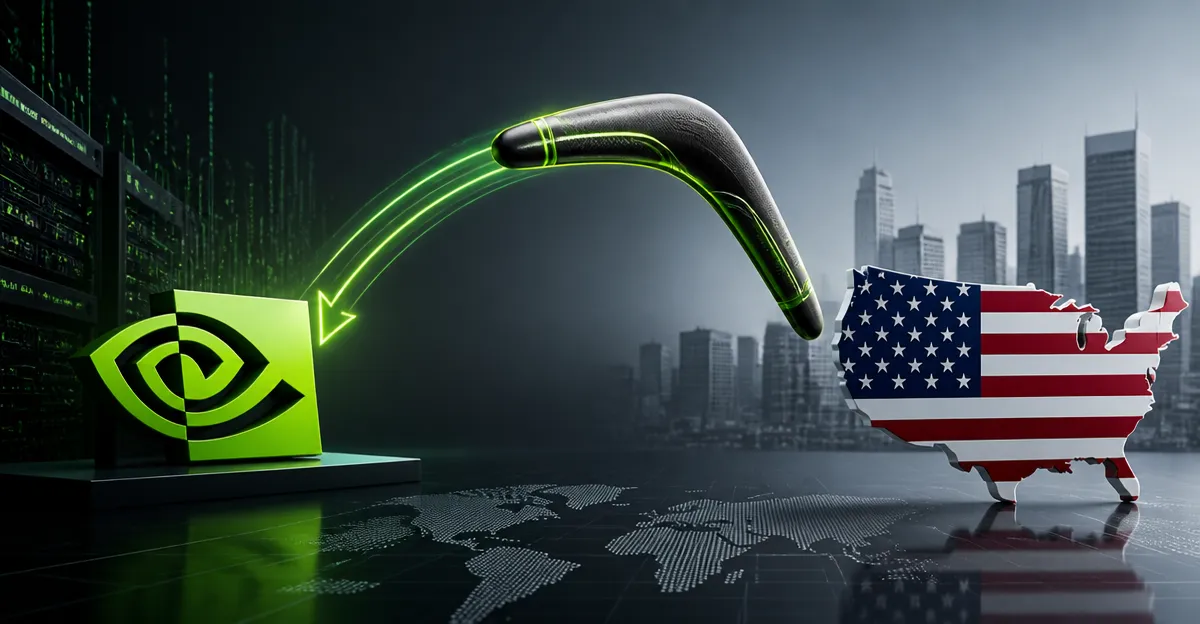
The news of Huang's return, first reported by Reuters, comes as the AI trade shows signs of strain. Heavy bets on the build-out of AI, from chipmakers to hyperscalers and data center construction firms, have turned sour. Nvidia insists there is no national security risk in reinstating Huang, but the affair has handed Congress a fresh reason to scrutinize export controls. The stakes are enormous: a single policy move could wipe out a significant slice of the industry's revenue growth.
Gina Martin Adams, Chief Market Strategist at HB Wealth, told Sectors Up Close that the market is already pricing in a harsh scenario. "Roughly 40% of the growth anticipated for the semiconductor segment at large is related to Chinese growth, whether it's direct or indirect sales into China," she said. "So that is the segment that the market is really focusing on right now, is where will that Chinese revenue come from? What is the run rate of that revenue going forward? How will Congress address export restrictions on that revenue?"
The answer to that last question could determine the fate of the entire sector. If Congress responds with more export controls, the cost to chipmakers would be substantial. Yet Adams argues that much of the damage is already reflected in stock prices. "Since June, we've really been questioning how much semiconductor revenue growth can continue in an environment where the competitive landscape is shifting," she said. "The hyperscalers themselves are all developing their own chip substitutes to compete with some of the chips that are coming out of the semiconductor space."
That competitive threat is not new, but it has gained urgency. Companies like Amazon, Google, and Microsoft are investing heavily in custom silicon to reduce their reliance on Nvidia. At the same time, the Fed's tightening cycle has made investors more discriminating. "When the Fed shifted toward a path of tightening, that created a vulnerability in the broader market that we need to acknowledge," Adams said. "We almost always get a 10% drawdown in the midst of Fed tightening phases."
Why One Man's Return Can't Fix The Sector
Huang's role as a dealmaker has been pivotal for the AI ecosystem, particularly for neoclouds, the smaller cloud providers that rely on Nvidia chips. "There's a very significant two-way relationship between Nvidia and the neocloud segment of the AI ecosystem," Adams noted. "Nvidia also, of course, has been a big champion of ongoing growth in AI and sort of open development of AI and improving of the technology. So it certainly helps to have a cheerleader, if you will, a dealmaker, if you will, in the center of the AI trade."
But Adams cautions against overstating his importance. "I would never suggest that one person is everything to AI. I think some of that rhetoric got a little bit too extreme over the course of the last several weeks," she said. "Certainly, Jensen, given a founder, the founder mentality that he has is a really big part of the Nvidia culture. And clearly the board has decided to reinstate him given his profound role inside that organization. But I think, frankly, AI is bigger than any individual."
That view is not universally shared. Some analysts argue that Huang's personal network and dealmaking prowess are irreplaceable, especially for startups that depend on Nvidia's backing. His absence, even temporarily, had raised questions about the company's direction. The reinstatement removes that uncertainty, but it does not address the larger forces at play.
The semiconductor index has fallen sharply since June, with valuation multiples now at multi-decade lows. Adams sees this as a sign that investors have already priced in a considerable amount of risk. "When you've got semiconductor stocks trading at, you know, multi-decade low valuation levels, it does suggest that you've priced a considerable amount of risk to earnings going into 2027," she said. "Certainly, you would never dismiss the notion that you could still see more downside risks emerge."
One of those risks is the Fed. The central bank's tightening campaign has created a backdrop that Adams describes as both vulnerable and healthy. "It does also though, help prevent us from developing some kind of bubble mentality," she said. "If the Fed is tightening, sort of really pushing on the brakes of overall economic growth, overall profit growth, and saying we've got to pick our spots a little bit more carefully, we've got to tread a little bit more lightly in this climate, it does create a much healthier backdrop for the equity market with a longer-term perspective."
That perspective may be cold comfort to investors who have watched their AI bets sour. But Adams argues that the Fed's stance is necessary given current economic conditions. "I view this Fed tightening phase as necessary, given the run rate of current economic conditions and inflation," she said. "And as long as the Fed continues to remain on the case of preventing an inflationary spiral and keeping growth stable at the same time, that's a much healthier condition for investing for equity market investors with a longer term focus."
The coming weeks will bring more information about the scandal and its fallout. Congress may announce new export restrictions, and Nvidia's competitors will continue to advance their own chip designs. For now, the sector remains in a holding pattern, with Huang back at the helm but the broader challenges unchanged.

If a research paper dropped this week, Mahesh has already read it. He covers AI tools and vibe coding for builders who need to know what is worth their time and what is not.