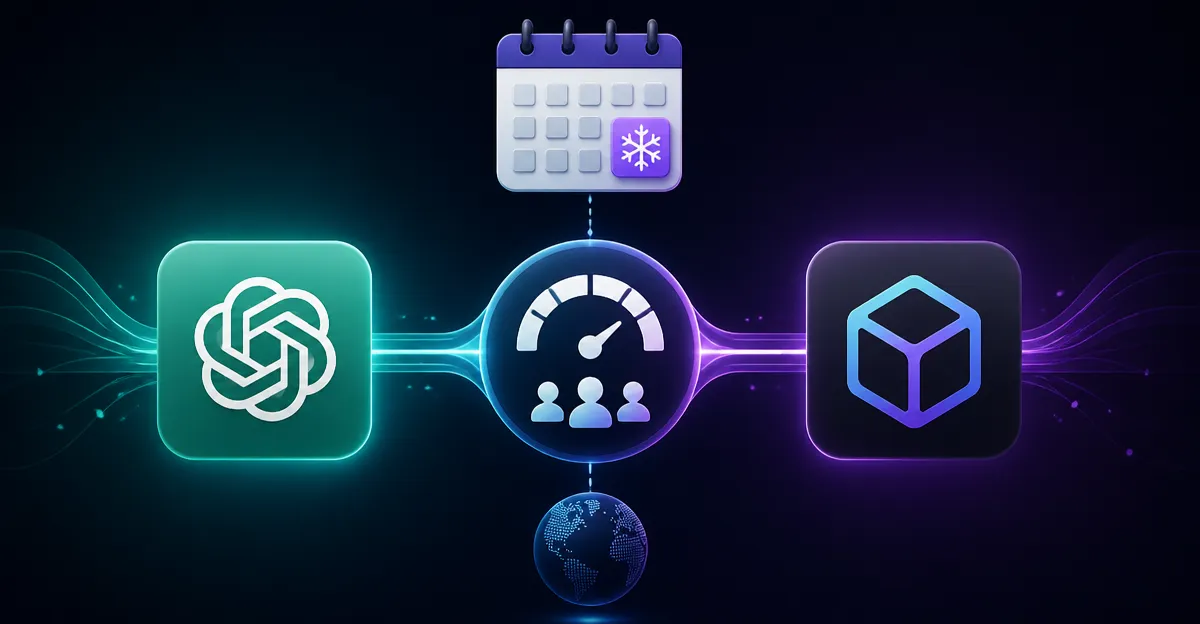
November 27, 2026, (Inside AI) — OpenAI will merge ChatGPT's Chat and Work tabs and combine usage limits for ChatGPT and Codex starting in December, the company told paid subscribers in a November 2 email. The change affects Plus, Pro, and Business plans, which will share a single token-based allowance across both products.
The move marks the first time OpenAI has pooled capacity between its conversational assistant and its coding tool. Codex handles software development tasks alongside the main chat experience. Until now, the two services drew from separate pools. After the merger, both will pull from one shared supply.
The stakes are high for developers and researchers who rely on both products daily. A long research session could leave less capacity for a coding project later. OpenAI says most users will not need to wait for resets more often, but the company acknowledged that the heaviest users may hit their limits sooner.
Why OpenAI Is Pooling Limits
The merged interface lets users move between conversations and multi-step tasks without switching tabs. OpenAI began testing the combined experience with a small group of Pro subscribers first. A wider rollout follows in December.
Read: AI Stocks Slide as Infrastructure Buildout Costs Spook Investors
More advanced models and complex tasks will consume a larger share of the allowance. Instant chat stays exempt from the shared allowance. Users can keep using Instant without limits even after they exhaust their token allocation.
The announcement drew pushback from subscribers on social media and OpenAI's community forums. Many worry that pooling chat and code limits could reduce access to advanced reasoning models. They also pointed out that subscription prices remain unchanged.
OpenAI has not yet disclosed exact token allocations or a specific rollout date in December. The company says it will keep shipping efficiency improvements so subscribers can get more from their plans.
In response to earlier criticism, OpenAI doubled usage limits across all Pro tiers and Business Premium on October 29. Thibault Sottiaux, OpenAI's head of core products, confirmed the changes on X. Similarly, the company reversed a planned reduction for the $200 Pro plan after subscriber feedback.
“We're making it easier to move between chat and code without hitting artificial walls,” Sottiaux said in a post on X.
The timing is notable. OpenAI faces growing competition from Anthropic's Claude and Google's Gemini, both of which offer coding tools with separate usage pools. By merging limits, OpenAI simplifies its billing but risks alienating power users who value predictable access.
Read: Anthropic Shares Fall Below $83 IPO Price Days After Record Debut
Industry analysts see the move as a way to reduce infrastructure costs. A shared pool lets OpenAI balance load across services more efficiently. But it also shifts the burden of managing usage onto subscribers, who must now budget tokens across tasks.
The change could also affect enterprise adoption. Business subscribers often use ChatGPT for customer support and Codex for internal development. A shared limit means a spike in one area could throttle the other.
OpenAI's email to subscribers did not mention any price adjustments. The company says it will keep shipping efficiency improvements so subscribers can get more from their plans.
For now, subscribers can only wait for December to see how the new limits work in practice. OpenAI has promised more details closer to launch.

Shamil has a low tolerance for AI that only works in controlled demos. He covers agentic systems and generative AI with the skepticism of someone who has seen too many “revolutionary” tools quietly disappear six months after launch.