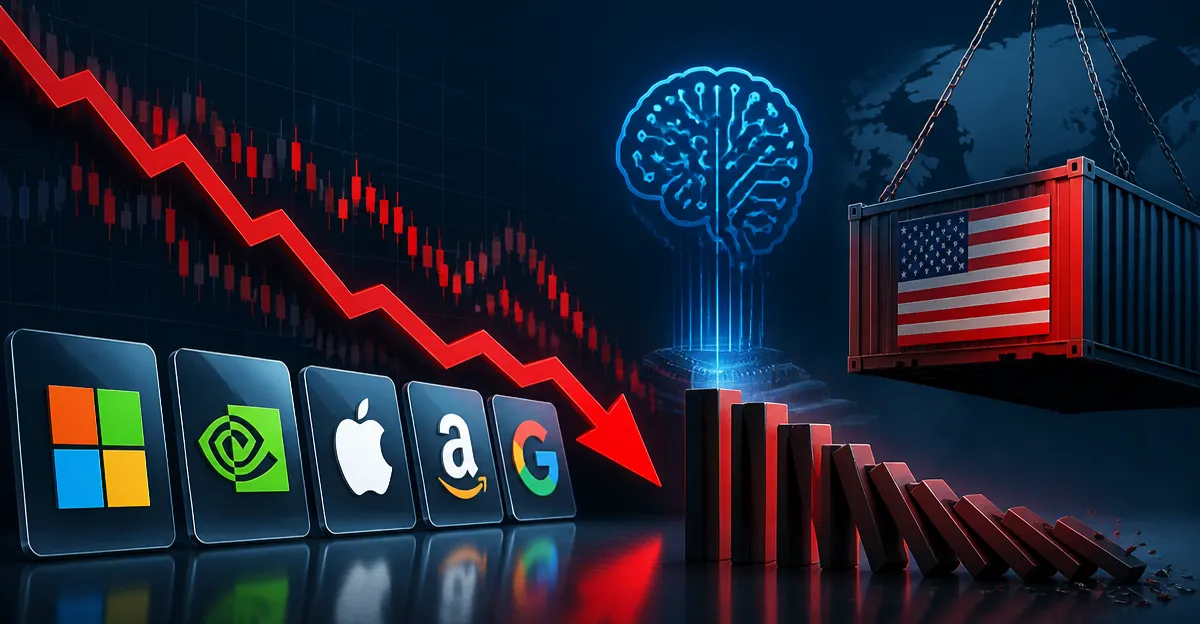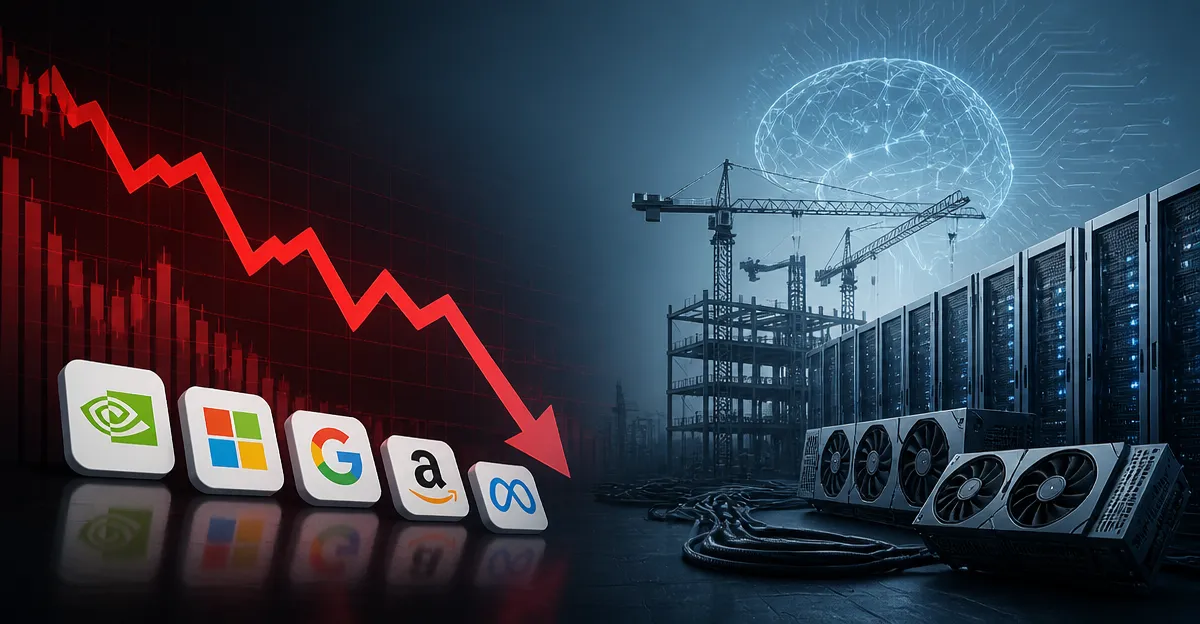
November 25, 2026, (Inside AI) — AI-linked stocks fell sharply in premarket trading on Wednesday, with chipmakers, server manufacturers and data center operators all sliding as investors weighed the soaring cost of building AI infrastructure against uncertain returns. The selloff extended a rout that began earlier in the week and now threatens to reshape how public markets value the companies underpinning the artificial intelligence boom.
Dell Technologies dropped 7.2% despite raising annual revenue and profit forecasts for the third time this year and approving an additional $25 billion share buyback. Rival server maker HPE tumbled 16.3% on Tuesday after lifting its full-year revenue outlook, and its shares plus those of Super Micro fell another 5.2% and 3.6% respectively on Wednesday. Ambarella, valued at $2 billion, plunged 36% after forecasting fourth-quarter revenue below analyst estimates.
The pattern is unmistakable. Companies that beat expectations and raised guidance are being punished anyway, a reversal of the reward structure that defined the first two years of the AI trade. Investors have set a high bar for AI-linked firms and now offer little reward for strong results, as concerns mount over heavy, often debt-fueled infrastructure spending and uncertain payoffs.
"Investors are focused on the big and rising cost of building AI, so good earnings and impressive earnings forecasts no longer lift sentiment," said Ipek Ozkardeskaya, senior analyst at Swissquote Bank.
The scale of the repricing is significant. Nvidia, the company at the center of the AI rally, fell 4.6%, extending Tuesday's 6% slide. The decline came just days after a rally sparked by CEO Jensen Huang's rehiring quickly lost steam. Anthropic dropped 5.6%, trading well below its $83 initial public offering price only days after the Claude developer's record-breaking Nasdaq debut. Hyperscalers were broadly lower, with Oracle, Alphabet, Amazon, Meta Platforms and Microsoft down between 1.4% and 4.3%.
Debt Markets Flash Warning Signals
The stress is most visible in credit markets. Neocloud providers, which rent out specialized AI computing capacity, have been under pressure since October over concerns about the debt funding their rapid expansion. Nvidia-backed CoreWeave and Nebius Group each fell about 6%, while IREN, Applied Digital and Core Scientific lost more than 4%.
The yield on CoreWeave's bonds due 2031 rose to almost 18% as prices fell more than 1.6 cents on the dollar to near record lows, according to Tradeweb data. The cost of insurance against tech companies defaulting on debts has jumped sharply, with five-year credit default swap spreads at Oracle, Alphabet, SpaceX and CoreWeave hitting record levels.
These credit metrics matter because they signal that bondholders, not just equity investors, are now pricing in meaningful default risk across the AI infrastructure complex. When CDS spreads at investment-grade names like Alphabet and Oracle reach records, the market is repricing the entire capital structure of the AI buildout, not merely trimming growth expectations.
Political risk has compounded the financial strain. The Democrats' victory in the midterm elections this month has added to worries, with investors weighing the prospect of a data center slowdown from tougher AI regulation and more hurdles to construction. The combination of rising borrowing costs and regulatory uncertainty creates a double bind for neoclouds that depend on continuous expansion to service debt.
The immediate question is whether this correction reflects a healthy reset or the start of a deeper unwind. Dell's decision to authorize a $25 billion buyback while its stock falls suggests management sees value, but the market's refusal to reward the move indicates skepticism runs deeper than any single company's fundamentals.
For now, the AI trade faces its most serious test since it began. Investors who once bought every dip are now selling into strength, and the burden of proof has shifted decisively toward companies that must demonstrate returns on enormous capital outlays. The coming weeks will reveal whether this is a pause or a turning point.

Shamil has a low tolerance for AI that only works in controlled demos. He covers agentic systems and generative AI with the skepticism of someone who has seen too many “revolutionary” tools quietly disappear six months after launch.