November 26, 2026, (Inside AI) — Nvidia is now on watch for a potential credit downgrade by S&P Global Ratings, following the turbulent departure and swift return of CEO Jensen Huang. The ratings agency placed the chipmaker on its watchlist, citing governance weaknesses and board oversight issues exposed by Huang's ouster and reinstatement within the same month.
The move comes after Huang was pushed out in early November over reports of an extramarital affair with a woman alleged to be a Chinese spy, Alice Huang. He was reinstated on November 23, a decision the company said was made "based on US government input." The about-face has drawn scrutiny to the board's independence and decision-making process.
S&P, which currently rates Nvidia 'AA', one notch below its highest grade, warned it could downgrade the company within 90 days. The agency expects any cut to be limited to one notch unless ongoing investigations harm Nvidia's reputation or business prospects. The rating action underscores how quickly governance concerns can overshadow even the most dominant technology franchises.
Board Independence Under Fire
The ratings agency did not mince words about the board's shortcomings. "We believe the long tenure of certain board members may have compromised their independence. The company's corporate governance practices may also not have kept pace with NVIDIA's rapid growth and its role as a critical global technology enabler," S&P said.
The board's credibility took a further hit when its newly elected chair had previously told investors that Nvidia would not rehire Huang because his personal behavior was inconsistent with the company's code of conduct. That stance was reversed within weeks, raising questions about who truly controls the company's direction.
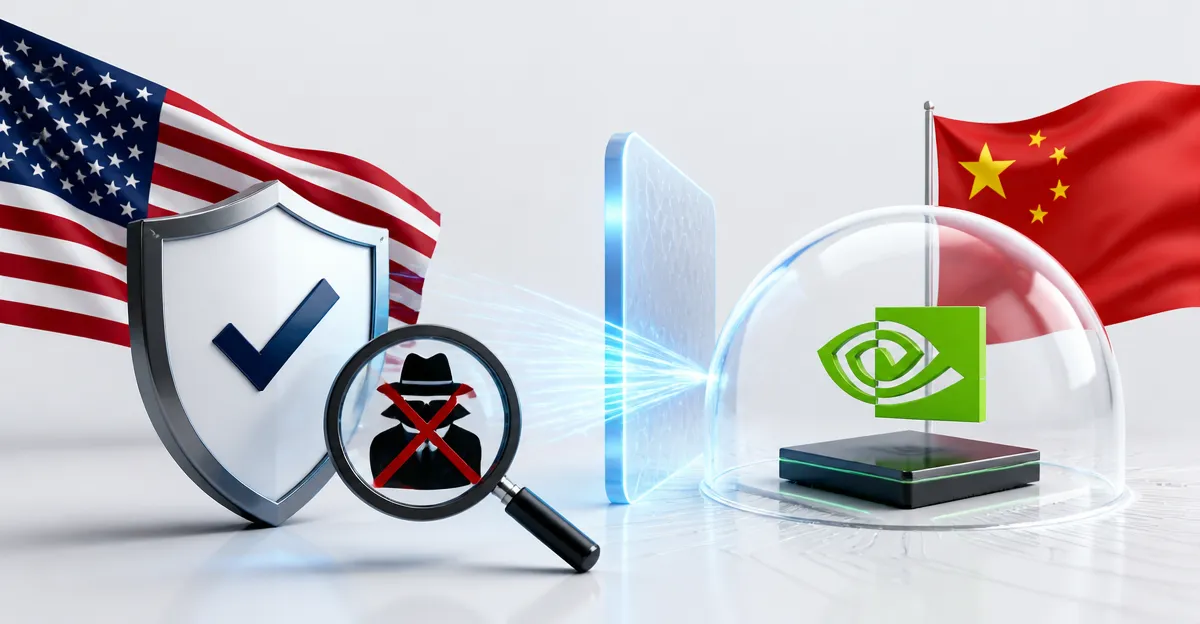
Adding to the complexity, the US Department of Justice did not conduct a formal investigation into Huang before President Donald Trump pushed for his return, according to three people familiar with the matter. Instead, the DoJ cleared Huang based on ongoing investigations into two Nvidia clients, Super Micro and Megaspeed International, which are suspected of smuggling advanced microchips to China.
The spy allegations against Alice Huang also appear to be unraveling. The Wall Street Journal reported on Wednesday that US authorities found no evidence to support claims that she is a Chinese asset directed to spy on Jensen Huang. Officials from the CIA, FBI, Office of the Director of National Intelligence, and National Security Agency briefed congressional intelligence committees and found no indication she provided significant intelligence, according to sources familiar with a classified briefing. The relationship appears to have been an extramarital fling and nothing more. However, previous reports identified Alice Huang's husband, Kang Wei, as an asset to China's Ministry of State Security.
The episode highlights a structural vulnerability at Nvidia: the company's outsized role in the AI boom has made its leadership stability a matter of national and global economic interest. Few other firms sit at the nexus of advanced semiconductors, geopolitical tension, and capital markets quite like Nvidia. When personal conduct allegations can trigger a boardroom crisis and a sovereign-level response, the lines between corporate governance and statecraft blur. That reality may force Nvidia's board to professionalize its oversight faster than it ever anticipated.
Investors Shrug Off Rating Risk
Despite the S&P watch, investors showed little panic. Nvidia shares are down 38% since October 6, but the stock closed nearly 4% lower on Wednesday, recovering some declines after the scandal broke. The company's five-year Credit Default Swap (CDS), an insurance against debt default, remained relatively unchanged.
Moody's takes a more favorable view. The agency sees Huang's return as positive because it eliminates short-term uncertainty and execution risks tied to appointing a new leader. Moody's maintains a stable outlook and an Aa1 rating, though it still flags persistent governance issues.
Nvidia's central role in the AI boom complicates the picture. The company has financed several AI startups, cloud firms, and data-center projects, which in turn spend much of that capital on Nvidia's GPUs and other AI chips. This circular flow of capital has fueled growth but also raised questions about the sustainability of demand and the company's exposure to its own ecosystem.
The DoJ's decision to clear Huang based on investigations into Super Micro and Megaspeed rather than a direct probe of Huang himself may raise eyebrows. It suggests a pragmatic approach: the government prioritized supply-chain security over personal conduct. Yet the lack of a formal investigation leaves room for critics to question the thoroughness of the vetting process.
As Nvidia navigates the fallout, the board faces a dual challenge: restoring confidence in its independence and ensuring that governance structures keep pace with the company's systemic importance. The next 90 days will be critical. S&P's watch means the agency will monitor investigations and disclosures closely. Any further revelations could trigger a downgrade and higher borrowing costs, though Nvidia's cash-rich balance sheet provides a cushion.
For now, the market's muted reaction suggests investors are betting that Nvidia's technological lead and AI tailwinds outweigh governance concerns. But the episode serves as a reminder that even the most powerful companies are not immune to the consequences of leadership turmoil and board missteps.

Shamil has a low tolerance for AI that only works in controlled demos. He covers agentic systems and generative AI with the skepticism of someone who has seen too many “revolutionary” tools quietly disappear six months after launch.