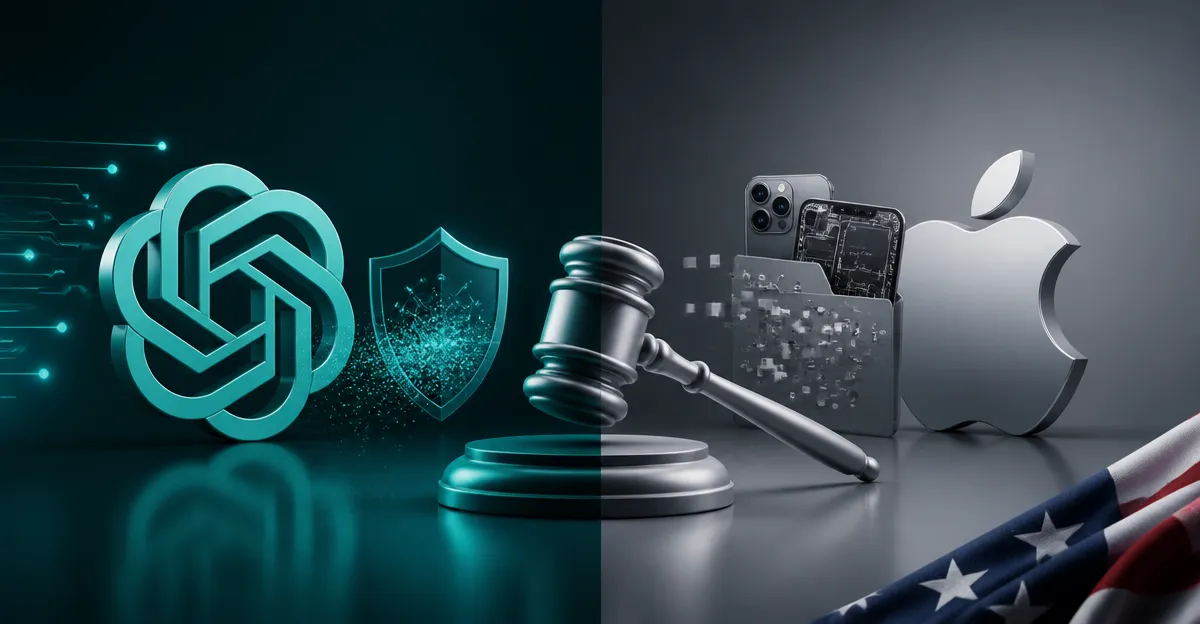
November 28, 2026, (Inside AI) — OpenAI filed counterclaims against Apple in California federal court on Friday, accusing the iPhone maker of stealing trade secrets and discouraging hardware suppliers from working with the AI company. The move escalates a legal battle that began in July when Apple sued OpenAI and two former Apple employees, Tang Tan and Chang Liu, for allegedly misappropriating trade secrets to aid OpenAI's push into consumer hardware.
OpenAI's filing alleges that Apple gained confidential information by rehiring a former OpenAI employee who had worked there for six months. During that time, the employee accessed details about a new device and OpenAI's hardware roadmap. "Given the timing, it now appears that stealing those documents may have been his reason for joining OpenAI in the first place," OpenAI said in the filing. The company also claims Apple's employment practices are designed to "trap" employees and prevent them from joining competitors.
The dispute centers on the intensifying race to build AI-enabled personal devices, a market OpenAI is targeting with hardware that could challenge Apple's dominance. OpenAI said its devices threaten to "outcompete Apple on what Apple views as its own turf." Apple denied the allegations, stating, "OpenAI's counterclaims are a transparent attempt to distract from the substance of Apple's lawsuit."
Apple's Grip On Departing Employees
OpenAI's filing criticizes Apple for encouraging employees to use personal Apple devices and accounts for work, then restricting access to those accounts after employees leave. OpenAI claims Apple continues to access former employees' personal devices and accounts, enabling it to "monitor and ensnare departing employees" who join competitors. The filing states that 400 employees have left Apple for OpenAI, and Apple aims to intimidate others from leaving.
Read: OpenAI Taps Cravath Litigator Gary Bornstein for Texas Trial Against Musk
Apple denied using a rehired employee to access OpenAI's confidential information and denied trying to suppress competition in AI device manufacturing. The company did not immediately respond to a request for comment on the counterclaims. Attorneys for Tan and Liu also did not respond.
This legal clash reflects broader tensions in the tech industry as competition for AI talent and proprietary technology intensifies. Apple's July lawsuit alleged that Tan, a 24-year Apple veteran who served as vice president of product design for iPhone and Apple Watch, and Liu misappropriated trade secrets. Tan was part of the team that launched AI device startup io Products, which OpenAI acquired in 2025. OpenAI and the employees have denied those allegations, arguing that Apple's lawsuit relied on unauthorized monitoring of Liu's personal messages after he left the company.
The counterclaims highlight a strategic battle over employee mobility and trade secrets in the AI hardware sector. As companies race to develop next-generation devices, the lines between personal and professional accounts blur, creating legal and ethical dilemmas. OpenAI's allegations suggest that Apple's practices may hinder fair competition by restricting employee freedom. Apple's response frames the counterclaims as a diversion from its original claims, setting the stage for a protracted legal fight.
Read: California AG Bonta Sues OpenAI Over AI Model Security and Public Safety
This case could set precedents for how tech companies handle trade secrets and employee transitions in the AI era. With both sides dug in, the outcome may influence talent flows and innovation in consumer AI hardware. The court's decisions will be closely watched by industry players navigating similar challenges.

Sofia spent years studying how machines parse human language before pivoting to cover the systems now rewriting it. She reads technical papers the way others read news and looking for what the numbers are actually saying beneath the headlines.