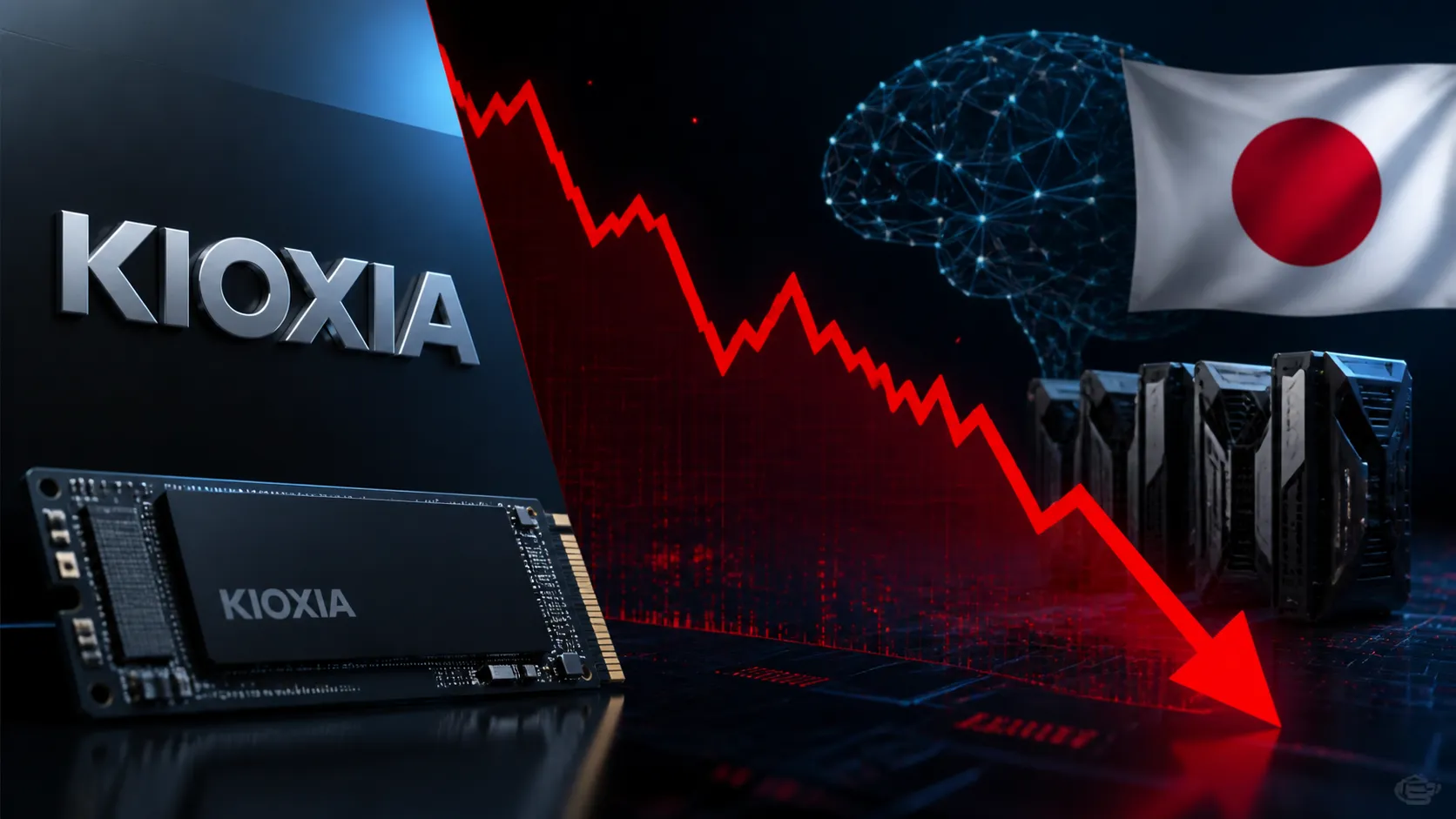
June 26, 2026, (Inside AI) — Shares of Japanese memory chip giant Kioxia plunged 12% on Friday, wiping out recent gains as a broader AI stock rout took hold. The sell-off was triggered by a report that OpenAI, the maker of ChatGPT, may delay its initial public offering.
The New York Times revealed OpenAI is considering pushing its IPO to next year, as CEO Sam Altman pursues a $1 trillion valuation. That news rippled through markets, hitting firms tied to the AI boom.
Kioxia, formerly Toshiba Memory, was carved out of Toshiba in 2018. It has ridden the AI investment wave to become the most valuable company on Japan’s Nikkei 225 index. But the stock’s sensitivity to AI sentiment was on full display Friday.
The decline came despite Kioxia’s own strategic moves. On Thursday, the company said it is considering a stock split and plans to list American depositary shares on a U.S. exchange early in the next financial year, which ends March 2028.
Chief Financial Officer Yoshihiko Kawamura told the annual general meeting:
“Whether it’s April, May, or June is not yet clear, but we’re hoping to list… around that time.”
The U.S. listing ambition aligns with a trend among Asian tech firms seeking deeper American investor bases. South Korean chipmaker SK Hynix this week announced plans to raise up to $29.4 billion through a U.S. listing.
Analyst Douglas Kim of Smartkarma noted the confidence behind Kioxia’s timeline, writing on the platform:
“The timeframe to complete this offering suggests that (Kioxia) is highly confident of its ability to continue to produce outstanding results in the next 9-12 months.”
The sell-off underscores the fragility of AI-driven valuations. OpenAI’s potential delay signals that even the sector’s darlings face hurdles in converting hype into public market debuts. For Kioxia, the drop tests whether its fundamentals can withstand shifting sentiment.
Memory chip demand remains tightly linked to AI infrastructure spending. Any slowdown in that cycle could pressure Kioxia’s growth narrative. Yet the company’s U.S. listing plans suggest leadership sees durable tailwinds ahead.