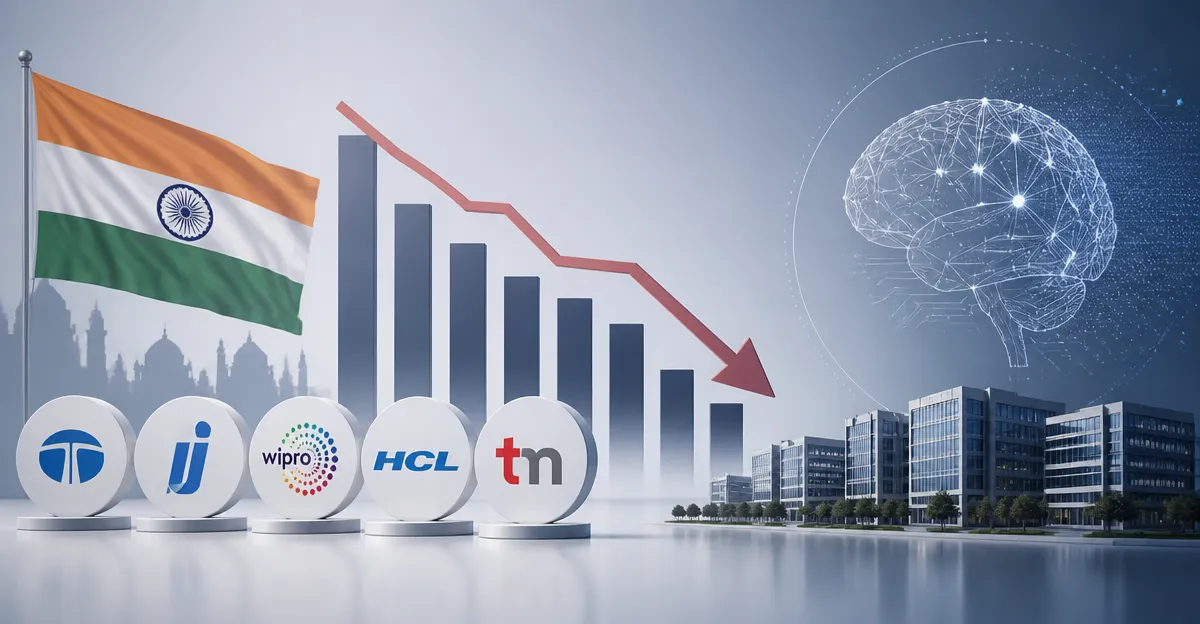
July 6, 2026, (Inside AI) — India’s top IT firms are bracing for a muted first quarter, as nine brokerages warn of persistent headwinds. The April-to-June period, typically a strong season for the $315 billion sector, is expected to show only 2.8% constant-currency revenue growth. AI-driven pricing pressure, weak client spending, and geopolitical turmoil are the primary culprits.
The earnings season kicks off on Thursday with Tata Consultancy Services (TCS), followed by Infosys, HCLTech, and Wipro. While rupee revenue may jump 14% year-on-year due to sharp currency depreciation, underlying growth remains anemic. Citi predicts a fourth straight year of subdued expansion, and JPMorgan sees growth staying below 3%-4% for the “foreseeable future.”
The sector is in a “perfect storm,” according to Nomura, as the rapid adoption of AI agents and tools by global clients compresses pricing and shortens development cycles. This shift is upending the traditional labor-intensive model. TCS Chairman N Chandrasekaran recently stated:
“The day is not far when we will have an equal number of AI agents and employees.”
Investor anxiety is palpable. The Nifty IT index plunged 9.5% in the June quarter, even as the benchmark Nifty 50 gained 6.9%. Year-to-date, the IT index has slumped about 28%, making it the worst-performing major sector in India. This divergence underscores a structural repricing of IT stocks as markets discount future earnings power.
The AI Disruption Deepens Across Verticals
The pain is spreading beyond the top line. PL Capital notes that AI-led disruption is hitting consumer, hi-tech, and telecom verticals broadly. The brokerage said:
“Slower decision-making and elongated sales cycle are leading to delays in revenue conversion and execution.”
This echoes a wider industry trend where clients are pausing discretionary projects to reassess AI integration. The result is a double hit: lower billing rates for AI-augmented work and deferred traditional contracts. Meanwhile, hiring has slowed sharply; TCS added just 1,500 net employees in the last quarter, a fraction of pre-2023 levels.
Competing viewpoints reveal a split in strategy. Infosys is doubling down on AI training for existing staff, while Wipro is betting on platform-based AI solutions. However, analysts warn that these investments may take years to offset the erosion in core services. The U.S. market, which accounts for roughly 60% of revenue, adds another layer of risk with potentially higher interest rates dampening tech budgets.
Earnings Forecasts Under Scrutiny
Annual revenue guidance will be in sharp focus. Brokerages expect Infosys and HCLTech to narrow or trim the upper end of their forecasts. This cautious stance reflects not just demand uncertainty but also the unknown pace of AI cannibalization. Historical context is sobering: the last time Indian IT faced such sustained low growth was during the 2008-09 financial crisis, but the current disruption is technology-driven, not cyclical.
Geopolitical tensions, particularly the Middle East conflict, compound the outlook. Nomura highlights this as a key variable in client decision-making. For an industry that thrives on long-term outsourcing contracts, the combination of AI disruption and macro instability is unprecedented. The next few quarters may determine whether the sector can reinvent itself or face a prolonged winter.








