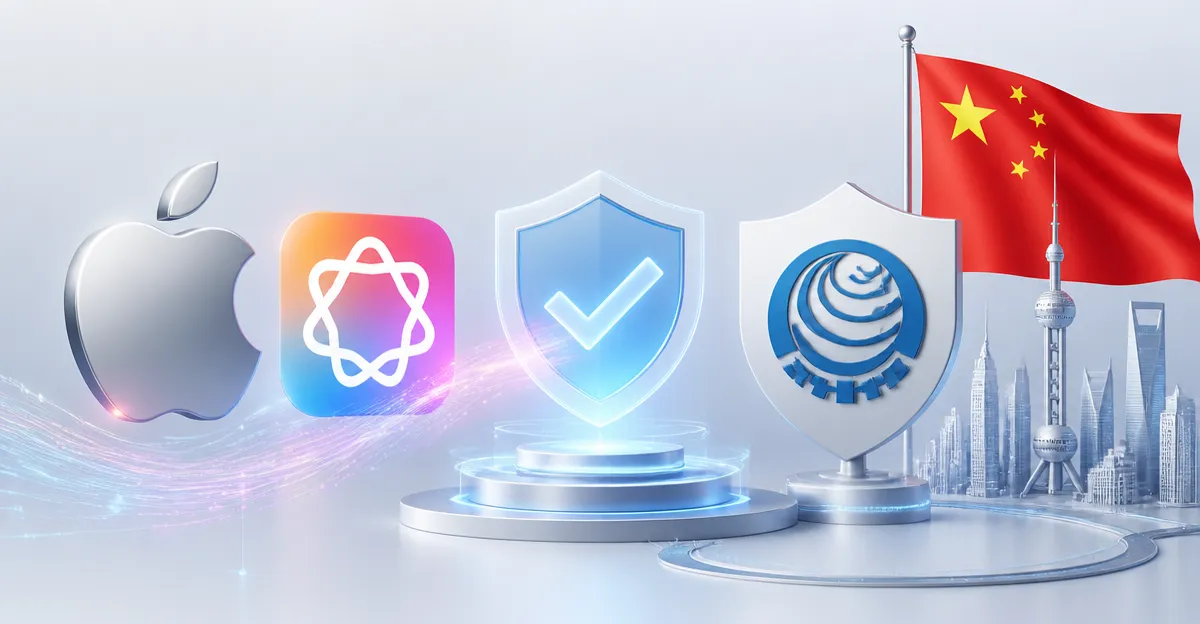
July 15, 2026, (Inside AI) — Apple has officially registered its on-device generative AI service, Apple Intelligence, with China’s cyberspace regulator, clearing a critical regulatory hurdle for the feature’s launch on iPhones in the country.
The registration was confirmed by the Cyberspace Administration of China on Wednesday. It marks a pivotal step for Apple to bring AI-powered capabilities to Chinese users while complying with strict local data and content rules.
Apple Intelligence will integrate AI models from domestic tech giants Baidu and Alibaba, according to a source familiar with the matter who requested anonymity. This hybrid approach blends Apple’s on-device processing with cloud-based models from local partners.
Alibaba confirmed the integration in a statement to Reuters, saying its Qwen model will be woven into Apple Intelligence across iOS, iPadOS, macOS, and visionOS for users in China. No rollout date was provided.
Apple did not respond to requests for comment. The silence leaves open questions about how deeply Baidu’s and Alibaba’s models are embedded, and whether Apple’s own foundation models play any role.
Why China’s Approval Process Reshapes AI Deployment
China mandates that generative AI services undergo a security assessment and registration before public release. The process evaluates data handling, content moderation, and alignment with socialist core values.
Apple’s registration signals compliance with these norms, but the reliance on third-party models is a departure from its global strategy. Outside China, Apple Intelligence runs primarily on-device using Apple’s proprietary models, with optional cloud compute via Private Cloud Compute.
In China, however, foreign AI models face intense scrutiny. Partnering with Baidu and Alibaba allows Apple to navigate censorship requirements and data localization laws while offering a competitive AI experience.
This isn’t Apple’s first regulatory compromise in China. The company already stores iCloud data on local servers and removes certain apps at government request. Integrating local AI models is a logical extension of that playbook.
Market Momentum Meets Strategic Necessity
Apple’s move comes as it regains momentum in China. The company reported a 24.4% year-on-year increase in iPhone shipments in the second quarter, reversing a previous sales slump.
AI features are increasingly a battleground for smartphone makers in China. Local rivals like Huawei, Xiaomi, and Oppo have already rolled out generative AI capabilities, often powered by domestic models. Delaying Apple Intelligence would risk ceding ground.
Yet, the partnership model raises questions about user experience. Will Apple’s hallmark privacy and seamless integration hold up when core AI features depend on external models? And how will Apple handle updates when Baidu or Alibaba modify their models?
Industry analysts note that China’s AI regulations also require clear labeling of AI-generated content and mechanisms to prevent harmful outputs. Apple must ensure its implementation meets these standards without degrading performance.
Looking ahead, the rollout timeline remains unclear. Apple typically launches major software updates in September, but regulatory approvals can introduce delays. The company has not indicated whether Apple Intelligence will be available at launch or via a later update.
For now, the registration removes a major obstacle. Apple can now finalize testing and prepare for a launch that could redefine the iPhone experience for millions of Chinese users—if it delivers on the promise of privacy-centric, locally compliant AI.