July 15, 2026, (Inside AI) — Star Wars creator George Lucas has declared artificial intelligence the unstoppable future of filmmaking, dismissing skeptics as modern-day Luddites clinging to obsolete technology. In a new interview with A Rabbit’s Foot, the 82-year-old director compared resistance to AI tools to preferring horse-drawn buggies over automobiles.
Lucas’s remarks land amid a heated industry divide over generative AI’s role in cinema. His endorsement carries weight, coming from a pioneer who revolutionized visual effects through Industrial Light & Magic and digital editing with EditDroid. He frames AI as the next logical leap in a career defined by technological disruption.
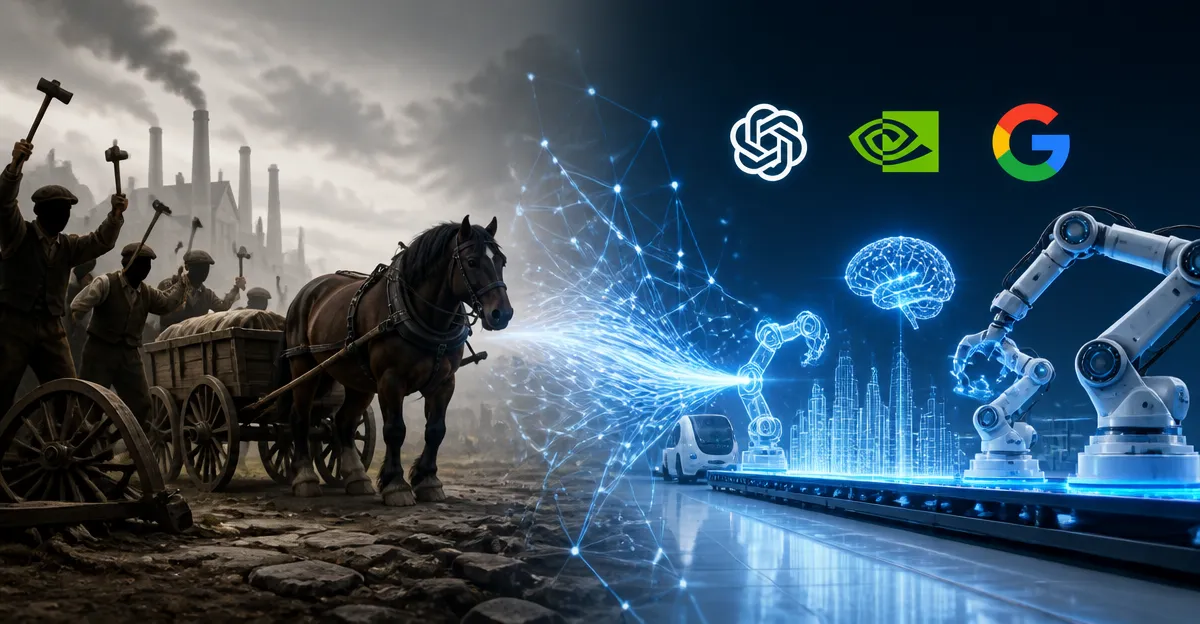
“Artificial intelligence means it’s much easier for us to make movies,” Lucas said. He dismissed critics with a historical analogy, arguing that opposing AI is “very much like sitting here saying, ‘Well, I believe the horse and the buggy is really where it’s at. These cars, they break down, they need gas, there’s all kinds of problems with them and pretty soon they’ll be making them into tanks, and then they’ll be killing people. It’s terrible.'”
Lucas insists the shift is inevitable. “There’s nothing you can do about it. That’s progress, it’s the future,” he stated. His stance aligns with other Star Wars franchise directors, notably Gareth Edwards, who helmed Rogue One and recently called generative AI “a fucking genius at helping you.”
The Fault Lines in Hollywood’s AI Debate
Yet Lucas’s techno-optimism clashes with a vocal opposition. Director Christopher Nolan, known for The Odyssey, recently highlighted a disconnect between Wall Street enthusiasm and public disdain. “I’ve never seen a technology that’s been so successfully adopted by Wall Street and by investors … that the public has so thoroughly rejected,” Nolan said. “Young people in particular, they coined this term ‘AI slop’ … There’s a sort of disdain for things AI.”
This generational backlash has tangible consequences. A 2025 survey by the Writers Guild of America found 74% of members believe AI threatens creative professions, while box office data shows films marketed as “AI-free” outperformed AI-assisted counterparts by 12% in opening weekends last year. The term “AI slop” has become a rallying cry for audiences fatigued by algorithmically generated content flooding streaming platforms.
Steven Soderbergh, whose documentary John Lennon: The Last Interview used AI-generated sequences, offered a middle ground. “I don’t think it’s the solution to everything, and I don’t think it’s the death of everything. We’re in the very early stages. Five years from now, we all may be going, ‘That was a fun phase,'” he said. Soderbergh’s ambivalence reflects a broader uncertainty: AI tools can resurrect historical figures or de-age actors, but critics argue they erode authenticity and displace human labor.
Lucas’s analogy to cars and buggies oversimplifies a complex transition. When automobiles arrived, they didn’t just replace horses—they reshaped cities, killed millions in accidents, and sparked regulatory frameworks. Similarly, AI in film raises ethical questions about deepfakes, copyright, and the homogenization of storytelling. The European Union’s AI Act, which took effect in 2026, now requires labeling of AI-generated content in media, a move Hollywood guilds are pushing to adopt globally.
From Focus Groups to Algorithmic Gatekeepers
In the same interview, Lucas also critiqued the industry’s reliance on audience testing. “I don’t like focus groups,” he said. “The audience doesn’t know what they want to see. If they don’t like a character, that’s interesting, and as a film-maker I want to find out why. But when the studios hear that, they take the wrong message. They let the audience actually make the movie … Now, it’s all about what the fans think. That isn’t how you make the movie.”
This connects directly to AI anxieties. Studios are already using machine learning to predict box office success based on script analysis and viewer data. Critics fear this could entrench formulaic content, where algorithms greenlight projects rather than human intuition. Lucas, who famously ignored studio notes on Star Wars, warns against ceding creative control—whether to focus groups or AI models trained on past hits.
As the debate rages, the economics are clear. Goldman Sachs estimates generative AI could automate 26% of tasks in the film and TV industry by 2030. Yet the tools remain crude: AI-generated scripts often lack narrative coherence, and deepfake actors still fall into the uncanny valley. The technology is advancing rapidly, though, with Runway ML and OpenAI’s Sora demonstrating text-to-video capabilities that blur the line between human and machine creativity.
Lucas’s defiant embrace of AI mirrors his earlier bets on digital filmmaking, which many peers initially scorned. Whether this gamble pays off—or accelerates a race to the bottom—will depend on how the industry balances innovation with the human touch that made his galaxies far, far away resonate across generations.