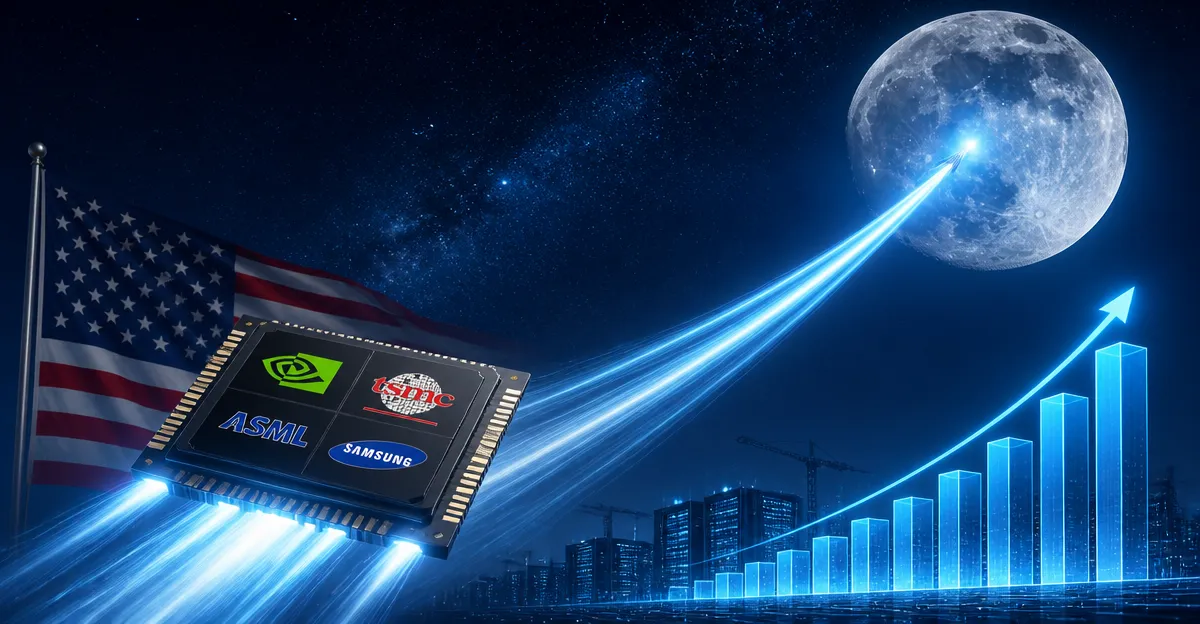
August 5, 2026, (Inside AI) — Semiconductor stocks surged in Asian trading on Wednesday, shrugging off after-hours tumbles in SpaceX and AMD as markets latched onto record Wall Street highs. The Kospi index jumped 4.0%, led by memory giants SK Hynix and Samsung, even as a new competitive threat emerged from Chinese equipment makers.
The rally came despite SpaceX shares sinking 7.5% after hours, erasing most of a 9.4% regular-session gain, after the company disclosed that capital expenditure had ballooned to over $18 billion, with nearly $16 billion of that poured into artificial intelligence projects. Revenue hit a record $7.8 billion, but the cash burn rate alarmed analysts, who warned the firm may need to tap markets again for funding.
AMD also slid 8.8% in extended trading. The chipmaker beat sales and outlook estimates, but the results failed to satisfy investors who had driven its stock up 142% this year. The twin disappointments highlighted a growing tension: AI infrastructure spending is soaring, yet the payoff timelines remain uncertain.
The capital spending frenzy is reshaping the semiconductor landscape. SpaceX’s AI-related capex alone underscores the massive bets being placed on next-generation computing. But the company’s bonds have been battered in recent weeks, and a lockup expiration on 911.5 million insider and employee shares looms on Thursday, adding to the pressure.
Meanwhile, a new front is opening in the memory chip war. Reuters reported that Samsung and SK Hynix are evaluating etching equipment from China’s Advanced Micro-Fabrication Equipment (AMEC) for use in their Chinese factories. The move signals a potential shift away from U.S. suppliers like Applied Materials and Lam Research, which currently dominate the market but face tightening export restrictions.
This development could accelerate the decoupling of semiconductor supply chains. If Korean giants adopt AMEC’s tools, it could erode the U.S. equipment makers’ market share in one of the world’s largest memory production hubs.
The broader market mood was buoyed by falling oil prices, with Brent crude slipping another 1.5% to $78.24 a barrel, far below June’s peak of $102. The retreat eased inflation fears, nudging 10-year Treasury yields down to 5.60% and lowering the implied odds of a September Fed rate hike to 57% from 67%.
Geopolitical risks also eased as Qatar said mediators were making progress in ending the U.S.-Iran conflict, though Tehran has not confirmed its participation. Analysts noted that oil flows from the Gulf have been higher than expected, raising the specter of oversupply if the Strait of Hormuz reopens further.
In Europe, earnings are due from Siemens Energy, Infineon, and Novo Nordisk, while U.S. reports include DoorDash, Uber, and Walt Disney. Federal Reserve Governor Lisa Cook is scheduled to speak, and key data releases include EU services PMIs and U.S. ISM services.