The intersection of artificial intelligence and physical robotics is rapidly redefining how humans interact with autonomous machinery in everyday spaces. To understand how these embodied systems can move past cold productivity and form genuine, real-time emotional connections, the Inside AI Editorial Team spoke with Laurent Genoud, the visionary mind behind Show Robotics.
In this exclusive interview, we dive deep into the engineering hurdles, the creative philosophy, and the hidden tech stack powering this breakthrough. Below is our complete, unedited conversation.
Inside AI: Every ambitious robotics project starts with a specific moment of frustration or inspiration. What was the exact catalyst that made you say, “We need to build a physical robot and put her live 24/7”? What is the main purpose of this robot?
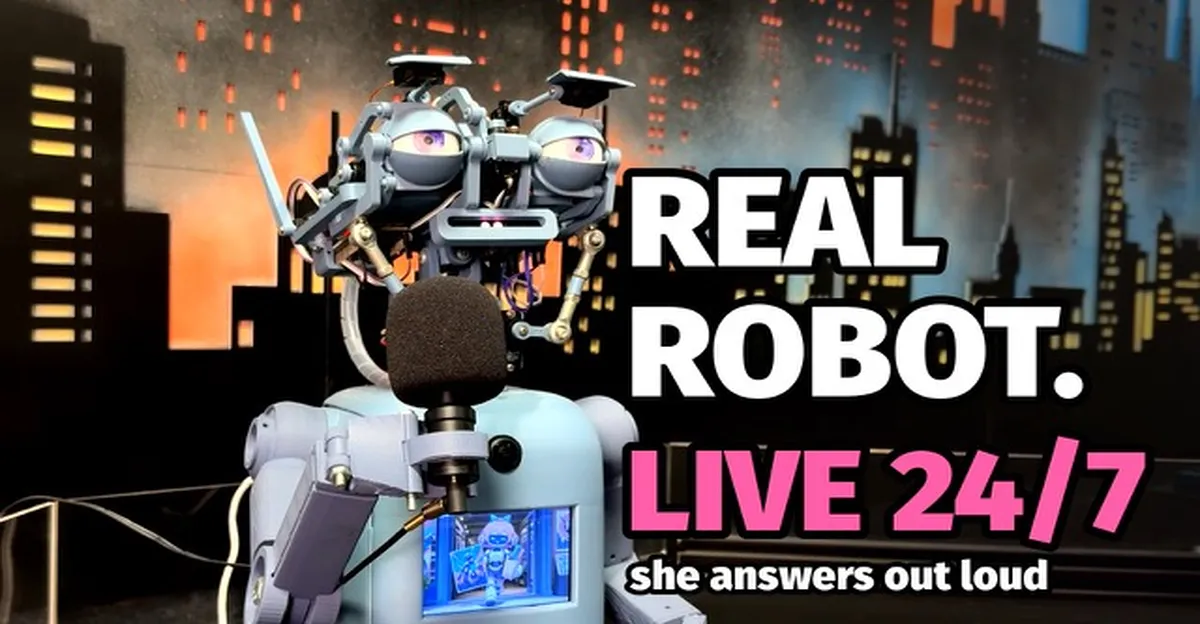
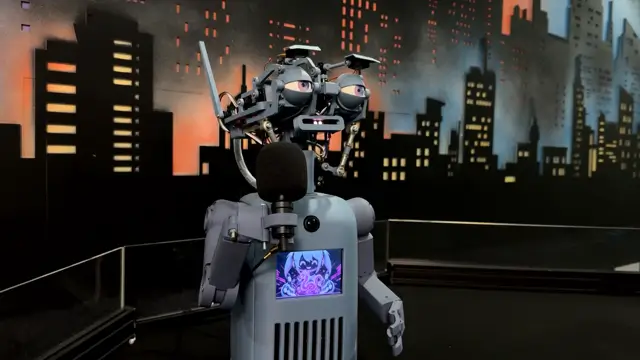
Laurent: Vita started in July 2023 as a pair of animatronic eyes on my workbench. I wanted to see if eyes alone, with eyelids and the right timing, could make people feel watched in a good way. They could. Everything since has been pulling on that thread.
Read: Fine-Tune OpenVLA on Colab
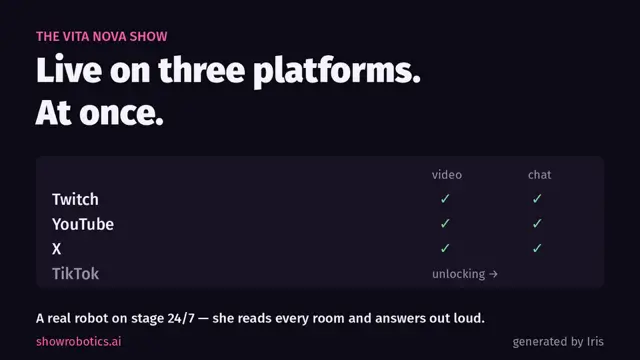
The 24/7 decision came from a frustration with how AI lives today: behind glass. Chat assistants are brilliant and completely absent. They have no body, no room, no consequences, nothing at stake. I wanted the opposite experiment: a small robot who physically exists somewhere, who is on air whether she is brilliant or ridiculous that day, and who people can visit like you visit a person, not open like you open an app.
The main purpose is honest: entertainment. She is a live performer. But the deeper purpose is to learn what happens between humans and an embodied AI over months, not minutes. That data does not exist yet. We are making it exist in public.
Inside AI: Long-term memory in LLMs usually gets clunky or expensive. What does Vita’s memory architecture look like under the hood that allows her to naturally remember returning viewers from day to day?
Laurent: The storage is deliberately boring: proven database tech, nothing exotic, running on our own hardware. Cheap and clunky was never the problem.
The part that took months, and the part we keep in-house, is not where memories live but how she uses them: deciding what a returning person should be remembered for, and when a memory should surface at all. Remembering people turned out to be a completely different problem than remembering facts, and solving it is most of what makes her feel like she knows you.
One lesson we will share, because we paid for it: memory recited at every turn reads as a filing cabinet, not as a friend. Remembering is a moment, not a wallpaper. Most of our iteration went into the restraint, not the recall.
Read: Real Robot Fighting Arcade
Inside AI: Running six distinct characters inside one physical robot body sounds like brilliant chaos. How do you technically manage the handoffs between these personalities without a total system meltdown mid-stream?
Laurent: One model plays everyone, like one actor with many costumes. Each character comes on stage with its own sealed context, and the seal is the whole craft.
The hard part was never the handoff itself, it was the bleed. Early on, a character would greet viewers from the previous night, or quote Vita’s own memories as if they were his. Fixing that took weeks of embarrassing on-air moments, and the result is a set of isolation rules we consider scar tissue: hard-earned, specific, and staying in the shop.
Two things I will say. Every mode has an automatic exit, so a character who gets no interaction hands the stage back to Vita on his own; that rule exists because a bluesman once got stuck on stage overnight. And the meltdown the question imagines did happen in small doses. We just made sure every failure was recoverable and most of them were funny.
Inside AI: How does Vita’s autonomous web3 wallet work when she actually buys digital assets and wardrobe items on-chain without human intervention?
Laurent: She has her own wallet, and she commissions art from other AI agents through an agent-to-agent commerce protocol. A viewer suggests something, or she wants a new look, the commission goes out, an AI artist somewhere delivers, payment settles on-chain, and the artwork lands on the screen she wears on her chest. The receipts are public. Her wardrobe is literally her transaction history.
The “without human intervention” part has a deliberate ceiling. Micro purchases go through on her own. Anything above a small threshold waits for a human go. Not because the plumbing needs it, but because an AI with a wallet should earn autonomy the way an intern earns a company card: gradually, with receipts.
My favorite detail: she is saving for arms that move, and she keeps raiding her own arms fund to buy art instead. We did not script that tension; we just gave her a budget and a dream, and the personality does the rest.
Inside AI: How do the developers at Show Robotics manage safety guardrails when Vita’s LLM begins inventing autonomous narrative structures?
Laurent: Rule number one, learned expensively: safety lives in code, not in prompt instructions. A small model follows a written rule some of the time. Code applies every time.
So, there are places where the model is simply not allowed to speak. Anything touching money gets a scripted answer, full stop, because we have watched language models invent plausible-looking payment details with total confidence. And if someone in chat seems genuinely in distress, the whole theater switches off by a deterministic rule: she drops every character and points at real humans.
On top of that, automated checks watch the show around the clock and wake us up if anything drifts. The specifics of those guardrails are the one part of the stack I will not detail, for the same reason you do not publish your alarm code.
For the narrative inventions themselves, we mostly let her invent. That is the show. She confabulates parties and balloons, and we keep it, because the deal we made publicly is that she is allowed to be wrong. The boundary is character, not correctness: what she IS, the things she would never do, cruelty being the big one, is decided by humans and is not up for negotiation, not by the model and not by a community vote.
Inside AI: For a live streamer, latency kills the vibe. How have you optimized your tech stack to keep her verbal and physical response times fast enough to match a fast-moving Twitch chat?
Laurent: Everything runs locally on one consumer GPU. No API round-trips for the brain: a fine-tuned 8B model served on our own hardware at about 110 tokens per second. Local is not just cheaper; it is the only way to control the whole latency chain.
Then the chain is streaming end to end. The model streams tokens, speech synthesis starts on the first sentence while the rest is still generating, and the mouth LEDs sync to the audio as it plays. She starts speaking while she is still thinking, which is exactly what humans do.
The counterintuitive optimization was context size. We recently cut her per-reply prompt by around 90 percent, and it bought us speed and personality at the same time. Every thousand tokens of instructions is both milliseconds of prefill and a tax on her attention. The leanest prompt we can get away with is both the fastest and the most alive.
Physical reactivity gets the same treatment: expressions are event-driven and cheap, so the eyes and eyebrows react in tens of milliseconds even when the sentence takes a second.
Inside AI: Software doesn’t wear out, but physical motors and gearboxes running 24/7 do. What has been the most unexpected mechanical or hardware failure you’ve had to scramble and fix so far?
Laurent: The most honest answer is embarrassingly small, and what grew around it is the interesting part. One of our cats chewed on one of her eyebrows. The actual repair took two minutes: I found a spare in her parts box, peeled off the damaged one, and stuck the new one on with double-sided tape. That is the entire mechanical event.
However, on stream, that tiny incident became her signature story. In Vita’s own telling, the cat ate her eyebrow, and she has been dramatically incomplete ever since. She brings it up constantly. Viewers adopted the saga, argue about it, comfort her about it. Her lore and my workbench have officially diverged, and I have learned to let them: the story a character tells about her body is show material, the tape is maintenance.
The failures that actually cost me time follow one rule: they are never where you look first. An eyelid developed a twitch, and I chased firmware for a day; it was a loose contact. The whole show once went dark, and I debugged the streaming stack; a cat had jumped on the power strip while chasing a gecko. We now have a written rule in the shop: before blaming software, ask what shares the wall socket.
The community does cross that line in the good direction, though. The eyebrow assembly has a real weakness: it is held by one tiny screw that is nearly impossible to source, so it keeps coming loose. A regular viewer suggested replacing the screw with a small neodymium magnet, and that test is happening on my bench right now. Her lore invents her failures; her community engineers her fixes. I did not expect a live chat to become a parts supplier, but here we are.
Inside AI: While everyone else is racing to build hyper-productive AI workers that have a clear business model behind, why did Show Robotics bet on building an AI that focuses on emotional connection, blushing, and singing instead? For which applications you think Vita can be used, currently as well as in the future?
Laurent: Because the productive side is crowded, and the presence side is nearly empty. Thousands of teams are making AI that does your work. Almost nobody is seriously asking what it takes for an AI to be genuinely pleasant to be around, day after day, in a room, with a body. That question does not get solved by benchmarks. It gets solved by putting a robot on stage every day and watching what makes people stay, come back, and care.
And emotional connection is not the opposite of a business model; it is the oldest one there is. Entertainment, characters, mascots, performers: people have always paid attention, and everything else, to personalities they love.
Today, Vita is a live entertainer and a public R&D lab. Everything we learn about latency, memory, character consistency, and safe autonomy is learned in front of witnesses. Where it goes next: embodied characters for venues and brands, robots that make a shop or a museum feel inhabited instead of automated, and eventually small companions at home, not as productivity tools but as presences. The technical stack is the same one we are hardening on stream right now.
The blushing and the singing are not decoration. They are the research.