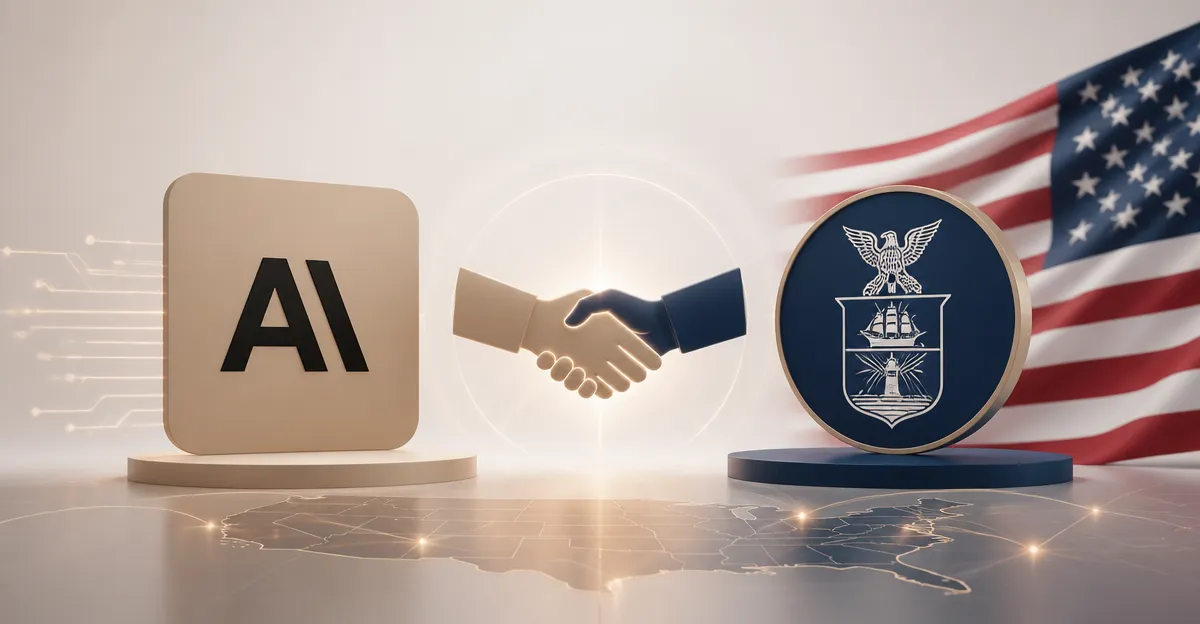
September 2, 2026, (Inside AI) — U.S. Commerce Secretary Howard Lutnick said Anthropic is “back on the right side” with the Trump administration, according to sources familiar with his remarks. The comment signals a potential thaw in a relationship strained by the company’s refusal to allow military use of its Claude AI models for domestic surveillance or autonomous weapons.
The statement came days after a U.S. judge sided with Anthropic in its legal fight against the American military over AI safety on the battlefield. Defense Secretary Pete Hegseth had blocked Anthropic from certain military contracts over the company’s restrictions. Anthropic then sued in California court.
The legal dispute centered on whether the government could compel a private AI developer to waive safety guardrails for defense applications. Anthropic argued its Claude models must not be used for lethal autonomous systems or mass surveillance, citing ethical commitments embedded in its corporate charter.
The judge’s ruling did not force the Pentagon to award contracts, but it prevented the department from excluding Anthropic solely based on its safety policy. That distinction matters for the broader AI defense market, where companies like OpenAI, Google, and Microsoft have accepted military work under varying restrictions.
Anthropic did not immediately respond to a request for comment. The Commerce Department also declined to elaborate on Lutnick’s remarks. His comment, however, suggests the administration may now view Anthropic’s stance as compatible with national security priorities rather than obstructive.
Military AI Contracts Face New Safety Scrutiny
The clash highlights a fundamental tension in the AI industry. Defense agencies want the most advanced models for intelligence analysis and autonomous systems. Developers worry that removing safety guardrails could lead to unintended escalation or civilian harm.
Anthropic has been more explicit than rivals about limiting military use. Its Acceptable Use Policy prohibits using Claude for weapons development or surveillance that violates human rights. That policy put the company at odds with Hegseth, who has pushed for faster AI adoption across the Department of Defense.
The court’s decision may set a precedent for other AI firms resisting specific government uses. Legal experts note that while the government has broad procurement power, it cannot punish a company for lawful ethical restrictions without a clear national security justification.
Industry analysts say the ruling could encourage more AI developers to adopt public safety commitments without fearing automatic exclusion from federal contracts. That shift would align with President Donald Trump’s stated goal of maintaining U.S. dominance in AI while avoiding excessive regulation.
What Comes Next for Anthropic and the Pentagon
The immediate impact remains unclear. Anthropic may now be eligible to bid on non-lethal military AI projects, such as logistics optimization, cybersecurity, and intelligence analysis. But the company’s policy still blocks autonomous weapons, so its role in combat systems stays limited.
The Commerce Department has taken a more active role in AI export controls and domestic competitiveness under Lutnick. His public comment suggests the administration wants to signal that responsible AI companies can still work with the government.
Whether Anthropic chooses to pursue military contracts remains an open question. The company has prioritized safety research and enterprise adoption over defense revenue. But the legal victory gives it leverage to negotiate terms that preserve its ethical commitments.
The case also underscores the growing legal complexity of AI governance. Courts are now arbitrating disputes between corporate safety policies and federal procurement demands, a role that will likely expand as AI systems become more capable and more embedded in national security.