September 3, 2026, (Inside AI) — Generative AI ads may look identical to human-made ones, but new research shows they underperform where it matters most: driving consumer action.
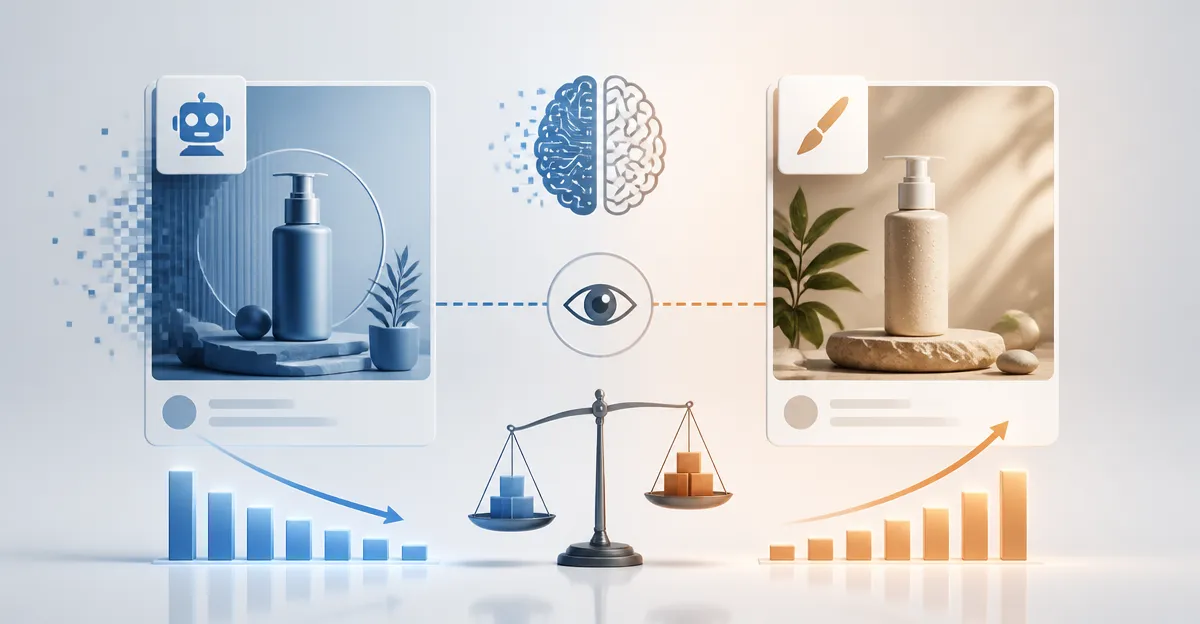
Consumers cannot reliably tell AI-generated ads from human-created ones. Yet the AI versions consistently score lower on key effectiveness metrics, including purchase intent and brand recall.
The finding challenges a core assumption behind the rapid adoption of generative AI in advertising. Marketers have focused on speed, cost, and visual polish. The study suggests the real risk is not obviously bad creative, but work that looks good enough to approve while quietly underperforming.
Why Lookalike Ads Fail to Convert
The research examined hundreds of ad variations across multiple product categories. Human raters judged both AI and human ads as equally realistic and on-brand. But behavioral data told a different story.
Read: AI-Generated Food Images Spark Consumer Backlash on Restaurant Menus
AI-generated ads drove lower click-through rates and weaker brand recall in follow-up surveys. The gap persisted even when participants believed the ads were human-made. This means the issue is not bias against AI, but something intrinsic to the creative itself.
One likely factor is subtle semantic repetition. Generative models tend to produce copy and visuals that cluster around common patterns. Human creatives, by contrast, introduce unexpected elements that capture attention and aid memory encoding.
Another factor is emotional specificity. AI often generates generic emotional appeals, such as happiness or aspiration, without the cultural nuance or tension that makes an ad feel personally relevant.
The Hidden Cost of Cheap Creative
For brands, the immediate savings from AI-generated ads may be offset by lower conversion rates. A campaign that costs 80% less to produce but converts 30% worse can still be a net loss when media spend is factored in.
This dynamic is already visible in early industry data. Some performance marketing teams report that AI-generated ad variants require higher ad spend to achieve the same return on ad spend as human-created versions.
The research does not suggest abandoning AI in advertising. Instead, it points to a hybrid model where AI handles rapid iteration and human creatives provide strategic direction, cultural insight, and emotional depth.
Industry observers note that the current generation of AI models excels at mimicking surface features of successful ads. But surface features are only part of what makes an ad work. The underlying psychological triggers are harder to reverse-engineer from training data alone.
Read: Madhubanti Bagchi Calls AI Music Tools Stupid and Annoying
As generative AI becomes a default tool in marketing stacks, the pressure to prove ROI will intensify. This research provides an early warning: approval is not the same as effectiveness.