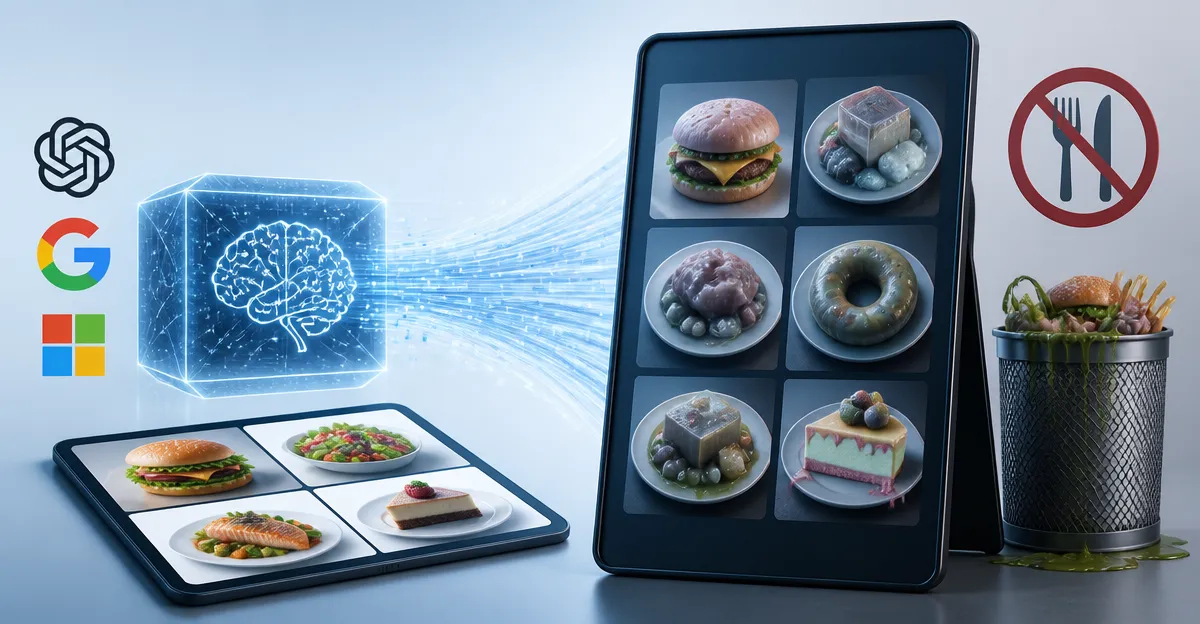
September 6, 2026, (Inside AI) — A Denver nurse's lunch break turned into a viral warning about AI-generated food imagery. Jill Sennett shared menu photos from a Jamaican barbecue pop-up where meats resembled leather belts crawling with beetles. Her post reached thousands, igniting a broader debate about authenticity and trust in restaurant marketing.
The images came from Jamaican Jerk and Barbecue Restaurant, whose manager confirmed using ChatGPT to create menu visuals instead of hiring a graphic designer. He said restaurant operators are trying to be cost-effective amid rising food and labor prices. Sennett still ordered chicken and macaroni and cheese because it was one of her only lunch options.
Consumer backlash is not limited to social media. At Grind & Unwind, a San Francisco cafe, vandals graffitied the storefront after locals identified AI-generated signage. The cafe owner spent an estimated $700 to paint over the graffiti and removed the temporary signs. Online commenters compared the AI bread to reptile skin and a loofah.
A 2026 National Restaurant Association report found 26% of restaurant operators use AI for marketing, inventory, scheduling, menu optimization, and order taking. Yet the technology's visible use in food imagery often triggers swift rejection, especially in tech-savvy regions like the Bay Area.
Why Texture Betrays Synthetic Food Photos
Professional food photographer Jamie Soja said AI typically fails on texture, color, and ingredient arrangement. Lighting also looks unnatural. These flaws make dishes appear uncanny rather than appetizing. Soja noted that even professionals struggle to distinguish AI generation from heavy editing.
Hunter Lewis, editor in chief of Food and Wine, said AI should remain invisible to diners. "The American dining public is smart," he said. "They know what they want, and they know what is real." Lewis sees value in automating back-end operations but calls visible AI food images a real turnoff.
Some restaurants are turning the backlash into marketing. Chugwater Soda Fountain in Wyoming posted a hand-drawn burger image with a pledge to never use AI. The Instagram post received over 200,000 likes. Commenters celebrated the homespun authenticity, though some noted the irony of sharing the message on an AI-powered platform.
Disclosure Changes Appetite, Research Shows
Charles Spence, a University of Oxford professor of experimental psychology, studied consumer reactions to AI food images. His 2024 research found people preferred AI-generated images when unaware of their origin. After disclosure, the same images became less appealing.
Spence also found AI adds fat to food when prompted to make it look appealing, such as butter on mashed potatoes. He worries these images could subconsciously nudge diners and chefs toward larger portions with higher fat content.
DoorDash offers AI photo tools to adjust lighting, color, or background of existing dish images. The company prohibits creating or altering misleading menu images and reviews them for compliance. Some images carry an automatic "AI-enhanced" label when restaurants use its editing tool.
Not all operators see harm. Nila Norero Salvatore, owner of Bella Cafe in San Francisco, uses ChatGPT for menu signs and employee handbooks. She said she has received no complaints and finds the AI images effective. "I think it's a great way of advertising our products, even though sometimes [people] say AI isn't effective or it's not natural," she said.