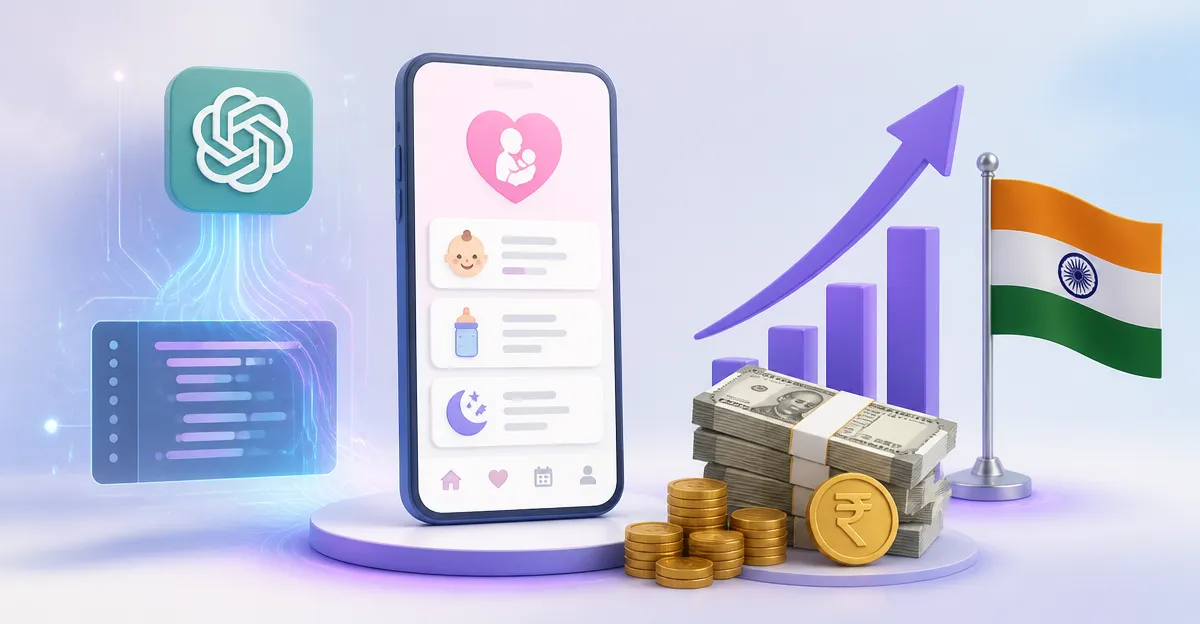
August 31, 2026, (Inside AI) — A 13-year-old girl in China earned 18,000 yuan (about Rs 2.2 lakh) in three days after building an AI-powered parenting app with no formal coding background.
Zhu Shuhan, a Grade 2 student in Shanghai, created Zai Chang, or “On Site,” to help parents supervise children during homework. She began using AI only last year, according to sources.
Shuhan showcased the app at a national AI product marketing competition in Hangzhou from August 21 to 23. She won third prize and 5,000 yuan, after the app received 90 orders and generated 18,000 yuan in sales during the event.
The competition lacked technical judges. Winners were decided solely by income generated from their AI products during the event, sources said.
Read: AI Use Slashes Chinese Students’ Exam Scores by 20% in 30-Month Study
Zai Chang acts as a virtual parent while children complete homework. Parents upload a photo of themselves, and the app creates a virtual version that appears on screen during study time.
The app uses a camera to monitor the child. If it detects phone use or the child leaving their seat, the virtual parent issues a voice reminder. After the session, it generates a “concentration report.”
Shuhan said the idea came from her own experience. Her parents were often too busy to sit with her while she studied.
“My parents were so busy that they did not have time to accompany me while I studied. I often found myself distracted and discreetly using my phone while doing homework,” Zhu Shuhan, student, Shanghai.
Shuhan added that many classmates struggled with similar issues, prompting her to develop what she called a “digital parent clone.”
She built the app by explaining her idea in simple terms to a large language model, which helped generate the code. She also used AI programming tools to fix technical problems during development.
Read: China Bans AI Girlfriends and Virtual Companions
From product design to core features, the entire process took about three to four days, she said.
Design Choices Reveal a Product Mindset
The app initially included a feature called “mother getting angry,” meant to alert parents when a child was repeatedly distracted. Shuhan later removed it.
“I dislike whistle-blowers. I want my app to be gentle and allow room for improvement for children,” Zhu Shuhan, student, Shanghai.
Shuhan said the experience changed her understanding of AI. “As long as you have a good idea, AI can bring it to life,” Zhu Shuhan, student, Shanghai.
This case highlights a shift in who can build software. No-code and AI-assisted development tools have lowered barriers, but they also raise questions about product quality, safety, and privacy, especially for apps aimed at children.
Experts note that while AI can generate code, young developers still need guidance on data protection, ethical design, and user consent. The competition’s focus on revenue over technical merit adds another layer of concern.
Shuhan’s app is not the first child-focused AI tool from China. The market for AI study companions and parental monitoring apps is growing rapidly, driven by academic pressure and busy parents.
Her story also mirrors a broader trend of young creators using AI to solve personal problems. Similar cases have emerged in India, the US, and Europe, where students build apps for chores, mental health, or local community needs.
Whether such apps can scale beyond a competition remains uncertain. But Shuhan’s early success shows that AI is changing who gets to be a builder, not just what gets built.