June 16, 2026, (Inside AI) — Casey Harrell, a man with ALS and paralysis, has become the first “power user” of a speech brain-computer interface. He has logged thousands of hours using electrodes implanted in his brain to speak, surf the web, and work.
Harrell’s device, embedded nearly three years ago, first gave him a voice in 2023. Now, he operates it mostly on his own. His team continues adding features. “Living with a disease like ALS, you are supposed to have diminished dreams. I do not,” Harrell told MIT Technology Review.
A New Voice for the Voiceless
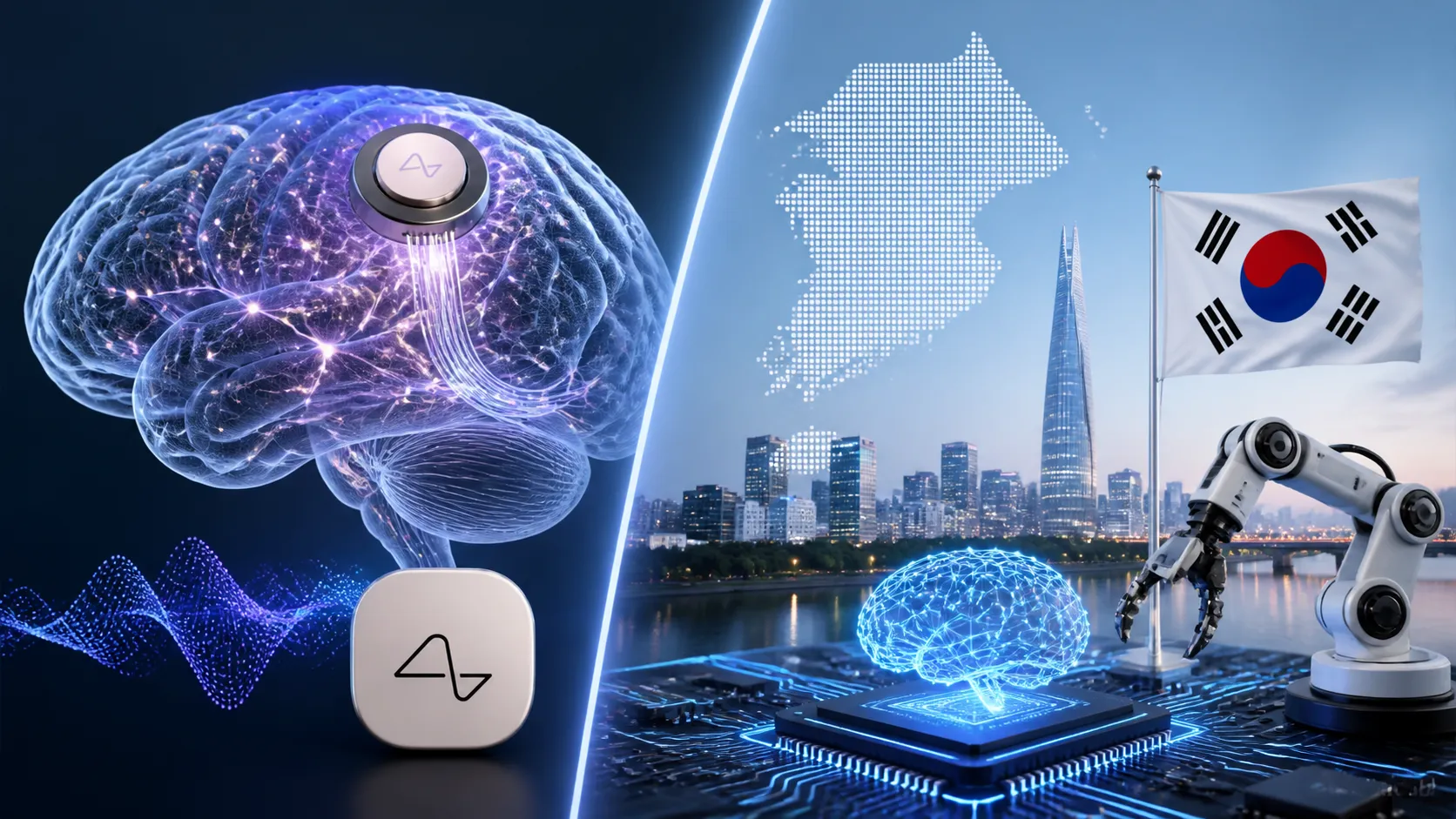
The BCI translates neural signals into speech. Harrell’s brain activity, mapped by electrodes, feeds into algorithms that decode his intended words. The system then vocalizes them. It is a dramatic leap from earlier, slower communication aids.
Researchers call Harrell a pioneer. His daily, independent use proves the technology’s durability. Beyond talking, he browses the internet and performs job tasks. This shift moves BCIs from lab experiments to real-world tools.
The team behind the device plans further upgrades. Better accuracy and faster processing are key goals. For Harrell, the implant is not just a gadget. It restores agency stolen by a degenerative disease.
South Korea’s AI Embrace Defies Global Skepticism
While backlash brews in the US, South Koreans show striking optimism toward AI. Only 16% say they are more concerned than excited, per Pew Research. In contrast, 50% of Americans express worry. This gap reflects deep cultural and economic drives.
South Korea sees AI as a national priority. Leaders tie technological prowess to modernization and global standing. The country’s rapid industrialization built this mindset. Now, AI is the latest frontier in a long push for tech dominance.
Fervor brings anxiety, too. South Koreans fear falling behind in the AI race. The government invests heavily in research and education. Companies rush to integrate AI into products and services. This zeal shapes policy, business, and daily life.
Michelle Kim, reporting for The Algorithm, notes that South Korea’s AI obsession is not new. It echoes past drives to master semiconductors and broadband. The difference now is speed. AI evolves faster than any prior technology.
US Restricts Anthropic Over Espionage Fears
In a separate development, the US restricted Anthropic AI, citing foreign intelligence risks. Commerce chief Lutnick said national security concerns drove the decision. Anthropic then disabled access to its new models for affected users.
The ban highlights rising tensions. Both sides want a resolution but remain far apart. Critics call the move extreme. “There was a speeding ticket, and they gave Fable the death penalty,” said Alex Stamos, former Facebook security chief, to the Washington Post.
Anthropic’s advanced models, including Claude, are caught in geopolitical crossfire. The restrictions may slow AI collaboration. They also raise questions about how governments balance innovation and security.
Ripples Across the AI Landscape
Beyond these stories, AI news accelerates. DeepSeek became China’s most valuable startup after raising $7 billion in a first funding round. The deal values it at over $50 billion. Its unusual structure keeps founder control intact.
Alibaba unveiled AI models for robots, shifting from chatbots to physical systems. This joins a global race to embed AI in the real world. Meanwhile, gaming giant EA launched in-game advertising, letting brands become part of gameplay.
In AI safety, a deepfake expert no longer trusts his own eyes. He struggles to prove what is real before the internet decides. And a technique using magnetic sperm aims to improve IVF, guided remotely toward an egg.
From brain implants to geopolitics, AI’s reach expands daily. Harrell’s story shows its power to restore human connection. South Korea’s fervor reveals national hopes and fears. And US restrictions signal a new era of AI as strategic asset. The future is being written in neural signals, policy memos, and cultural values.