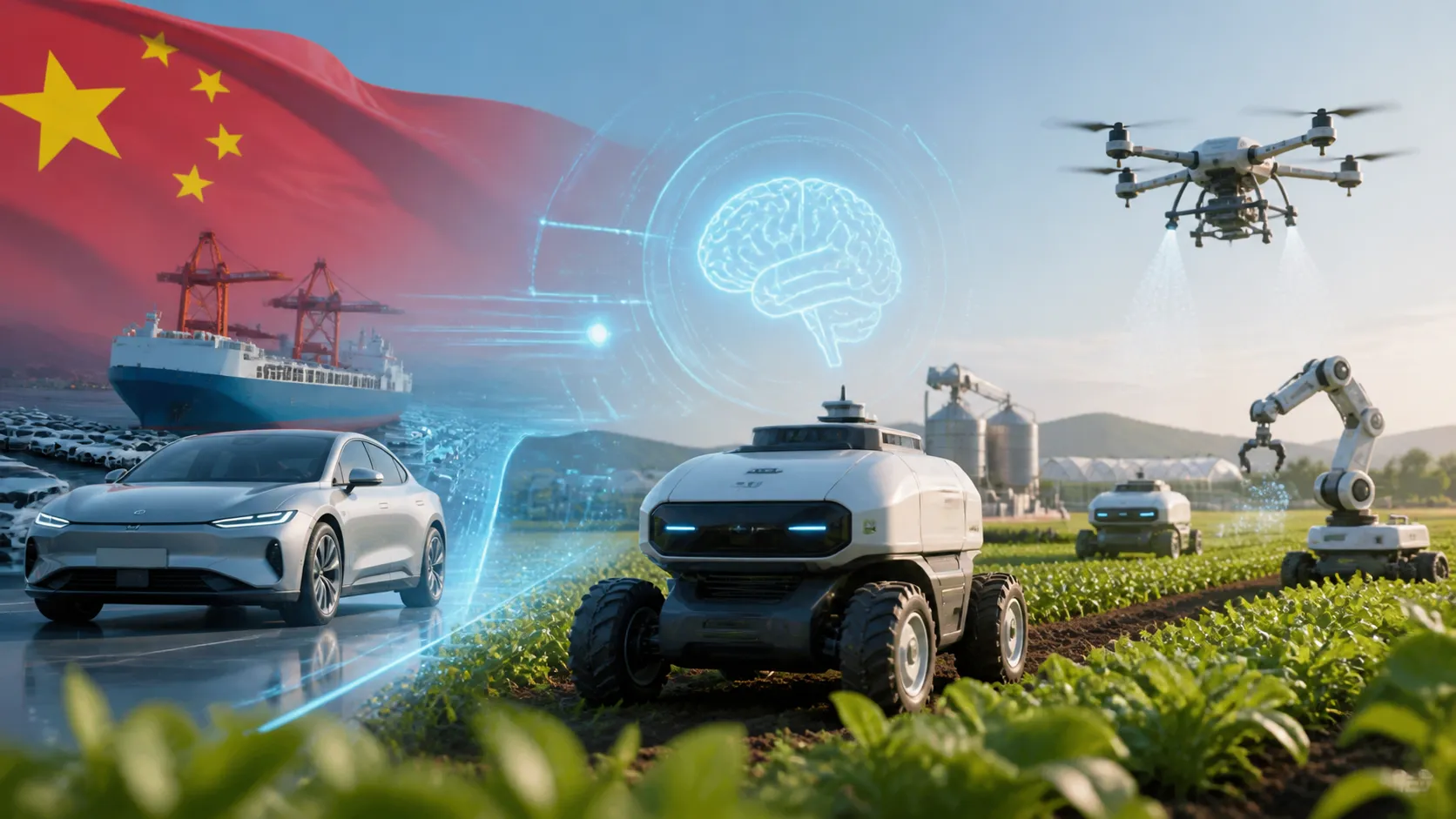
June 21, 2026, (Inside AI) — China is betting its AI-powered agricultural robots can replicate the explosive global success of its electric vehicle industry. Shenzhen-based GrainCore Dynamics believes the country’s unique mix of advanced artificial intelligence and mass production capacity positions it to dominate a field long controlled by traditional machinery makers.
A New Harvest: AI Meets the Field
Chinese agricultural machinery has never ranked among the world’s best. But the shift toward embodied intelligence—robots that perceive, learn, and act in physical environments—could reset the competitive landscape. Zhao Feng, founder of GrainCore Dynamics, argues that China’s AI capabilities and manufacturing scale give it an unprecedented edge.
Zhao draws a direct parallel to China’s leapfrog in electric vehicles. After decades trailing in combustion-engine technology, the country surged ahead by mastering batteries and smart systems. Now, he sees the same pattern emerging in agriculture.
China’s farming sector faces a severe aging crisis. The average farmer is over 55, and labor shortages are acute. Yet Zhao frames this as a catalyst rather than a threat.
Read: China’s AI-Powered Robot Exports Could Trigger a New Global Shock
“Chinese agriculture may appear to have a serious ageing problem, but within this crisis lies opportunity.”
He notes that no other nation combines China’s AI prowess with its capacity to churn out complex robots affordably and at volume.
The GrainCore Gambit: Why Now?
GrainCore Dynamics is among China’s first startups dedicated to embodied intelligence in agriculture. Its robots handle tasks like precision weeding, fruit picking, and soil analysis using computer vision and reinforcement learning. The firm is tapping into a domestic supply chain honed by consumer electronics and EV production.
Global agricultural robotics is projected to reach $35 billion by 2030. Incumbents like John Deere and Kubota have invested heavily in autonomy, but their focus remains on large-scale row crops. China’s fragmented, small-plot farms demand nimbler, cheaper machines—a gap GrainCore aims to fill.
Zhao’s thesis hinges on speed and integration. Chinese manufacturers can iterate hardware faster than Western rivals, while AI models trained on vast datasets from China’s diverse climates could adapt globally. The combination, he insists, is hard to replicate.
Seeds of Doubt: What’s Not Being Said
Skeptics point to hurdles. Farm robots must handle mud, rain, and unpredictable crops—conditions far messier than factory floors. Reliability remains unproven at scale. And geopolitical tensions could block exports of sensitive AI chips or software.
Others note that China’s EV dominance relied on massive state subsidies and a protected home market. Agricultural robotics lacks the same policy firepower. Without export channels and trust in autonomous systems, the EV parallel may crumble.
Read: India Sits Out the US-China Embodied AI Robot Race
Still, GrainCore’s early trials in Xinjiang and Yunnan show promise. The company claims its cotton-harvesting bots cut labor costs by 60% while reducing waste. If those numbers hold, the economic argument strengthens.
Beyond the Headlines: A Broader Automation Push
Beijing has quietly designated agricultural AI as a strategic priority. New five-year plans funnel cash into rural 5G, satellite imaging, and robotics hubs. Local governments offer land and tax breaks to agritech firms. The infrastructure play mirrors the EV playbook.
Internationally, competitors are watching. U.S. startups like Carbon Robotics and Israel’s Tevel are advancing, but none match China’s vertical integration. If GrainCore succeeds, it could spark a wave of copycats and consolidation.
For now, the fields remain mostly human-tended. But the seeds of disruption are planted. Whether China harvests a robotics revolution or stumbles on the terrain will depend on execution, not just ambition.