June 23, 2026, (Inside AI) — Elon Musk is betting that humanoid robots will become the most consequential product in history, driving what he calls “amazing abundance” — a world of universal high income where goods are cheap and plentiful. The concept, known as embodied intelligence or physical AI, moves beyond digital chatbots into machines that sense, decide, and act in physical spaces. Musk plans to begin pilot production of the Optimus 3 humanoid robot soon, aiming for a 10-million-unit-per-year production line at a Texas Gigafactory.
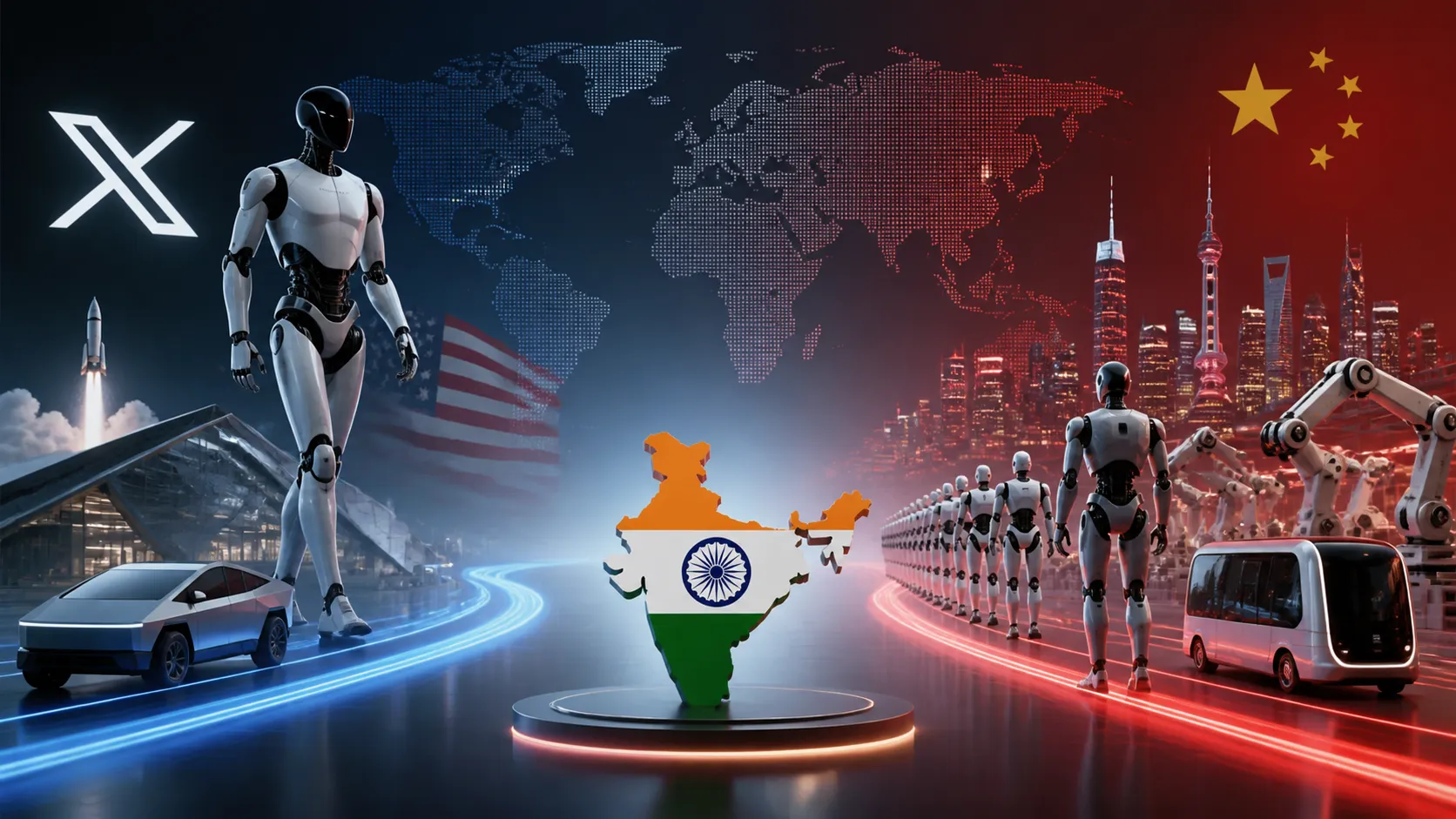
This is not science fiction. Industrial robots have worked in factories for decades. The new goal is to make them adaptable enough, powered by AI, to operate in human-designed environments. That ambition has ignited a strategic contest between the United States and China, with profound implications for global manufacturing and labor.
America leads in frontier AI, advanced chip design, and the software that will serve as a robot’s brain. China has built an unmatched industrial ecosystem to mass-produce the body. According to the International Federation of Robotics, China accounted for 54% of all industrial robot installations worldwide in 2024 — some 295,000 units, the highest annual total ever recorded by any single country. Its operational stock crossed two million, the largest in the world. China is becoming for robotics what it is for solar panels, batteries, and rare-earth processing: the dominant manufacturing platform.
In the humanoid segment, China produces roughly 85% of all units globally. Firms like Unitree and AgiBot have begun mass production, reports The New York Times. Neither side is content with the status quo. Beijing pours resources into closing the AI gap; Washington rediscovers industrial policy to rebuild advanced manufacturing.
India remains a spectator. The country installed 9,100 industrial robots in 2024, a 7% rise, placing it sixth globally — behind China, Japan, the US, South Korea, and Germany. Its robot density of about 10 per 10,000 manufacturing workers trails the global average of 132 and is a fraction of South Korea’s 1,200. For three decades, India’s comparative advantage has been cheap labor. Embodied intelligence threatens to turn that asset into a constraint if manufacturing competitiveness hinges on robotics rather than wages.
Self-reliance rhetoric cannot replace strategy. Unlike China, India must blend international collaboration with patient building of domestic research, design, and manufacturing. There are bright spots: SSI Mantra, India’s first indigenous surgical robotic system, has performed telesurgeries across thousands of kilometers. Firms like GreyOrange push ahead. But scaling to industrial levels remains the challenge.
Read: Nvidia Ramps Up Robotics Talent Hunt in China with Over a Dozen Roles
The government’s Draft National Robotics Strategy has lingered since 2023. A state-led mission may come too late. India’s place in the robot race will be decided by the appetite of Indian capital to invest, innovate, and take risks at the scale this moment demands.