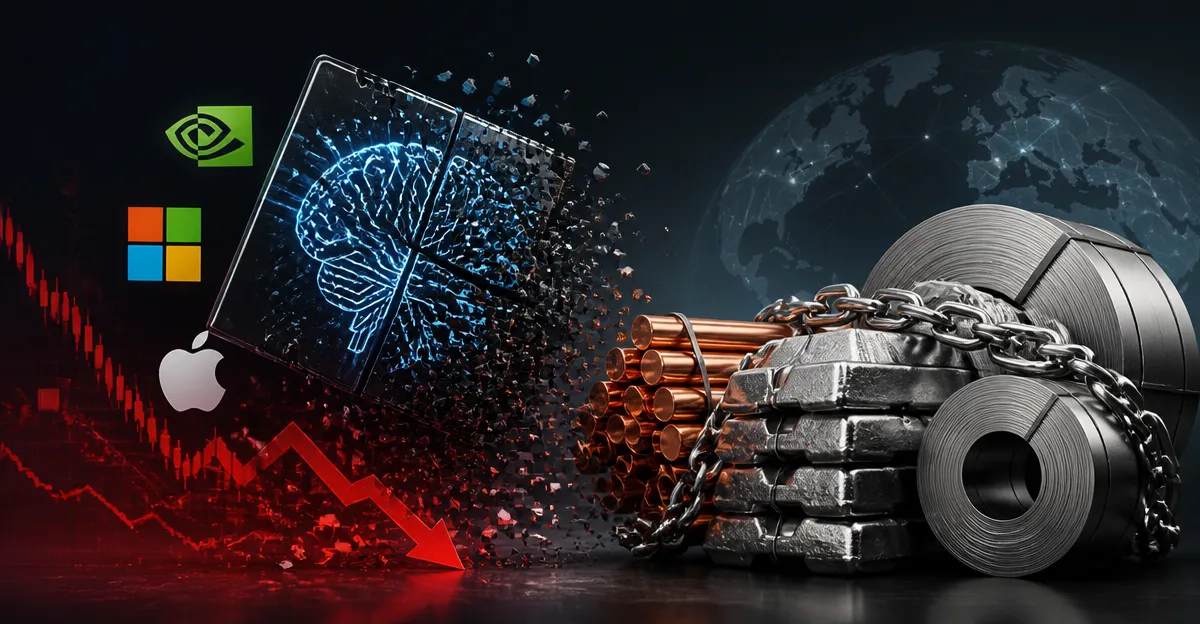
November 25, 2026, (Inside AI) — The AI metals trade has collapsed, but the physical supply chains it was supposed to feed are more strained than ever.
Copper, tin, and silver, which soared earlier this year on expectations of massive data-center demand, are now in freefall. The London Metal Exchange's base metals index has dropped 15% in November and sits below its year-start level. The selloff accelerated as investors fled the broader AI stock rout, dollar strength, and China's slowing economy.
Yet beneath the falling prices, a severe physical squeeze is unfolding. Exchange inventories are critically low, and time-spreads on both the LME and Shanghai Futures Exchange are flashing warning signs. The disconnect between speculative selling and physical scarcity has rarely been this extreme.
The AI narrative that drove metals higher was always more hope than reality. Data centers do consume copper and tin, but not at the pace speculators priced in. Now, momentum funds are exiting, and their selling is self-reinforcing. The LME index's slide has little to do with actual supply and demand. It is a financial market retreat, not a physical one.
Read: Johnson Matthey Says AI Data Center Filter Demand Outstrips Supply
Consider aluminium. The LME cash premium over three-month metal ballooned to $405 per ton on Monday, the widest since 1990, even as the outright price hit a 13-month low. The cost of rolling a short position overnight reached $32 per ton. The exchange has amended its lending guidance to ease the pain for shorts.
The root cause is depleted inventory. LME stocks have been drained to fill supply gaps left by lost production in the Gulf amid the US-Iran war. Available exchange stocks stand at just 205,300 tons, and most of that is hard-to-market Russian metal. The LME is speeding up the listing of new brands, including an application from an Indonesian producer, to boost liquidity.
Copper tells a similar story. On the Shanghai Futures Exchange, the November contract expiry proved brutal for shorts. Warranted stocks of only 2,270 tons were insufficient to cover positions, and the premium over the December contract exceeded 10,000 yuan ($1,500) per ton at one stage. The core problem is the threat of US tariffs, which has pulled most available metal into the US, leaving the rest of the world fighting over scraps. The Yangshan copper premium, a gauge of China's import appetite, has shot to a record $500 per ton. Metal is on its way to Shanghai, but the question is whether enough arrives before the December contract expires.
Tin, the solder of circuit boards, has traded like an AI stock since March. Three-month metal has slumped from over $51,000 to $37,900 per ton in three weeks. Yet combined London and Shanghai inventories stand at just over 8,400 tons, down from a February peak of 22,600 tons. LME cash tin has traded at a premium to three-month delivery since mid-October, with the backwardation reaching $1,000 per ton.
Zinc, which never featured in the AI narrative, has been swept up in the selloff. The LME zinc contract has been in backwardation since June, with the cash premium spiking to $177.50 per ton last week. The premium reflects a polarized market: surplus in China, persistent shortage elsewhere.
The scale of the disconnect reflects how much speculative money has seeped into metals. First came the buying frenzy at the start of the year, then the AI investment meme. Now the exit is equally violent. The good news is that the world has woken up to the importance of metals for decarbonization and next-generation technology. The bad news is that this year's roller coaster is probably a taste of things to come.
Read: Singapore Telco Merger Highlights AI Infrastructure Push Amid Uncertainty
The technology bulls may be leaving the party, but they will almost certainly be back.

If a research paper dropped this week, Mahesh has already read it. He covers AI tools and vibe coding for builders who need to know what is worth their time and what is not.