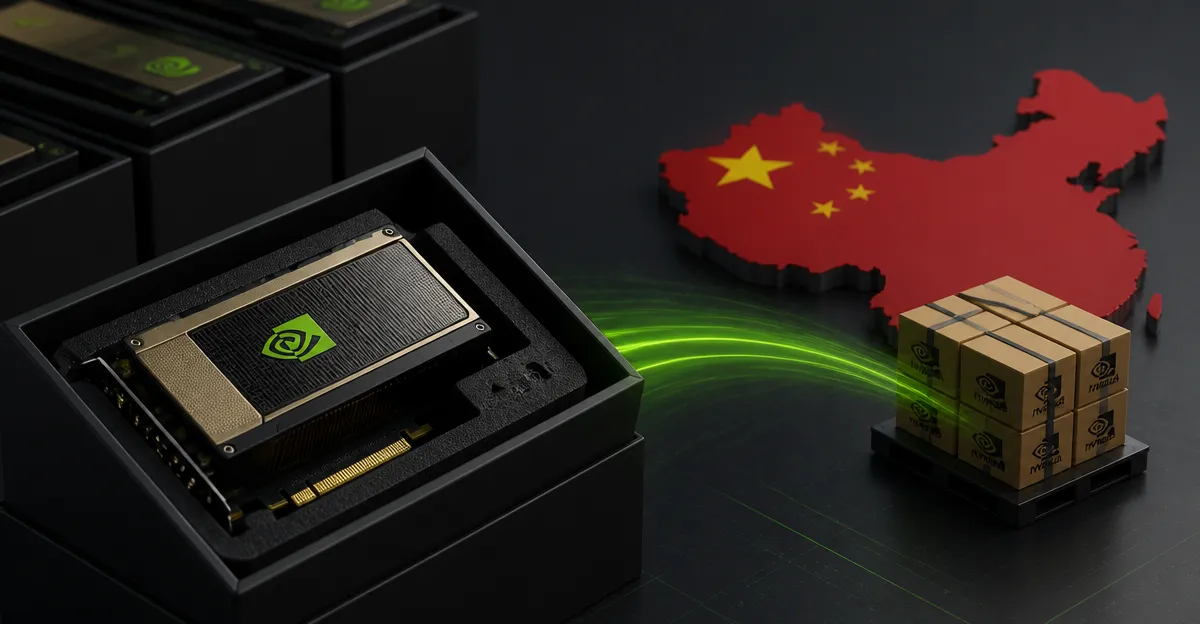
August 19, 2026, (Inside AI) — Nvidia’s H200 processors have reached mainland China in limited quantities, marking a rare exception to U.S. export controls. ByteDance and Tencent each received about 10,000 units in recent weeks, according to the Financial Times.
The shipments are small relative to demand. U.S. regulators have cleared both companies to buy up to 100,000 H200 chips each. Yet Beijing is pressing them to keep the hardware outside mainland China to support domestic chipmakers, the FT reported, citing two people with knowledge of the matter.
Chinese regulators have told companies they can ship the processors to Hong Kong, which operates outside mainland China’s customs border, and use them there. That arrangement lets firms access advanced compute without directly undermining local semiconductor efforts.
Last month, a top U.S. official told Congress that a small number of Nvidia H200 chips had been shipped to China. Reuters could not immediately verify the FT report. Nvidia did not immediately respond to a request for comment.
Why Washington Loosened the H200 Spigot
The H200 is a successor to the H100, which was banned from export to China in 2022. It offers faster memory bandwidth and better inference performance. That makes it valuable for large language model training and deployment.
The U.S. has tightened controls repeatedly. In October 2023, rules targeted chips above certain performance thresholds. In December 2024, Washington added more restrictions on advanced memory. The H200 falls into a gray zone because its compute power is below some thresholds but its memory bandwidth is high.
Allowing small H200 shipments may reflect a shift in enforcement strategy. U.S. officials have struggled to stop gray-market flows through third countries. Licensing limited volumes to major Chinese firms could give Washington more visibility and control over where the chips end up.
Beijing’s push to keep chips in Hong Kong is also notable. Hong Kong has separate customs and trade rules. That lets Chinese firms use U.S. silicon for global operations while domestic foundries like SMIC focus on mainland demand. It is a pragmatic split, not a policy reversal.
The Real Constraint Is Not Silicon, It Is Sovereignty
China’s domestic chip industry still lags Nvidia by several generations. SMIC’s most advanced node is around 7 nanometers, while Nvidia’s H200 uses TSMC’s 4-nanometer process. Closing that gap requires years and billions in subsidies.
Beijing has responded with export bans on rare earth minerals and procurement rules favoring local AI chips. Companies like Huawei have pushed Ascend processors as alternatives. Yet performance and software compatibility remain hurdles.
The 10,000 H200 units per company are a drop in the bucket. ByteDance and Tencent each operate massive AI training clusters. Industry analysts estimate China’s total demand for advanced AI accelerators exceeds 1 million units per year.
Other Chinese technology firms could soon secure similar shipments, the FT reported. That suggests a controlled, case-by-case licensing approach rather than a broad reopening. Nvidia’s China revenue has fallen sharply since the 2022 export ban, but the company continues to sell lower-spec chips like the H20.
The H200 shipments may also be a signal ahead of potential trade talks. Both sides have used chip policy as leverage. Small, quiet approvals can build goodwill without triggering political backlash at home.
For now, the chips are flowing in small batches. The bigger question is whether Beijing will allow them to stay on the mainland or keep pushing compute capacity to Hong Kong. That decision will shape China’s AI infrastructure for the next two years.