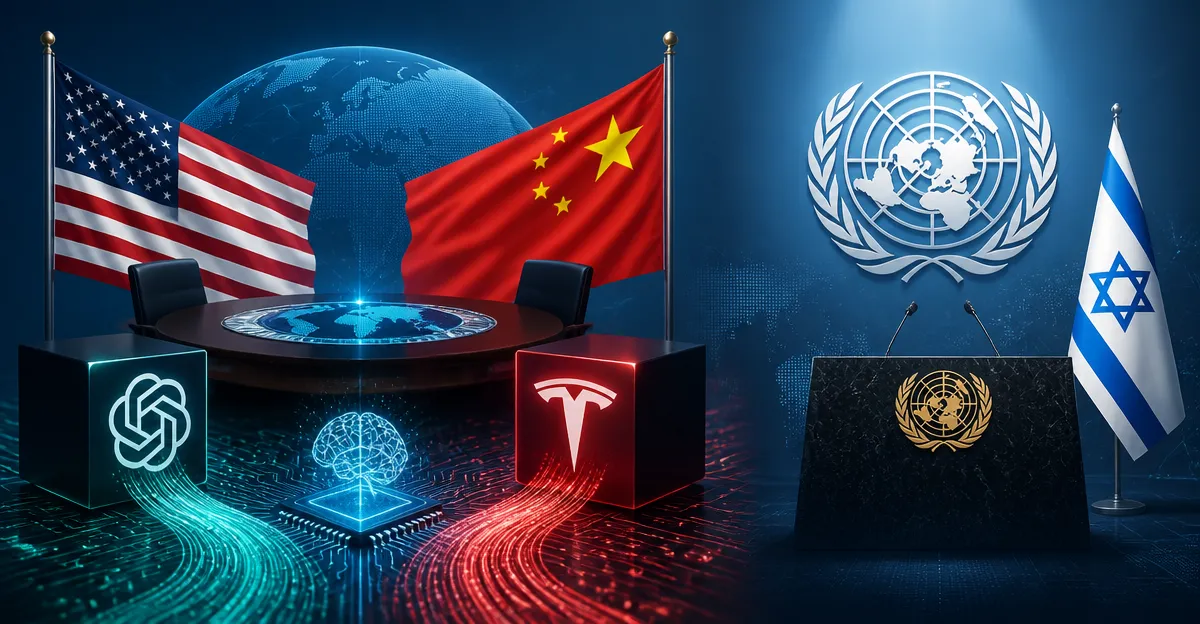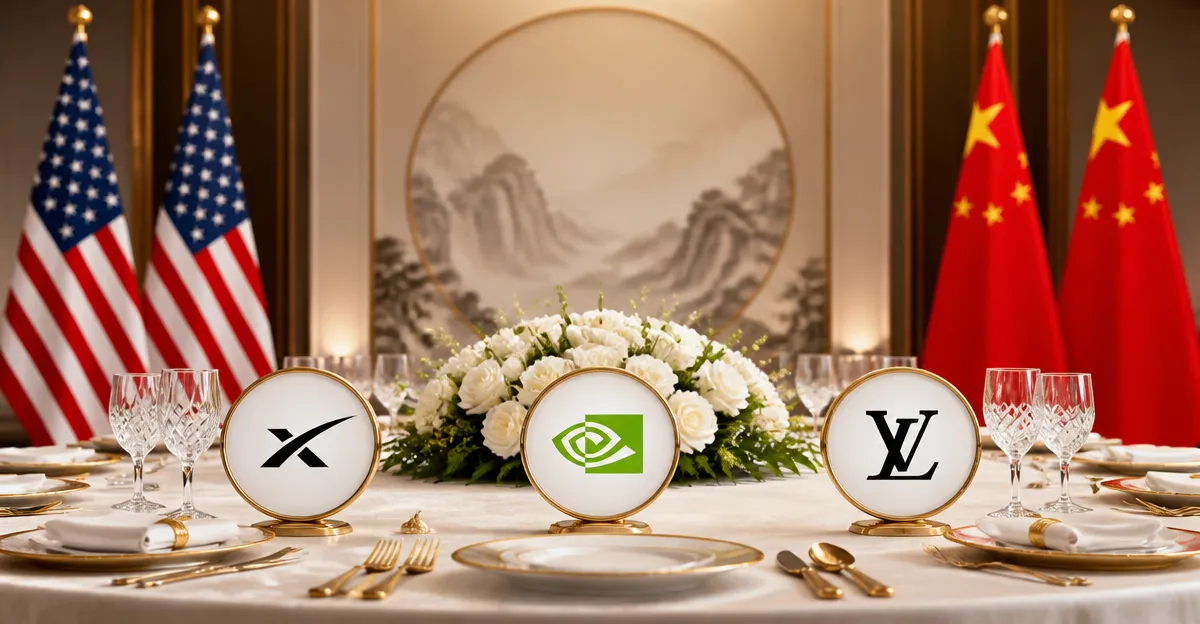
September 25, 2026, (Inside AI) — The White House state dinner for Chinese President Xi Jinping on Thursday drew a guest list that placed the leaders of America's most valuable technology and semiconductor companies alongside the president and first lady Melania Trump. According to the White House press office, Nvidia CEO Jensen Huang and his wife Lori Huang attended, as did Apple board chairman Tim Cook, SpaceX founder Elon Musk, and LVMH chairman Bernard Arnault.
The dinner, held in Washington, D.C., was the ceremonial centerpiece of a meeting that touched on trade, artificial intelligence, and Taiwan. The presence of Huang and Cook signaled that AI hardware and consumer technology remain central to the U.S.-China relationship, even as both governments continue to restrict advanced chip exports.
Nvidia's attendance carried particular weight. The company dominates the market for AI accelerators, and its most advanced chips fall under U.S. export controls aimed at limiting China's access to cutting-edge computing. Huang has publicly argued that broad restrictions can backfire by pushing Chinese firms to build their own alternatives.
Apple's Cook, who serves as chairman of the company's board, has spent years balancing a supply chain deeply tied to China with pressure from Washington to diversify. His presence at the dinner underscored how much of Apple's manufacturing base remains in the country.
Read: Huawei to Launch AI Chips in 2027, Challenging Nvidia's $5.5 Trillion Dominance
Musk's inclusion added a different dimension. SpaceX operates satellite networks and launch systems with national security implications, and Tesla maintains a major production facility in Shanghai. His dual role as a government contractor and a manufacturer inside China makes him a rare bridge between the two economies.
Arnault's attendance represented the luxury sector, which depends heavily on Chinese consumers. LVMH has expanded aggressively in China, and any shift in trade policy or consumer sentiment directly affects its revenue.
The guest list also included Chinese officials and other guests, though the White House did not release a full breakdown by name. The dinner followed a bilateral meeting where Trump and Xi discussed trade, AI, and Taiwan, according to a video caption from the event.
No readout of the dinner conversation was provided. The White House press office released the guest list without comment on what was discussed at the table.
The timing matters. The U.S. has tightened rules on AI chip exports to China over the past two years, and Nvidia has designed downgraded products to comply while preserving access to the Chinese market. Those workarounds have drawn scrutiny from lawmakers who argue they undermine national security.
Huang has met with Chinese officials in the past, and his company's fortunes depend on maintaining sales in both countries. His seat at the dinner suggests the administration wants industry input as it calibrates policy.
Cook has also been a frequent visitor to Washington, lobbying on trade and privacy issues. Apple's China exposure makes it vulnerable to tariffs and retaliatory measures.
Read: Huawei Sets Commercial Launch Dates for Ascend 950 AI Cluster Cloud Service
Musk's companies have faced their own regulatory hurdles in China, but Tesla's Shanghai plant remains one of its most productive. SpaceX, meanwhile, has benefited from U.S. government contracts that could be affected by any thaw or escalation in relations.
The dinner did not produce any announced agreements. The guest list itself functioned as a statement about which industries the two governments consider strategic.
AI hardware, consumer electronics, space, and luxury goods all sat at the same table. Each sector faces distinct pressures from the bilateral relationship, and each executive has a stake in how the next round of trade talks unfolds.
The White House did not say whether the CEOs spoke directly with Xi or Trump. Reporters were not granted access to the dinner itself.
What remains unclear is whether the gathering will translate into policy movement on chip controls or tariffs. The guest list offers a snapshot of influence, not a roadmap.
For Nvidia, the stakes are immediate. Any further restrictions could cut off a significant revenue stream. For Apple, the calculus involves manufacturing costs and market access. For SpaceX and Tesla, the overlap between commercial and national security interests grows more complicated by the year.
The dinner ended without a joint statement. The next signal will come from follow-up meetings between trade officials, which have not yet been scheduled publicly.