August 10, 2026, (Inside AI) —
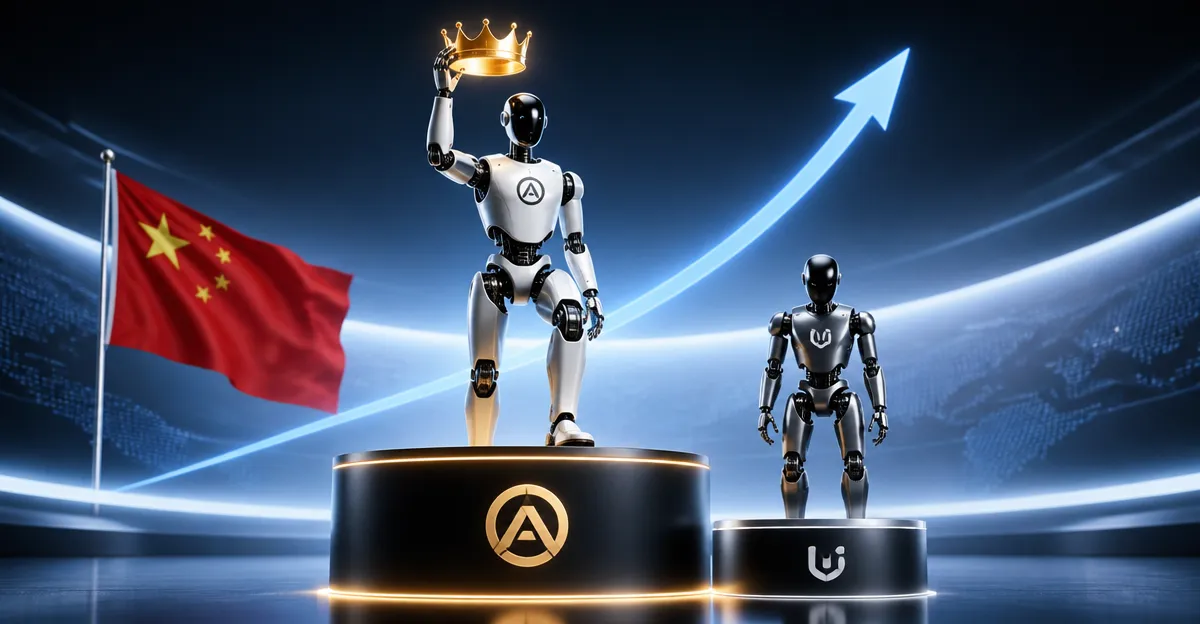
Shanghai’s AgiBot has seized the crown as the world’s largest humanoid robot vendor, shipping roughly 8,400 units in the first half of 2026 and capturing 44% of the global market, according to a new report from Smart Analytics Global (SAG). The surge dethrones domestic rival Unitree Robotics, marking a pivotal realignment in the physical AI industry just as both companies prepare for initial public offerings.
The 562% year-on-year shipment increase was fueled by a broad product range spanning full-size bipedal A-series models, compact X-series units, and wheeled G-series robots. AgiBot’s ascent signals not just a corporate victory but a maturation of the humanoid robotics market, where scale and portfolio diversity are becoming decisive competitive moats.
Unitree, once the undisputed leader, now faces a challenger that has translated technological ambition into commercial momentum. The SAG data underscores how rapidly the landscape can shift when manufacturing capacity aligns with product-market fit. AgiBot’s ability to serve varied use cases—from industrial logistics to consumer assistance—has allowed it to outpace a rival that helped define the category.
The timing is critical. Both AgiBot and Unitree are racing toward public markets, seeking to capitalize on investor appetite for embodied AI. AgiBot’s IPO is expected to value the company at over $5 billion, according to people familiar with the matter, while Unitree’s listing could reach $3 billion. The divergent shipment figures may influence those valuations and the narrative each company presents to institutional investors.
Yet shipment volume alone does not tell the full story. Unitree’s robots have historically commanded higher average selling prices and stronger brand recognition in research and education. AgiBot’s growth has been partly driven by aggressive pricing and a focus on enterprise deployments in manufacturing and warehousing. The question for public markets is whether AgiBot’s volume lead translates into sustainable margins or merely reflects a land-grab strategy.
Industry analysts note that the humanoid robot market is still nascent, with total global shipments estimated at fewer than 20,000 units in the first half of the year. The addressable market, however, is projected to reach $38 billion by 2035, according to Goldman Sachs. Both AgiBot and Unitree will need to navigate supply chain constraints, safety regulations, and the challenge of moving from pilots to scaled deployments.
The rivalry also reflects broader geopolitical dynamics. China’s government has designated humanoid robotics as a strategic industry, offering subsidies and policy support that have accelerated domestic players. AgiBot’s rise may intensify scrutiny from Western regulators already wary of Chinese dominance in drones and electric vehicles.
Meanwhile, Unitree is not standing still. The company recently unveiled its H1 model, capable of running at 3.3 meters per second and performing backflips, aiming to reclaim the technological high ground. AgiBot, for its part, is investing heavily in AI-driven dexterity and multi-modal sensing, areas that could define the next phase of competition.
As both companies prepare their prospectuses, investors will weigh not just shipment numbers but unit economics, software ecosystems, and the path to profitability. The humanoid robot race is entering a new chapter—one where the winners will be determined not by viral videos but by factory floors and balance sheets.