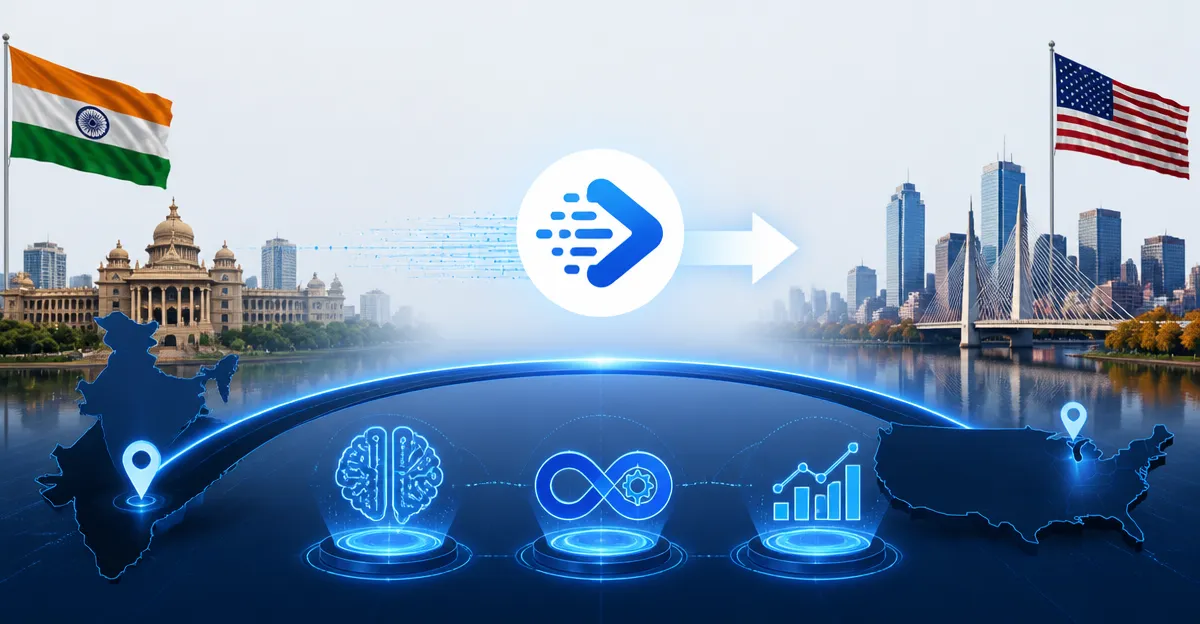
October 30, 2026, (Inside AI) — A small online training institute founded in India is betting that the same cloud and AI skills employers demand in Boston, Berlin, and Singapore can be taught live to working professionals in Lucknow, Kochi, and Coimbatore. ShiftToTech Academy, operated by ShiftToTech Private Limited with offices in Bengaluru and New Delhi, has put just over 500 learners through its batches. More than 100 of them have landed jobs paying between ₹6 lakh and ₹18 lakh per annum, according to figures the company provided.
The academy offers only three programmes: Artificial Intelligence, DevOps and Cloud, and Data Engineering. Each runs between 10 and 16 weeks, costs from ₹35,000, and ends with a project the learner keeps. Classes are live, mostly on weekends, and there is no recorded version to buy. Instructors are working professionals who hold day jobs building and running AI, cloud, and data systems, usually at large technology companies.
The pitch lands at a moment of visible anxiety in the Indian labour market. LinkedIn's Jobs on the Rise report for India found that 72% of professionals plan to look for a new job this year, and 84% said they feel unprepared for the search. The same report identified AI engineer as the second-fastest-growing role in the country. That gap between intent and readiness is the market ShiftToTech is selling into.
Harshit Wadhwa is one of the named cases. Two years into an information security role at Samsung Display in Noida, he enrolled in a weekend DevOps course and now works as a DevOps engineer at Birlasoft. His tools, Kubernetes, Terraform, and AWS, appear in job advertisements from Bengaluru to Boston. The academy's business rests on that observation: the skills travel even when the learner does not.
Read: Frugal AI Hub's Serish Gandikota: Why Silicon Valley's AI Playbook Is Failing the World
"We're not trying to be the biggest institute in the country," says a ShiftToTech Academy spokesperson. "We want to be the one a working person can actually finish."
That line is a deliberate contrast with the volume-driven model of most Indian edtech. Small live batches, no recorded fallback, and instructors who keep their industry jobs are expensive choices. They also cap growth. The company says it plans to add new time zones one cohort at a time rather than scale quickly, a strategy that will test whether quality-first positioning can survive investor expectations in a sector that has repeatedly rewarded scale over completion.
The curriculum is standard for the category. The AI track starts with Python and moves through LLMs, RAG, LangChain, and MLOps, with shorter Generative AI and Agentic AI options. DevOps covers Docker, Kubernetes, Terraform, Ansible, Jenkins, GitHub Actions, ArgoCD, Prometheus, and Grafana across AWS and Azure. Data Engineering covers Spark, Kafka, Airflow, Snowflake, Microsoft Fabric, and BigQuery. All three tracks lean heavily on real AWS accounts rather than simulators, a detail that matters because interviewers tend to probe deployed work rather than certificates.
The academy repeats a line that is unusual for a training company: the certificate is the least valuable thing a learner takes away. It offers a free intro session and a 7-day full refund on every course. International learners in the US and UK join evening cohorts in Eastern, Pacific, and GMT slots, while learners in the Gulf, Southeast Asia, Europe, and Australia typically join India batches. There is no campus abroad, and the company does not claim one.
Job outcomes are presented as named individuals rather than aggregate statistics. Deepak moved from customer support with no IT background to a DevOps role in Whitefield at ₹10.5 lakh. Himani was a PHP developer stuck at ₹8 lakh for four years before leaving with a ₹13 lakh offer at Manyata Tech Park. Alumni have joined TCS, Infosys, Wipro, Accenture, Cognizant, HCL Tech, Deloitte, Capgemini, and IBM. The academy explicitly avoids the word guarantee and says placement support includes resume rewriting, LinkedIn cleanup, mock interviews, and referrals to more than 100 hiring partners.
Read: A reality check on AI boom: Eight risks to look out for
The road ahead is deliberately unglamorous: keep batches small, keep instructors in their day jobs, and add time zones slowly. For professionals weighing a switch, the free intro session and refund window lower the cost of finding out whether the model fits. For the institute, the harder test is whether a few hundred completions can scale into a credible global alternative without diluting the live, working-instructor format that differentiates it.