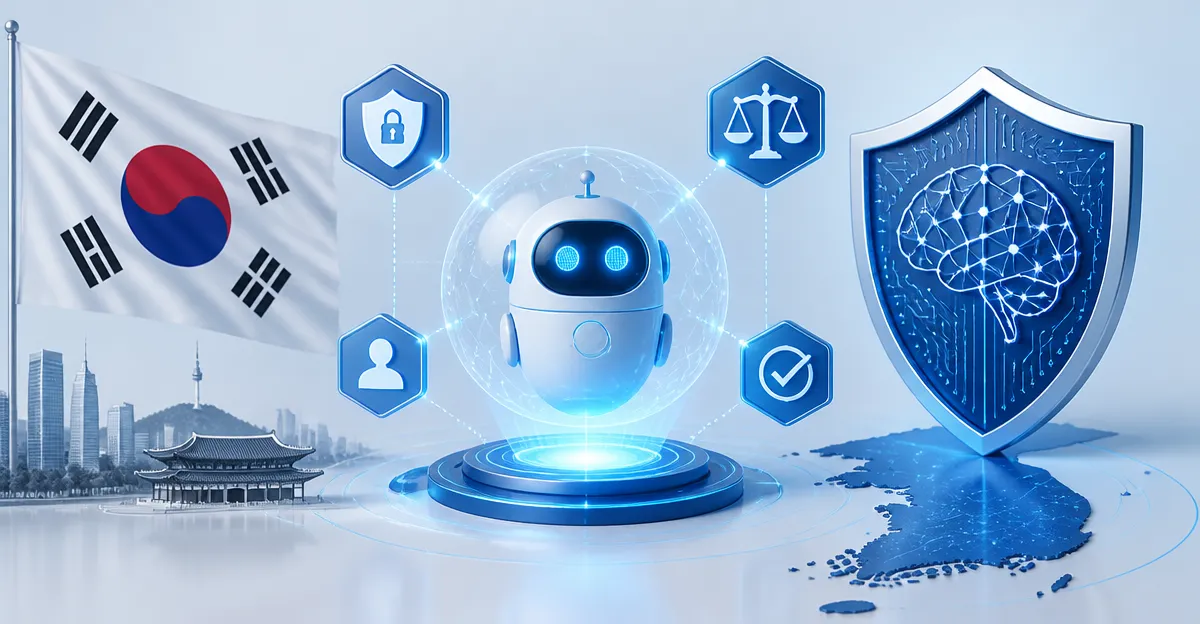
September 15, 2026, (Inside AI) — South Korea's state-run internet security agency confirmed on Tuesday it is drafting a fresh set of guidelines to govern autonomous AI agents, systems that can plan, execute, and chain tasks with little or no human input. The Korea Internet & Security Agency (KISA) is leading the effort, according to sources familiar with the matter, as enterprises across the country accelerate deployment of agentic tools in customer service, finance, and internal operations.
The move places South Korea among the first governments to formally address a gap in existing AI rules: most current frameworks, including the EU AI Act and the U.S. NIST AI Risk Management Framework, were written for models that respond to prompts, not for agents that act on their own.
KISA has not published a draft or timeline. An official who spoke on condition of anonymity said the guidelines aim to define minimum safety expectations for developers and operators. The focus includes audit trails, human override mechanisms, and limits on how much autonomy an agent can hold before triggering mandatory reporting.
Why Agent Autonomy Outpaces Existing Rules
The distinction matters. A large language model that drafts an email is a tool. An AI agent that reads a database, decides which customers to contact, sends the messages, and adjusts its strategy based on replies is closer to an employee. That shift introduces failure modes regulators have not yet codified: cascading errors, unauthorized transactions, and accountability gaps when no human approved a specific action.
South Korea's Financial Services Commission flagged similar concerns in 2025 after domestic banks began piloting AI agents for loan pre-screening. At the time, regulators asked institutions to maintain human sign-off on final decisions. The new KISA guidelines would extend that logic beyond finance into all sectors.
The agency's timing reflects a broader pattern. In July 2026, the U.K.'s AI Safety Institute published a framework for evaluating agentic systems, and Singapore's Infocomm Media Development Authority launched a sandbox for autonomous AI in public services. South Korea's approach appears more prescriptive, with an emphasis on operational controls rather than voluntary principles.
Industry reaction has been mixed. Korean AI startups worry that strict rules could slow deployment against global competitors. Larger firms, including Naver and Kakao, have publicly supported clearer standards, partly because ambiguity complicates their own compliance planning.
"The real question is not whether agents should be allowed to act, but where the line sits between automation and accountability," said a Seoul-based AI policy researcher who requested anonymity to discuss internal deliberations. "KISA is trying to draw that line before a major incident forces a rushed response."
That concern is not hypothetical. In March 2026, a European retail company disclosed that an autonomous pricing agent had undercut competitors so aggressively that it triggered a regulatory inquiry into predatory pricing. No law explicitly covered the agent's behavior. South Korea's guidelines would aim to prevent similar gaps by requiring developers to document an agent's decision boundaries before deployment.
KISA has not said whether the guidelines will be voluntary or backed by enforcement. A public consultation is expected later this year, according to sources. The agency is also coordinating with the Personal Information Protection Commission, since autonomous agents often process personal data across multiple systems.
For now, the practical effect is limited. No compliance deadline exists. But the signal is clear: South Korea wants a domestic framework in place before agentic AI becomes standard infrastructure. Other governments are watching closely. If KISA's model proves workable, it could become a reference point for smaller economies that lack the resources to build their own rules from scratch.