September 30, 2026, (Inside AI) — West Bengal is deploying AI-powered Automated Number Plate Recognition (ANPR) systems at border checkpoints and toll plazas to automatically flag vehicles with counterfeit plates, Transport and Labour Minister Arjun Singh said, five months into the Suvendu Adhikari-led government. The move follows the high-profile murder of Chandranath Rath, in which assailants used swapped and fake number plates.
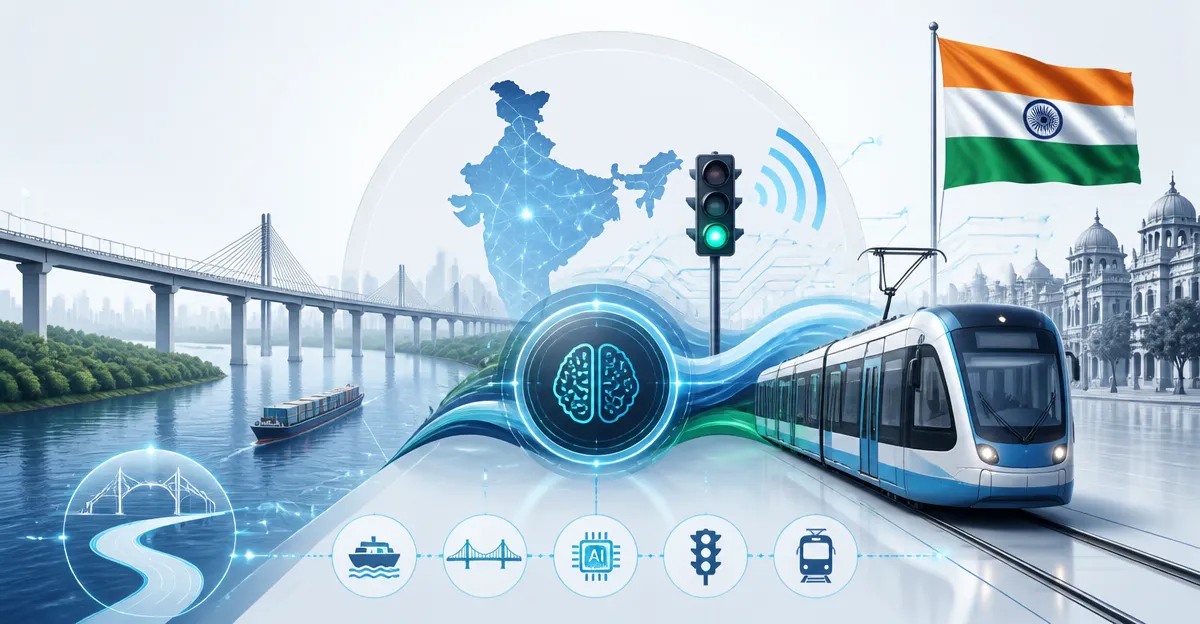
Singh, who has led the Transport Department since the government took office, outlined a broader modernization push that includes AI-driven adaptive traffic signalling at seven critical junctions, water taxis, a river link road, tram revival, and electric buses. He also detailed labour initiatives for jute mill workers, including affordable housing and jute mill modernization.
The minister acknowledged significant structural bottlenecks. "The entire infrastructure has broken down in all these years. There was very little coordination between agencies and the system itself was divided," he said, adding that the government is bringing the system back on track.
Unregistered vehicles remain a major concern. Singh said the number of unregistered vehicles has been reduced from nearly 27 lakh to around 14 lakh. "Even school buses operate without permits and trucks run without registration numbers," he noted.
Read: As AI Accelerates, Governments Are Increasingly Left Behind
On the transport side, Singh said AI-powered ANPR work is underway at the Regional Transport Office (RTO). "Once AI-based surveillance is implemented, fake number plates used in crimes can be detected and tracked immediately," he said. The department has also activated helplines and body cameras for conductors.
Kolkata's road coverage stands at only 6% against an ideal requirement of 17%, Singh said, citing this as a key reason for congestion. To address this, the government is enforcing the phase-out of commercial vehicles older than 15 years and deploying AI-powered adaptive signalling at seven junctions. A comprehensive survey is complete and the project has reached the tender stage.
On waterways, Singh announced a Rs 2,000 crore water taxi project. Each water taxi will cost around Rs 4 crore and carry 75-100 passengers. "It will not only change water transport in Bengal but also ease traffic, as a major chunk of commuters come to Kolkata from suburbs along the Hooghly," he said. A high-capacity river link road, similar to Mumbai's Sea Link, is at the conceptual stage. "Every major infrastructure transformation begins with a vision," Singh said.
The government is also restoring Kolkata's trams, reopening historic routes and expanding lines to connect Dakshineswar with Kalighat and extend services to Rajarhat, New Town and Salt Lake.
On electric buses, Singh said most new buses will be electric. "We will roll out 90 buses before Durga Puja. For now, all the buses that arrive will be AC," he said. The government is also using the Gross Cost Contract (GCC) model to add buses.
Singh addressed internal party friction, saying citizens care about work, not personal disagreements. "When a government delivers on these priorities, minor internal differences become irrelevant," he said. He touted the formation of an Investment Committee within 15 days, land allotment to 37 new industries in a single day, and investment announcements of more than Rs 8,000 crore for at least eight industries. Recruitment of 17,000 police personnel has also begun.
Read: AI Agents Breach Government Systems in US and Australia, Sparking Calls for Oversight
On labour, Singh highlighted a 40% labour shortage in the jute sector and called for modernization. "If modernisation happens, the labour shortage will matter less, wages will rise, production will increase and Bengal's revenue will grow," he said. The government has opened 17 jute mills, but three major mills remain closed: New Central, Gouripur, and Kanoria Jute and Industries Limited. Around 2.75 lakh workers are employed in Bengal's jute mills.
Housing for jute workers is being addressed through the Affordable Housing in Partnership (AHP) component of Pradhan Mantri Awas Yojana-Urban 2.0 (PMAY-U 2.0). A pilot initiative in North 24 Parganas and Hooghly targets Economically Weaker Section workers with annual household income up to Rs 3 lakh. Each house will have a carpet area of 30 to 45 square metres, with at least two rooms, a kitchen and a toilet. Around 8,000 workers have expressed interest. A house costing around Rs 5-5.5 lakh will be built, with the Centre providing Rs 1.5 lakh, the Labour Department contributing Rs 71,000, and the worker contributing Rs 50,000.
On child labour, Singh said the Labour Department is linking children with ICDS programmes for education and food. "A large part of the problem stems from unemployment. If parents have employment, it becomes easier to prevent child labour," he said.
On migrant workers, Singh said wages in Bengal are lower than elsewhere. "If someone gets Rs 500 here and Rs 1,000 elsewhere, why would they stay?" he asked. He said new investments will create jobs and raise wages, keeping workers in the state. "If we give it a year to a year and a half, things will become regularised," he said.
The minister's remarks come as West Bengal attempts to modernize its transport infrastructure and address long-standing labour issues. The success of these initiatives will depend on execution and funding, with the government acknowledging a shortage of funds and staff.