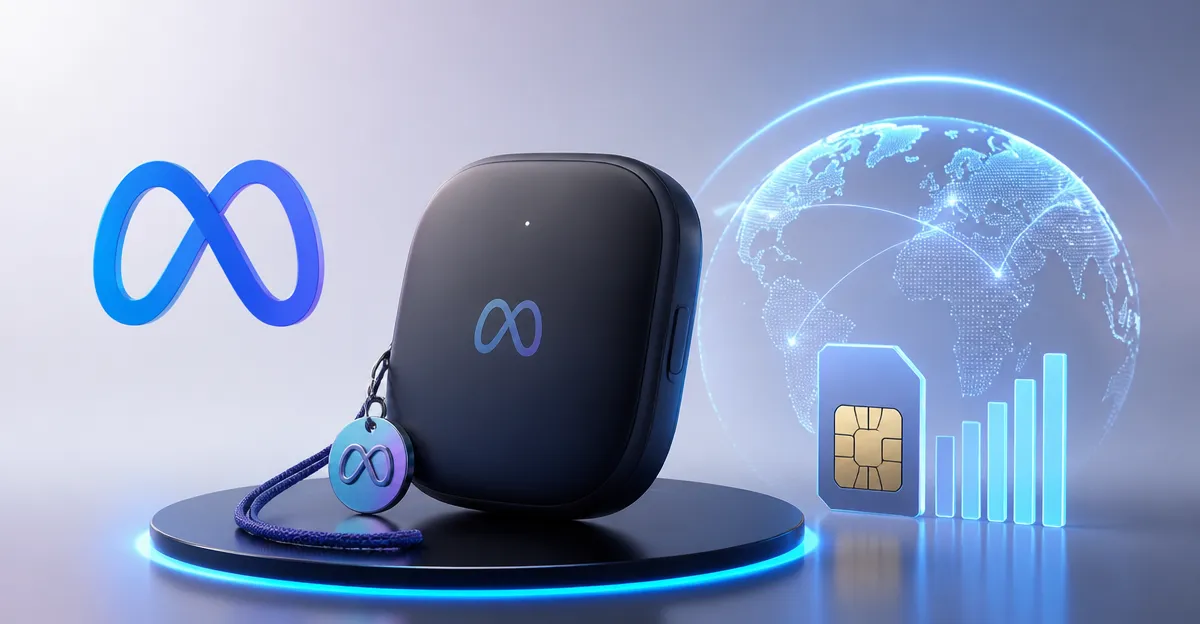
November 20, 2026, (Inside AI) — Meta Platforms plans to price its pocket-sized AI device, Muse Charm, at $300 and bundle up to 12 months of free 5G data from Verizon, according to a person familiar with the matter who spoke to The Information. The device, unveiled by CEO Mark Zuckerberg in September at the company's annual Connect conference, is expected to launch in December, in time for the holiday shopping season.
The Charm carries Meta's viral Muse AI agent into the physical world. It features a roughly 2-inch touchscreen navigated by thumb, with a customizable Muse character at its center. A built-in 5G modem lets users access the assistant without Wi-Fi or a smartphone. The device cannot make phone calls.
The pricing and data bundle, if confirmed, would position Charm as a standalone AI companion rather than a smartphone accessory. That distinction matters. Most wearable AI devices to date have depended on a paired phone for connectivity and processing. By embedding cellular service, Meta reduces friction for buyers and loosens its reliance on Apple and Google's mobile operating systems.
Meta's spokesperson offered a cautious response: "We're charmed by the interest in our AI devices, and we'll have more to share soon" (Meta spokesperson). Verizon did not immediately respond to requests for comment.
Read: Snap Unveils Specs Intelligence AI Assistant for $2,195 AR Glasses
Why A $300 Gadget Needs Its Own Data Pipe
The free 5G offer is the more revealing detail. A standalone AI device lives or dies on always-on connectivity. Without it, users must tether to a phone hotspot, which defeats the purpose of a dedicated assistant. Verizon's involvement suggests Meta is willing to absorb carrier costs to seed adoption, a strategy reminiscent of early e-reader bundles where Amazon included free cellular on Kindle devices.
That parallel is instructive. Amazon's Whispernet deal with Sprint in 2007 let Kindle owners download books anywhere without hunting for Wi-Fi. It turned a niche gadget into a mainstream product. Meta appears to be betting that Charm's always-connected Muse agent can do the same for AI assistants. The difference is that Kindle sold digital books, a proven category. Charm sells an AI agent that books travel, fills forms, and shops on the user's behalf. Consumer trust in delegated tasks remains unproven at scale.
Meta has not disclosed Charm's battery life, processor, or privacy safeguards. Those omissions are significant for a device that listens, watches, and acts on personal data. The company has faced repeated scrutiny over data handling across its apps. A pocket AI companion that accesses shopping accounts and travel bookings will invite even closer examination.
Muse itself has gained traction inside Meta's apps. The agent handles tasks such as shopping, travel booking, and form-filling. Charm extends that capability beyond the phone. Zuckerberg has framed AI devices as a way to reduce Meta's dependence on rival app stores and operating systems. A $300 price point undercuts most flagship smartphones and positions Charm as an impulse buy for holiday shoppers.
Carrier Bundles And The Holiday Deadline
The December launch window is aggressive. Hardware manufacturing timelines are tight, and carrier partnerships require extensive integration. Verizon's silence on the report leaves room for the deal to change or collapse. Meta's spokesperson declined to confirm pricing or the Verizon arrangement.
Competitors are watching closely. OpenAI has partnered with Jony Ive on a hardware device, though details remain scarce. Humane's Ai Pin, launched in 2023 at $699 with a $24 monthly subscription, struggled with reviews and returns. Charm's lower price and bundled data address two of Ai Pin's biggest complaints: cost and connectivity. Whether Meta can avoid the same fate depends on execution and whether consumers see value in a screen-first AI gadget.
The device also tests Meta's ability to build a consumer hardware business beyond VR headsets. Its Ray-Ban smart glasses have found a niche, but a $300 pocket AI device targets a broader audience. Success would give Meta a direct channel to users outside Apple's and Google's ecosystems. Failure would reinforce the view that AI assistants belong on phones, not in separate gadgets.
Meta has not announced preorder dates or retail partners. The company is expected to share more details closer to launch. For now, the $300 price and Verizon bundle remain unconfirmed by both companies.

If a research paper dropped this week, Mahesh has already read it. He covers AI tools and vibe coding for builders who need to know what is worth their time and what is not.