June 20, 2026, (Inside AI) — The global AI race is often measured by chips and computing power. But new data reveals talent is the true foundation of leadership. China now educates the largest share of elite AI researchers, yet most work in the United States.
The Talent Paradox Driving AI Dominance
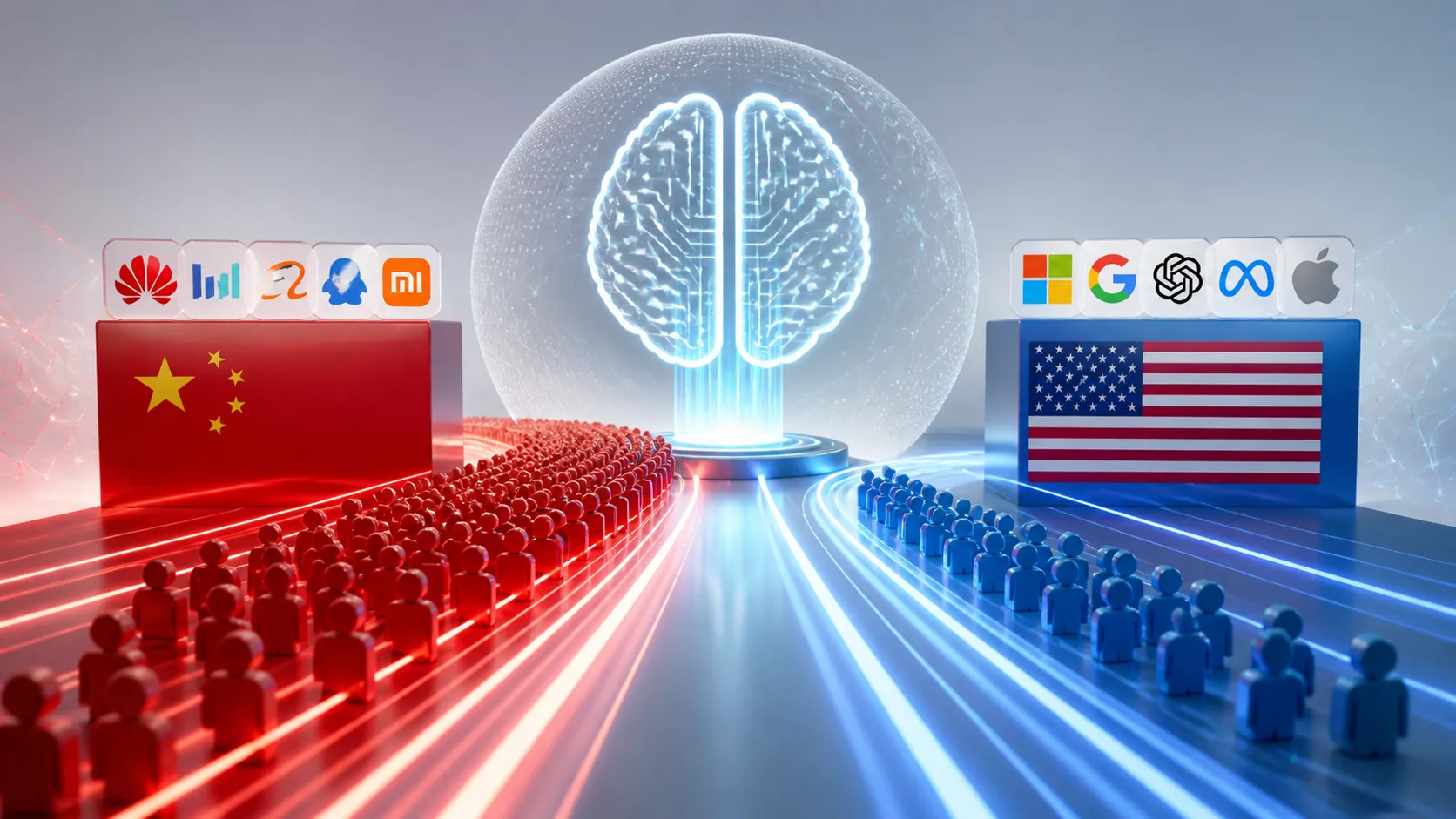
MacroPolo’s latest Global AI Talent tracker shows 38% of top AI researchers were educated in China. That surpasses any other nation. However, 72% of those China-educated researchers work in US institutions.
“It has always been about talent — the chip race and the model race are downstream of that,” said Kelly Forbes, global AI policy advisor.
Forbes told indianexpress.com the US lead is not just domestic innovation. “What this data makes very clear is that the US lead in AI is not a story of American innovation in isolation. It’s a story of American institutions being extraordinarily good at attracting the world’s best minds.”
Fragile Advantage Built on Mobility
The concentration of foreign talent creates a competitive edge. But Forbes warns it is more fragile than policymakers assume. “Thirty-eight per cent of top AI researchers were educated in China, and 72 per cent of those are now working in the United States. That’s not just a technology advantage. And that’s a much more fragile thing to build a national strategy around.”
Immigration rules directly impact this ecosystem. Forbes called the US position “extremely vulnerable, and I doubt that’s well understood in the policy conversation.”
“When you look at the numbers — 72 per cent of China-educated elite AI researchers are working in US institutions — you realise that any significant tightening of visa policy or student exchange programmes doesn’t just affect individuals, it degrades US AI capacity directly.”
China’s Retention Struggle
China produces more elite researchers than any country. Yet only 11% currently work there, down from 16% in 2019. Forbes said, “The retention number, which is 11 per cent, down from 16 per cent in 2019, tells you that despite enormous domestic investment, China hasn’t cracked this yet.”
She cautioned against complacency. Early warning signs include compensation parity at top Chinese labs, return migration of US-trained PhDs, and more top-tier publications from China-based affiliations.
“We are not there yet, but the trajectory matters as much as the current snapshot,” Forbes said.
Talent Trumps Chips in Long-Term Strategy
US export controls target advanced semiconductors. But talent concentration may be a more enduring advantage. “Both matter, but I think talent is the more durable advantage and the harder one to replicate quickly,” Forbes stated.
“Chips you can redesign around, stockpile, or eventually produce domestically, and China is investing heavily in that. But the concentration of elite AI researchers, the research culture, and the ecosystem of labs and universities…that takes decades to build.”
India’s Wake-Up Call
India educates 10% of elite AI researchers. Only 2% work in the country. Forbes called it a warning. “India’s numbers in this data should be a wake-up call. Ten per cent of elite AI researchers were educated in India, but only 2 per cent are working there, a 20 per cent retention rate.”
“India is producing serious talent and then effectively gifting it to the US and others.”
The report tracks 462 top researchers from India. 80% moved to the US, 60% to the UK, and 5% to Canada. Key institutions include IIT Bombay, IIT Delhi, and IISc Bangalore.
Forbes sees a window of opportunity. “India needs to move beyond celebrating the success of its diaspora in Silicon Valley and start asking harder questions about what it would take to keep or attract back that talent.”
This requires research infrastructure, competitive pay, and a strong domestic AI industry. “The window is open, but it won’t stay open indefinitely,” she added.
The tracker draws from NeurIPS 2024, ICML 2024, and ICLR 2025 proceedings. It shows China produced 1,756 researchers in 2024-25, the US 1,108, and Europe 416. Retention rates: US 80%, UK 65%, Germany 55%, China 11%.
Ultimately, the real AI competition may hinge on the people building the technology, not just the hardware powering it.