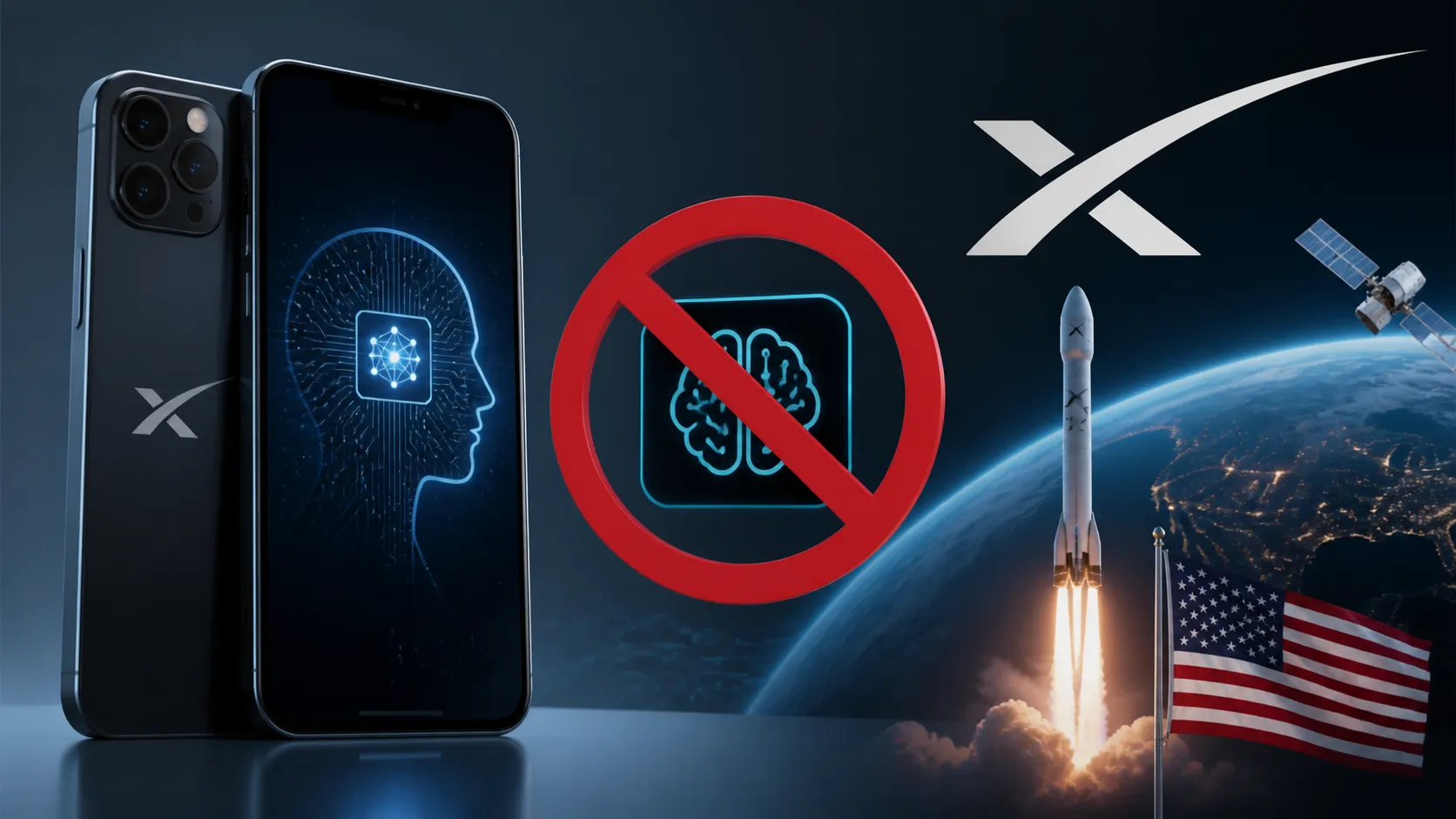
July 2, 2026, (Inside AI) — A report claiming SpaceX has developed a prototype AI-powered smartphone was quickly denounced by CEO Elon Musk as “utterly false” on X, casting doubt on the existence of such a device.
The Wall Street Journal had reported that SpaceX showed investors a slim handset thinner than Apple’s iPhone, integrating AI from Musk’s xAI, running a proprietary OS, and using Qualcomm Snapdragon processors. The project was said to be in early stages with no guarantee of market release.
Musk’s blunt denial left no room for interpretation, though he offered no further clarification. SpaceX and Qualcomm have not commented publicly, leaving the report’s origins unexplained.
This isn’t the first time Musk has teased mobile ambitions. In January, he said a Starlink phone was “not out of the question at some point,” but stressed it would be unlike existing handsets. That vision aligns with SpaceX’s broader push into AI infrastructure and space-based computing.
The alleged device would mark a dramatic expansion beyond launch services and Starlink internet. Reuters notes heavy investment in xAI’s Grok large language model, positioning SpaceX in the AI sector. An AI phone could leverage Starlink’s global connectivity and xAI’s models, but Musk’s denial suggests no such prototype exists.
Why an AI Phone from SpaceX Makes Strategic Sense—and Why It Doesn’t
A SpaceX AI phone could bypass terrestrial networks, using Starlink satellites for seamless global coverage. Combined with xAI’s Grok, it might offer deeply integrated AI features. The reported use of Snapdragon chips points to on-device AI processing, a trend Qualcomm is aggressively pushing.
But Musk’s immediate rejection indicates the report may be premature or inaccurate. SpaceX’s focus remains on capital-intensive projects like Starship. Entering the smartphone market would demand billions in R&D, manufacturing, and marketing—a stretch even for Musk’s empire.
Industry observers note the timing is curious. SpaceX is rumored to be considering an IPO, and such a device could boost valuation. Yet Musk’s history of denying unconfirmed projects suggests caution. His January comment about a Starlink phone left the door open, but the latest denial slams it shut.
The broader AI hardware landscape is littered with failures. Humane’s AI Pin and Rabbit’s R1 struggled with limited functionality and poor reviews. Even tech giants tread carefully: OpenAI is working with Jony Ive on an AI device, and Microsoft unveiled a wearable AI badge prototype, but no consumer hit has emerged.
Musk’s denial may also reflect legal or competitive sensitivities. Revealing a phone too early could invite scrutiny or tip off rivals. SpaceX’s silence, paired with Qualcomm’s non-comment, adds to the intrigue.
What the Denial Leaves Unanswered
Musk’s two-word rebuttal raises more questions than it answers. Was there a misunderstanding by investors? Could a conceptual design have been mistaken for a prototype? The Wall Street Journal stands by its reporting, citing unnamed sources, but without evidence, the story collapses.
If true, the phone would challenge Apple and Samsung, leveraging Starlink’s direct-to-cell technology. SpaceX has already partnered with T-Mobile to eliminate dead zones, and a proprietary device could take that further. But the regulatory and technical hurdles are immense.
For now, the AI phone remains a phantom. Musk’s denial is definitive, but his track record of surprising pivots keeps the industry watching. The episode underscores the hype and skepticism around AI hardware—a field where promises often outpace reality.