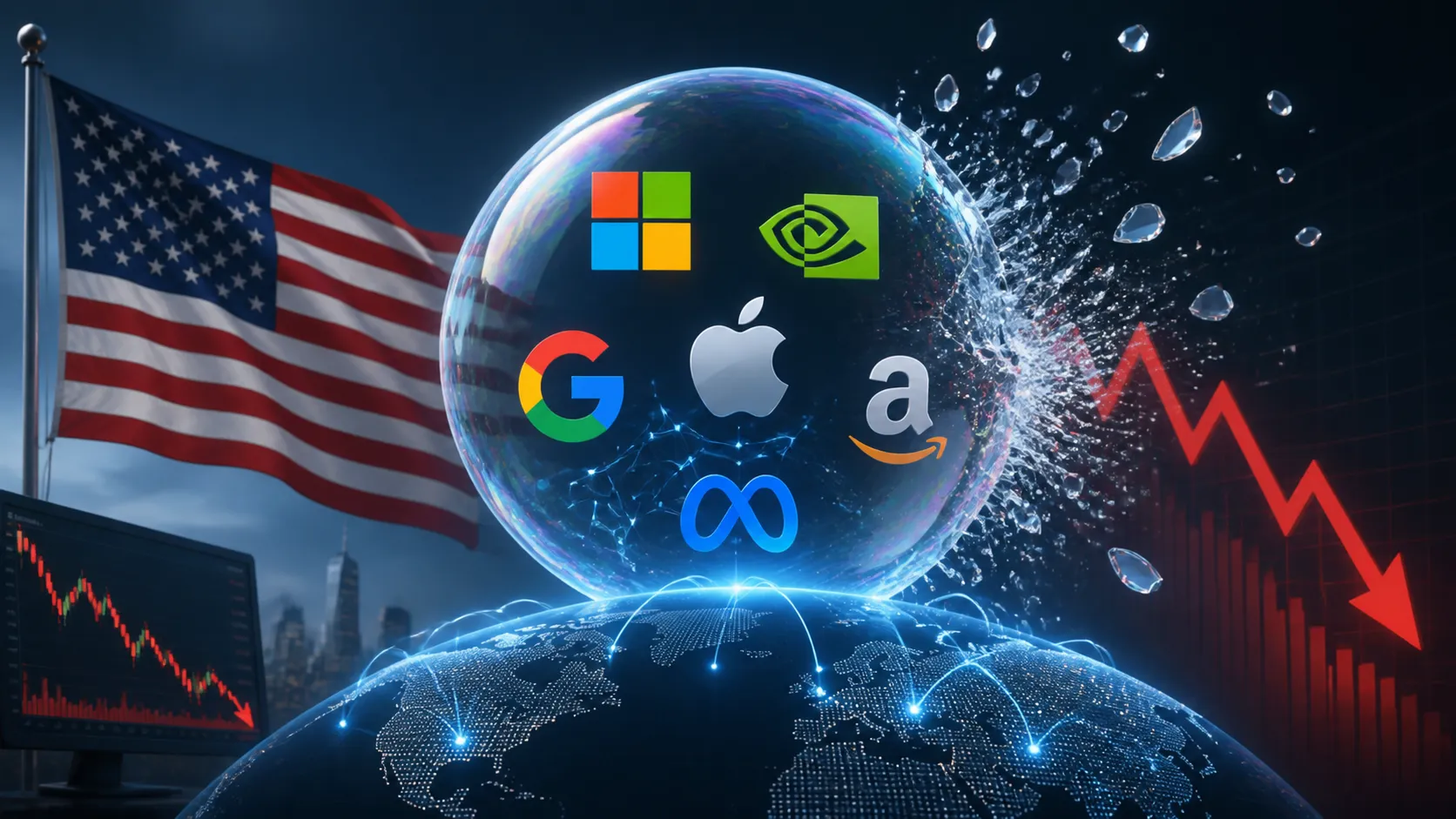
July 3, 2026, (Inside AI) — A stark warning from Michael Burry, the hedge fund manager famed for predicting the 2008 housing crisis, is rattling global AI markets. Burry declared in a Substack post on Tuesday that a bubble in AI-related assets is “only a matter of time now” from deflating. His bearish stance arrives as Chinese AI stocks face a pullback despite a record-breaking first half.
The immediate trigger: Burry’s public positioning against the AI trade. He sees valuations as dangerously stretched, echoing the speculative excesses he exploited during the subprime mortgage collapse. His warning comes as China’s SSE Star 50 index, a barometer of tech and AI momentum, surged roughly 65% in the first six months of 2026. That rally was fueled by semiconductors, optical modules, and AI infrastructure firms.
But sentiment is shifting. Despite improving earnings momentum entering the second half, first-half results and Burry’s high-profile skepticism are weighing on Chinese AI stocks. The disconnect between soaring share prices and underlying business fundamentals is drawing scrutiny from global investors.
The Burry Paradox: Why His Warning Matters Now
Burry’s track record gives his words unusual weight. He shorted the US housing market when almost no one believed it could crash, a move immortalized in the film The Big Short. Now he is applying the same contrarian lens to AI. His Substack post did not detail specific positions, but the message was clear: AI euphoria has detached from reality.
This is not the first time Burry has targeted tech. In 2021, he bet against Tesla and ARK Innovation ETF, though those trades had mixed results. His AI warning comes amid broader unease. The Nasdaq Composite has more than doubled since late 2022, driven largely by AI optimism. Nvidia alone added trillions in market cap. Critics argue that AI revenue is still concentrated in a few hardware suppliers, while most adopters have yet to show clear returns.
China’s AI rally mirrors this global trend. The SSE Star 50’s 65% surge was powered by names like Cambricon Technologies and Hygon Information Technology. These firms design AI chips and infrastructure, benefiting from Beijing’s push for self-sufficiency. Yet their price-to-earnings ratios have ballooned, in some cases exceeding 200. Analysts at Goldman Sachs recently noted that Chinese AI stocks are pricing in “perfect execution” with little room for error.
China’s AI Stocks: Rally Meets Reality
The first-half rally in China was not just speculative froth. Earnings did improve. Semiconductor exports rose 28% year-on-year in May, driven by AI demand. Optical module makers like Zhongji Innolight saw profits jump over 50%. Yet the second quarter brought signs of fatigue. The SSE Star 50 has slipped 8% from its June peak, and trading volumes are thinning.
Burry’s warning adds psychological pressure. Chinese retail investors, who dominate local markets, are sensitive to foreign bearish calls. In 2015, a similar boom-bust cycle wiped out trillions in market value. Regulators are also wary. The China Securities Regulatory Commission has tightened margin lending and warned about “concept stock” speculation, a term often used for AI plays.
Global context matters too. The US Federal Reserve’s rate policies and geopolitical tensions over chip exports create a fragile backdrop. If Burry is right, a correction in US AI stocks could spill over into China’s market, which is already under pressure from capital outflows and a weak yuan.
Yet some fund managers push back. “This is not 2008,” said Li Wei, chief strategist at Shanghai-based Yunqi Capital, in a recent note. “AI is a real productivity revolution, not a financial engineering trick.” He points to rising adoption of AI in Chinese manufacturing and logistics as evidence of tangible value. Others note that Burry’s calls are often early—he started warning about housing in 2005, three years before the crash.
For now, the market is at a crossroads. Burry’s warning may prove prescient or premature. But it has reignited a critical debate: whether AI’s economic promise justifies its price. As the second half unfolds, investors will watch earnings closely. If growth disappoints, the “Big Short” sequel could play out on a global stage.