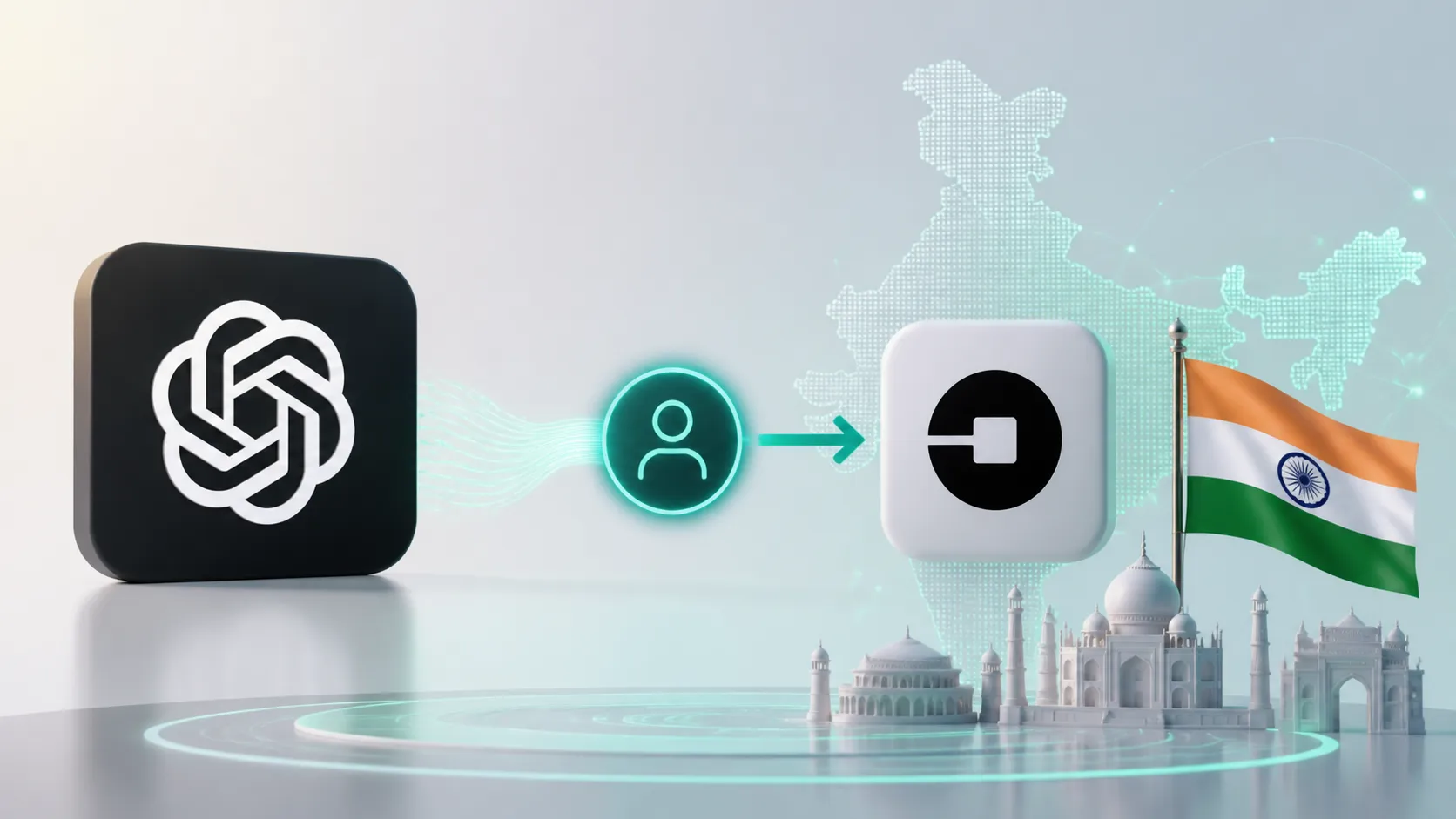
June 27, 2026, (Inside AI) — OpenAI has appointed Prabhjeet Singh as its new managing director for India, effective September. Singh previously served as president of Uber India and South Asia.
Singh will be OpenAI’s most senior leader in the country. His mandate spans consumer growth, enterprise adoption, and strategic partnerships, the company said in a statement.
This move signals OpenAI’s intent to deepen its footprint in the world’s most populous nation. India’s burgeoning digital economy and vast developer base make it a critical market for AI expansion.
The Strategic Calculus Behind OpenAI’s India Push
Singh’s appointment is not an isolated hire. It reflects a calculated bet on India’s unique AI adoption curve. The country has over 700 million internet users and a rapidly digitizing enterprise sector.
Read: OpenAI Launches Partner Network with $150M to Fix Enterprise AI’s Last-Mile Problem
OpenAI faces stiff competition from Google’s Gemini and homegrown models like Krutrim. Singh’s Uber experience in scaling operations across diverse Indian markets could prove pivotal.
His track record includes navigating complex regulatory environments and building localized strategies. At Uber, he oversaw expansion into over 100 Indian cities and managed a workforce of thousands.
Industry analyst Priya Sharma noted, “This hire shows OpenAI is moving from experimentation to execution in India. They need someone who understands the ground realities.”
OpenAI’s consumer products like ChatGPT already have significant traction in India. But enterprise adoption remains nascent, with concerns around data sovereignty and compliance.
Singh will likely focus on tailoring OpenAI’s offerings for Indian businesses. That could mean partnerships with IT giants like TCS or Infosys, and deeper integration with local cloud providers.
What Singh’s Uber Tenure Reveals About OpenAI’s Future
Singh’s six-year stint at Uber was marked by aggressive growth and localization. He championed initiatives like Uber Auto and Uber Moto, designed specifically for Indian commuters.
Read: India’s Four Unmatched Advantages in the Global AI Race
That playbook could translate into custom AI solutions for Indian enterprises. Think lightweight models for low-bandwidth areas or vernacular language interfaces.
OpenAI’s statement emphasized Singh’s role in driving “performance across consumer growth, enterprise adoption and partnerships.” The phrasing hints at a unified commercial strategy.
Yet challenges loom. India’s government is drafting AI regulations that may mandate local data storage. Competitors like Anthropic are also eyeing the market.
Singh’s ability to engage with policymakers will be tested. His Uber years involved frequent negotiations with transport authorities across states.
OpenAI did not disclose Singh’s exact start date beyond September. The transition period suggests a carefully planned handover.
This leadership appointment comes as OpenAI expands its global footprint. The company recently opened offices in Tokyo and London, signaling a decentralized growth model.
For India, Singh’s arrival could accelerate AI adoption in sectors like healthcare and education. But the real impact will depend on execution against entrenched local players.