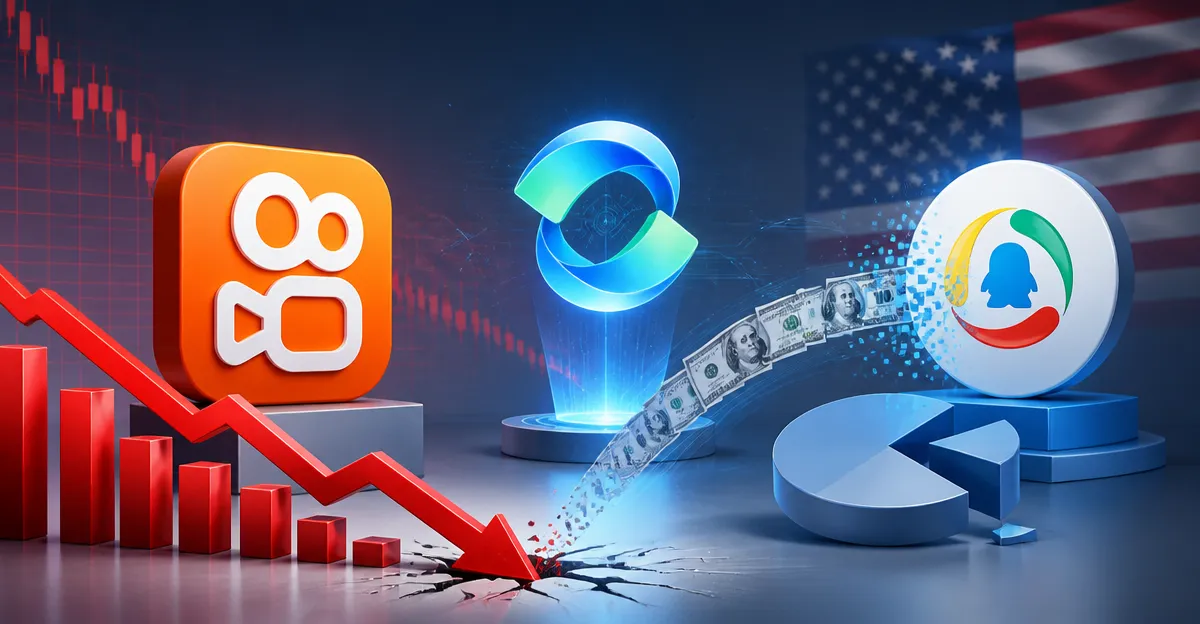
July 7, 2026, (Inside AI) — Tencent Holdings has slashed its stake in Chinese short-video giant Kuaishou Technology, sending shares down over 6% on Tuesday morning. The sale of 273 million Class B shares cuts Tencent’s holding to 9.37% from 15.68%, according to a Hong Kong stock exchange filing.
Based on Monday’s closing price of HK$46, the transaction could raise roughly HK$12.56 billion (US$1.6 billion). The filing did not specify the exact price or range of the sale.
The divestment means Tencent ceases to be a substantial shareholder in Kuaishou. Yet the move arrives just days after Tencent led a US$3 billion financing round for Kling AI, Kuaishou’s artificial intelligence video unit.
Kuaishou stated the share disposal is not expected to have “any material adverse effect” on its operations. It added that Tencent remains confident in the company’s long-term prospects and will maintain their business relationship.
A Strategic Pivot in China’s AI Landscape
The timing has raised eyebrows. Tencent’s decision to reduce its equity stake while simultaneously injecting capital into Kling AI signals a targeted bet on generative video technology rather than the broader platform. Kling AI has emerged as a leading text-to-video model, competing with OpenAI’s Sora and other Chinese rivals.
For Tencent, the move reallocates resources toward AI infrastructure and content generation tools. The US$3 billion round included state-backed funds and entertainment industry players, underscoring Beijing’s strategic interest in AI video. This aligns with China’s national push to dominate generative AI by 2030.
Kuaishou, meanwhile, is doubling down on shareholder returns. The company updated its HK$16 billion buy-back program, revealing it has repurchased 174.84 million Class B shares for HK$8.35 billion so far. Such buybacks often aim to stabilize stock prices after major sell-offs.
Analysts note that Tencent’s partial exit does not necessarily signal a loss of faith in Kuaishou’s core business. Instead, it may reflect portfolio optimization. Tencent has been streamlining investments, having distributed US$20 billion worth of JD.com and Meituan shares in recent years.
Kling AI: The New Battleground
Kling AI’s rapid ascent has drawn intense investor interest. The unit’s latest funding values it at over US$10 billion, sources say. Its technology generates high-fidelity videos from text prompts, a capability tech giants view as critical for advertising, content creation, and the metaverse.
Tencent’s dual role—investing in Kling AI while reducing its Kuaishou stake—highlights a nuanced strategy. By backing the AI unit directly, Tencent gains exposure to the high-growth generative AI sector without the regulatory and competitive baggage of a controlling stake in Kuaishou.
Kuaishou’s filing emphasized Tencent’s continued confidence, but the market reacted swiftly. The 6% drop reflects concerns about reduced strategic alignment. Still, Kuaishou’s daily active users exceed 400 million, and its e-commerce business remains robust.
The deal also comes as Chinese tech firms face heightened scrutiny from regulators. Reducing a substantial shareholding can simplify compliance and avoid mandatory disclosure obligations. For Tencent, it may be a pragmatic step to navigate an evolving regulatory landscape.
Looking ahead, the success of Kling AI will be pivotal. If the unit delivers on its promise, Tencent’s early bet could pay off handsomely, even as it trims its broader Kuaishou exposure. For now, the market is left parsing a complex chess move in China’s AI arms race.