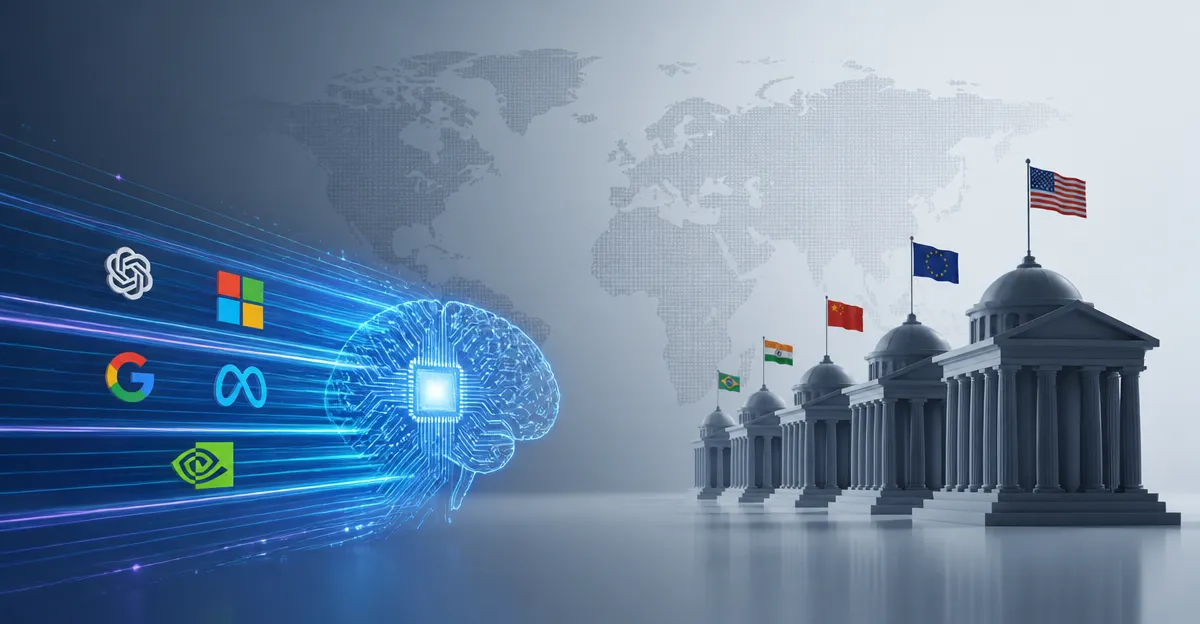
September 15, 2026, (Inside AI) — No government anywhere is prepared for the societal upheaval artificial intelligence will cause, Bill Gates warned in an interview, marking a sharp reversal from his earlier optimism about the technology.
The Microsoft co-founder and billionaire philanthropist said he has personally lobbied world leaders, including President Donald Trump and his team, and plans to meet China's President Xi Jinping later this year. His foundation also announced on Tuesday it will spend at least $1 billion over the next two years to expand AI access in developing nations.
Gates' shift matters because he spent decades as the world's most visible technology optimist. His warning now lands as governments scramble to write AI rules with little technical expertise in-house. The gap between AI's pace and policy's slowness has become a central tension in capitals from Washington to Beijing.
From Evangelist to Alarm Raiser
Until recently, Gates framed AI as a tool for solving humanity's hardest problems. He now warns about job losses, weaponized attacks, and addiction to AI companions. The change echoes earlier tech reckonings, like when social media pioneers later apologized for attention-hijacking algorithms.
His foundation's spending plan, part of a previously announced $9 billion annual budget, targets education, healthcare, and agriculture partners. It also aims to ensure large language models work in every language people speak, a gap that currently excludes millions from AI's benefits.
"I don't think any government is nearly as deep on this as they have to be," Gates said. "Governments are way behind on this one."
For health, Gates sees the highest potential. He cited support for frontline workers and accelerated drug and vaccine discovery. But he stressed that unequal access could widen the divide between rich and poor nations unless governments cooperate.
He compared AI's arrival to a disaster movie where aliens force rival nations to unite. "There's all sorts of movies where some aliens are coming, and magically the U.S. and China and everybody comes together to solve the problem," he said. "AI is kind of like this alien intelligence. It's here, and we better do like it shows in those movies."
The foundation's push includes building data foundations, such as ensuring language models serve every spoken language. That effort addresses a known bias: most AI systems perform best in English and a handful of other languages, leaving billions underserved.
Epstein Ties Leave No Mark
In June, Gates testified before Congress about his relationship with the late convicted sex offender Jeffrey Epstein. Gates, who faces no criminal accusations, has repeatedly expressed regret for associating with Epstein, hoping for donations to global health causes. Instead, Epstein tried to blackmail Gates over extramarital affairs.
An external review at the foundation found no payments to Epstein or involvement in criminal activities. Gates said the episode caused no significant reputational damage.
"In terms of having access to government leaders, or you know, journalists being willing to interview me, I don't see any diminishment," he said. He added that demand for the foundation's expertise on cutting child deaths and ending malaria had not dropped "even one iota."
That assessment may face scrutiny. Reputational damage often surfaces slowly, through quiet declines in invitations or partnership interest. Gates' continued access to leaders like Trump and Xi suggests his influence remains intact for now.
His meetings with Trump's team and planned Xi talks signal that AI governance is becoming a diplomatic issue, not just a domestic regulatory one. The U.S. and China are the two largest AI powers, and their cooperation, or lack of it, will shape global safety standards.
Gates' warning adds to a growing chorus of experts who say policymakers lack the technical depth to regulate AI effectively. Few legislatures employ staff who understand model training, compute scaling, or alignment research. That knowledge gap makes meaningful oversight difficult.
The foundation's $1 billion commitment over two years is modest against the scale of global AI investment, which runs into hundreds of billions annually. But it targets areas private capital ignores: low-resource languages, smallholder farmers, and community health workers.
Read: Obama Warns AI Could Be Dangerous, Urges Democrats to Act
Whether that spending can narrow the gap Gates fears depends on execution and on governments' willingness to act before problems become crises. His alien-invasion metaphor captures the urgency he now feels, but movies end in two hours. AI's story will run for decades.