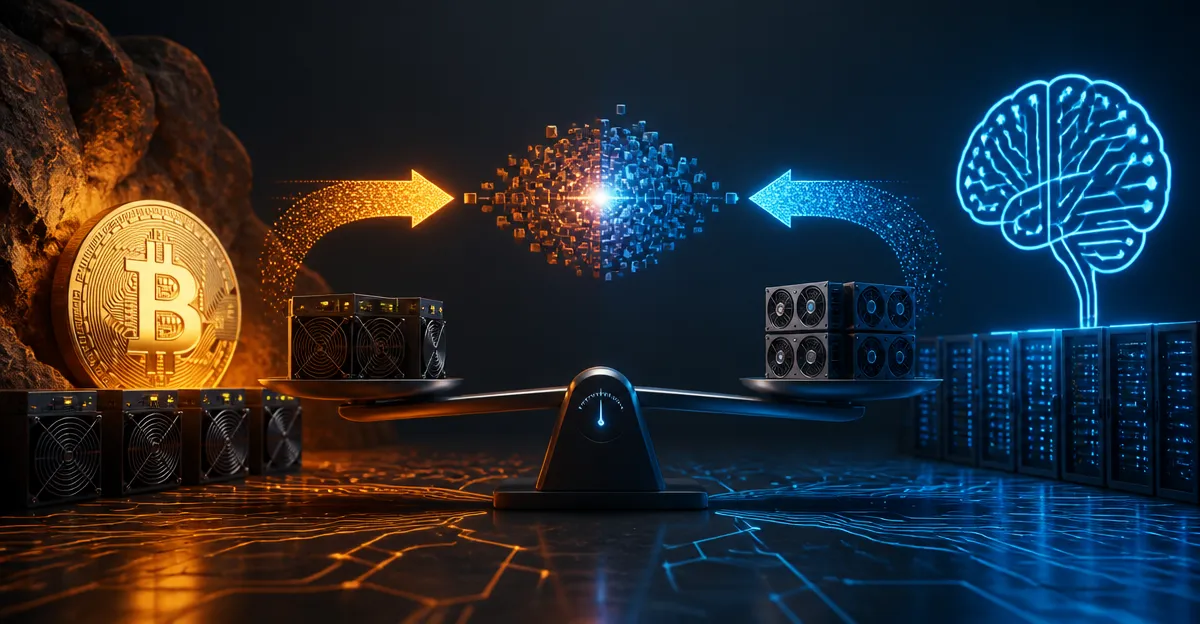
September 23, 2026, (Inside AI) — A quiet but telling shift is underway in the AI infrastructure trade. Bitcoin miners like Cipher Digital, TeraWulf, and Hut 8 are converting their massive electricity contracts into leases for AI data centers, while rival IREN has taken a different path by building an integrated server farm. Investors are rewarding the landlords more richly, signaling that access to power, not chips, may be the scarcest asset in the AI boom.
The development, first reported by financial commentary sources, highlights a growing recognition that the bottleneck for AI compute is not silicon but electricity. As demand for generative AI models surges, companies are scrambling for reliable, large-scale power. Bitcoin miners, who secured cheap energy deals during the crypto boom, now find themselves holding a valuable resource.
Cipher Digital, TeraWulf, and Hut 8 have begun leasing their power capacity to chatbot operators and other AI firms. These miners essentially become landlords, renting out megawatts rather than mining coins. IREN, by contrast, chose to build a full-stack server farm, offering both power and compute hardware. The market's response has been clear: the landlords are valued more highly, suggesting that megawatts will hold value better than chips.
This valuation gap is not accidental. AI chips, while essential, are subject to rapid obsolescence and supply chain improvements. Power, however, is constrained by geography, regulation, and infrastructure. Once a data center is built and connected, the electricity contract becomes a durable asset. Miners who pivoted early are now capitalizing on this dynamic.
Read: US AI Power Demand
Investors appear to be pricing in a future where energy scarcity dictates AI competitiveness. The landlords' premium reflects a bet that controlling power is more defensible than controlling hardware. This mirrors historical patterns in other industries, where infrastructure owners often outperform service providers during supply crunches.
The shift also underscores the evolving relationship between crypto and AI. Bitcoin mining, once criticized for its energy consumption, is now being repurposed to fuel the AI revolution. This repurposing could improve the public image of mining firms while providing a lifeline for those struggling with volatile crypto prices.
However, challenges remain. Leasing power to AI operators requires different expertise than mining. Miners must manage complex contracts, ensure reliability, and navigate regulatory hurdles. IREN's integrated approach may offer more control but at a higher cost. The market's current preference for landlords suggests a belief that specialization will win.
Analysts note that the AI boom has created a power crunch in key regions like Texas and the Nordics, where miners already have a presence. Companies that can quickly convert their operations to serve AI needs will likely reap rewards. Those that hesitate may find their assets less valuable as the industry matures.
The trend also raises questions about the long-term sustainability of AI infrastructure. If power becomes the primary constraint, innovation may focus on energy efficiency and alternative sources. Nuclear, geothermal, and even fusion could become more attractive. For now, the miners-turned-landlords are sitting pretty.
Read: Finland AI Power Supply
As the AI race intensifies, the ability to secure and lease power may become a key differentiator. The market's verdict is in: megawatts matter more than microchips. This realignment could reshape the competitive landscape, favoring those who control the plug.