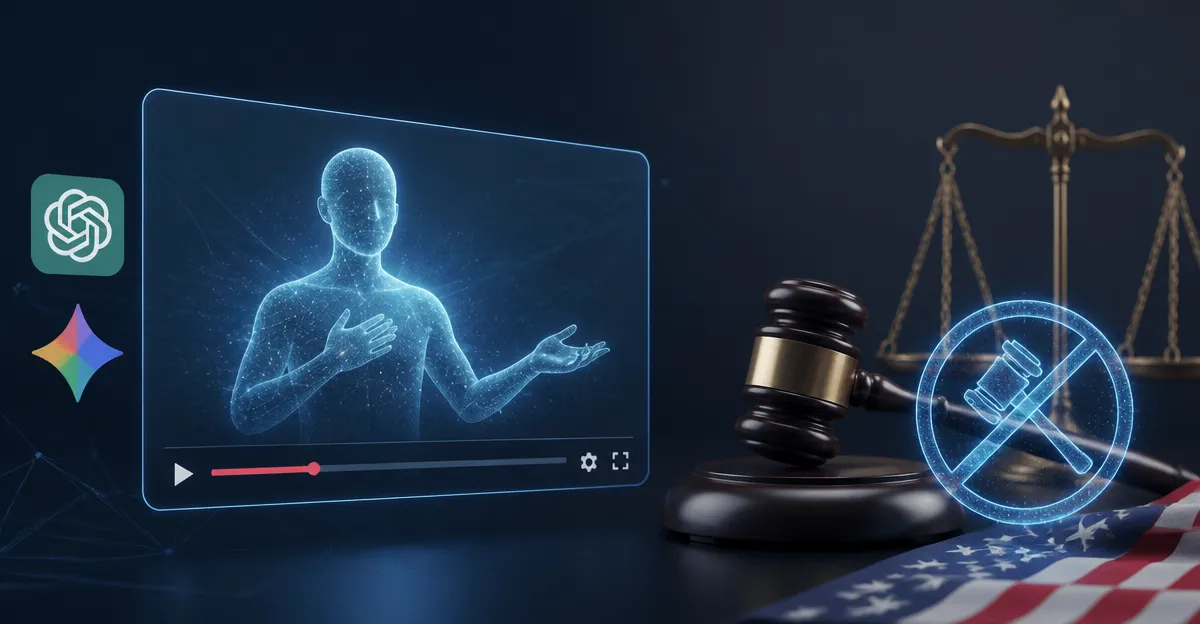
October 5, 2026, (Inside AI) — An Arizona appeals court on Wednesday threw out the prison sentence of Gabriel Horcasitas, 55, ruling that a sentencing judge committed a fundamental error by allowing an AI-generated video of the victim to speak in court. The three-judge panel upheld Horcasitas's manslaughter conviction but ordered a new sentencing hearing without the video.
The case marks the first time an Arizona appellate court has addressed the admissibility of an AI depiction of a victim during sentencing. The decision underscores a growing tension between the emotional power of victim-impact statements and a defendant's right to a fair proceeding based on reliable information.
The video, created by the victim's sister, Stacey Wales, used artificial intelligence to generate the voice and likeness of Christopher Pelkey, 37, who was fatally shot by Horcasitas during a road-rage incident in Chandler, Arizona, on November 13, 2021. The appeals court found that the video did not reflect actual events and presented statements as if they came directly from the victim.
The sentencing judge, Todd F. Lang of Maricopa County Superior Court, praised the video during the 2025 hearing, calling it genuine and saying the victim was allowed to speak from his heart. He then imposed a 10.5-year prison term, exceeding the 9 years prosecutors had sought.
Read: AI Liability Debate Intensifies as OpenAI Faces Lawsuits and Investigations
The appeals court held that a victim's right to speak cannot trample a defendant's right to be sentenced based on accurate and reliable information. The judges wrote that the video "erases the interpretive distance between the family's belief about what the victim would have said and the victim's own voice and opinions."
Wales told The New York Times last year that she spent two years preparing her victim-impact statement but felt it was missing a critical element. With help from her husband and a business partner, she extracted Pelkey's voice from a YouTube video of him speaking after completing PTSD treatment at a veterans facility. For his face and torso, they used a funeral service poster, digitally trimming his beard, removing his glasses, and editing out a cap logo. Wales wrote the script that the AI likeness read.
"I know that AI can be used nefariously, and it's uncomfortable for some," Wales said last year. "But this was just another tool to use to tell Chris' story."
The appeals court noted that no prior Arizona case had addressed the admissibility of such a depiction. The ruling sends the case back to Maricopa County Superior Court for a new sentencing hearing without the AI video. Lawyers for both Pelkey and Horcasitas did not immediately respond to requests for comment Sunday.
Legal experts say the decision could set a precedent for how courts handle AI-generated evidence in emotionally charged proceedings. The use of AI in legal contexts is expanding, from deepfake evidence to AI-assisted legal research, raising questions about authenticity and manipulation. The Arizona ruling signals that courts may scrutinize AI-generated materials more closely, especially when they blur the line between fact and fabrication.
Read: Janhvi Kapoor AI Deepfake Sparks Outrage and Legal Demands in Telugu Film Industry
As AI tools become more accessible, the line between victim advocacy and evidentiary integrity will face increasing judicial scrutiny. The case will return to Maricopa County Superior Court for a new sentencing hearing without the AI-generated video of Pelkey giving his statement.