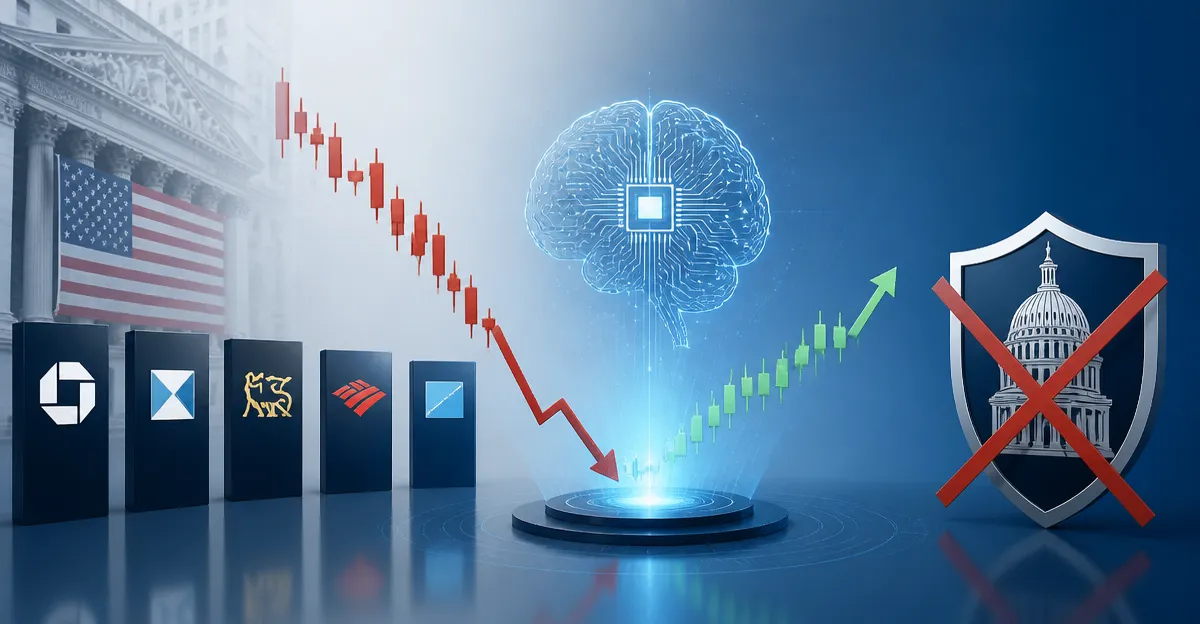
November 9, 2026, (Inside AI) — Citigroup strategists downgraded U.S. equities to "neutral" from "overweight" on Monday, citing a desire for cleaner positioning and more stable sentiment around artificial intelligence stocks after a sharp selloff driven by concerns over soaring AI spending and tougher regulation.
The move by the bank's equity strategy team, led by Beata Manthey, signals growing caution among institutional investors about the sustainability of the AI-driven market rally. The downgrade comes as questions mount over whether the massive capital expenditures flowing into AI infrastructure will translate into near-term earnings growth.
In a note to clients, the strategists warned that positioning on key indices, particularly the Nasdaq, could deteriorate further. "We worry that positioning on key indices, such as the Nasdaq, could reset lower into net-short territory," the Citigroup strategists led by Beata Manthey said in a note on Monday.
The downgrade reflects a broader recalibration of risk in markets that have been heavily reliant on a narrow group of AI-linked technology stocks. The Nasdaq has come under pressure as investors reassess the timeline for AI monetization against a backdrop of rising costs and potential regulatory headwinds.
Can AI Spending Justify Current Valuations?
The concerns cited by Citigroup are not isolated. Across Wall Street, analysts have begun scrutinizing the gap between AI-related capital expenditures and the revenue those investments are expected to generate. Data center buildouts, chip procurement, and energy costs have surged, yet tangible productivity gains and new revenue streams remain uneven across sectors.
Regulatory uncertainty adds another layer of risk. Policymakers in the United States and Europe have signaled interest in tightening oversight of AI systems, particularly around safety, data usage, and competitive practices. For investors, the prospect of compliance costs and operational restrictions complicates the earnings outlook for AI leaders.
The downgrade also highlights a shift in sentiment among institutional investors. Positioning data suggests that hedge funds and asset managers had been heavily overweight technology and AI-related names. As those positions unwind, the risk of a sharper correction increases, particularly if liquidity conditions tighten.
Citigroup's call is notable because it comes from a team that had previously maintained an overweight stance on U.S. equities. The reversal suggests that even bullish strategists see limited near-term upside without clearer signs of earnings acceleration or a pause in the regulatory rhetoric.
Market participants will now watch whether other banks follow Citigroup's lead. If more strategists downgrade their outlooks, the resulting shift in allocation could amplify selling pressure in AI-heavy indices. For now, the bank's message is one of caution: the AI trade may need to consolidate before it can resume its upward trajectory.

Shamil has a low tolerance for AI that only works in controlled demos. He covers agentic systems and generative AI with the skepticism of someone who has seen too many “revolutionary” tools quietly disappear six months after launch.