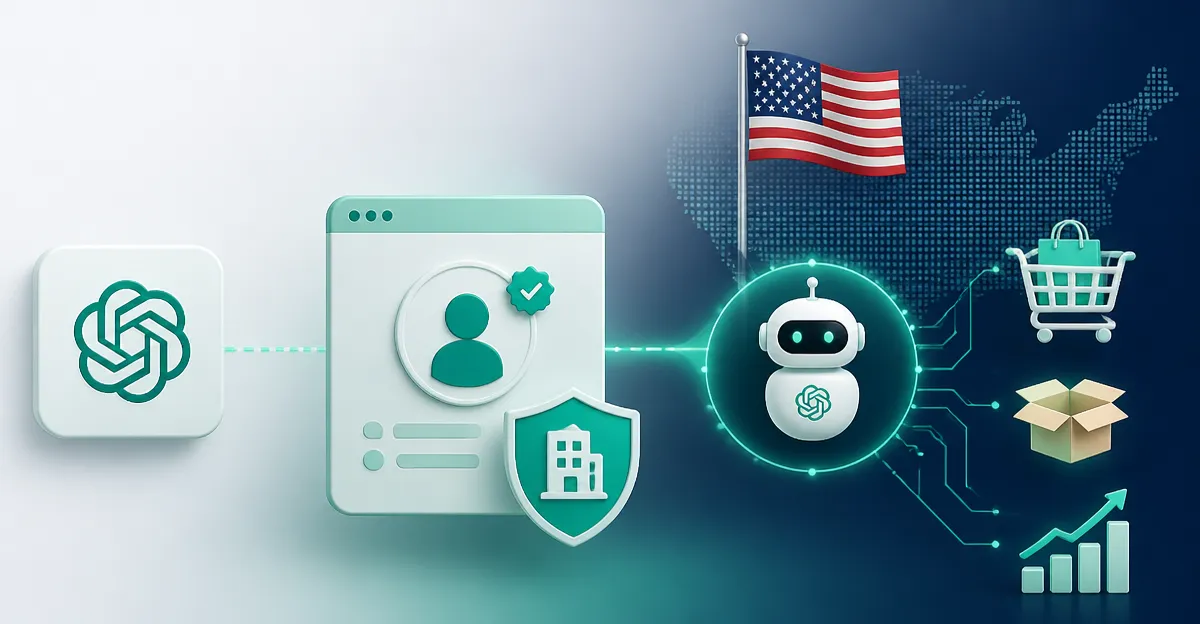
November 11, 2026, (Inside AI) — OpenAI on Tuesday introduced a beta feature called "Businesses" inside ChatGPT, allowing companies to claim and manage their profiles, update information, and track user engagement. The company also said it will add AI agents for United States e-commerce firms, according to sources familiar with the rollout.
The move marks OpenAI's most direct attempt yet to turn ChatGPT from a conversational tool into a commercial discovery layer. For businesses, the appeal is clear: a verified presence inside a platform used by hundreds of millions of people each week. For OpenAI, the feature opens a new channel for engagement data and potentially advertising revenue.
The beta launch arrives as competition among AI platforms intensifies. Google has integrated business profiles into its search results for years, and Microsoft has experimented with similar features in Bing Chat. OpenAI's entry signals that the company views ChatGPT as a destination for product and service discovery, not just question answering.
Why Verified Profiles Matter For AI Discovery
Businesses that claim a profile can control how they appear when users ask ChatGPT for recommendations. That control could influence purchasing decisions in ways that traditional search ads cannot. A user asking for "best coffee shop near me" may soon see a verified profile with updated hours, menus, and promotions.
Read: OpenAI Launches Free ChatGPT Workshops for Caregivers in Five U.S. Cities
OpenAI has not disclosed pricing or whether profile claims will remain free after the beta period. The company also has not specified which e-commerce firms will receive agent access first. An official who spoke on condition of anonymity said the agent tools will help merchants automate customer interactions and order tracking within ChatGPT.
The engagement tracking component raises privacy questions. OpenAI has faced scrutiny over how it handles user data, and businesses will now receive analytics on how users interact with their profiles. The company has not detailed what data businesses will see or how it will protect user identities.
"This is a natural evolution for ChatGPT," said Sarah Klein, an analyst at AI research firm TechInsight. "OpenAI needs to show that it can generate revenue beyond subscriptions, and business profiles offer a clear path."
OpenAI's previous commerce efforts have been limited. The company launched a plugin store in 2023 but later scaled it back. The new Businesses feature appears more integrated and could become a permanent part of the ChatGPT experience.
The timing is notable. OpenAI faces increasing pressure to justify its valuation, which has climbed to nearly $100 billion in secondary markets. Investors expect the company to diversify revenue streams beyond ChatGPT Plus and enterprise licenses.
For e-commerce firms, AI agents could reduce reliance on traditional customer service channels. A merchant could deploy an agent to answer product questions, process returns, and recommend complementary items. OpenAI has not said whether these agents will use the company's own models or third-party systems.
The beta launch is limited to a select group of businesses. OpenAI said it will gather feedback before a wider release. The company has not provided a timeline for general availability.
Read: Northern Trust, Microsoft Deploy AI Agent to Cut Client Onboarding Time by 83%
Industry observers note that OpenAI's move could pressure other AI platforms to offer similar features. Anthropic's Claude and Google's Gemini have not announced business profile systems. If ChatGPT becomes a primary discovery tool, businesses may feel compelled to maintain profiles across multiple AI platforms.
OpenAI's announcement comes amid a broader push into commerce. The company recently partnered with Shopify to test product recommendations within ChatGPT. That partnership, announced in September, allowed merchants to surface products through conversational queries. The new Businesses feature extends that effort by giving merchants direct control over their presence.
"The real question is whether users will trust ChatGPT for business information," said Mark Reynolds, a professor of digital marketing at Northwestern University. "If the data is inaccurate or outdated, the feature could backfire."
OpenAI has not said how it will verify business claims or prevent fraudulent profiles. The company requires businesses to provide official documentation during the claim process, according to a help center article. But the verification process remains unclear for small businesses without formal registration.
The feature also raises questions about competition. If ChatGPT prioritizes verified profiles in its responses, unverified businesses could become invisible to users. OpenAI has not said whether it will favor claimed profiles in search results.
For now, the beta is a test. OpenAI will likely refine the feature based on business feedback and user behavior. The company has a history of iterating on products based on early data. Whether Businesses becomes a core part of ChatGPT or a niche tool depends on adoption and revenue potential.
OpenAI's move also reflects a broader trend: AI platforms are becoming gatekeepers for information and commerce. As users increasingly rely on chatbots for recommendations, the companies that control those chatbots gain significant influence over which businesses succeed.
The announcement did not include details on international availability. OpenAI said the beta is initially focused on the United States. The company has not said when it will expand to other markets.
Businesses interested in claiming a profile can join a waitlist, according to OpenAI's website. The company has not disclosed how many businesses have signed up so far.

Shamil has a low tolerance for AI that only works in controlled demos. He covers agentic systems and generative AI with the skepticism of someone who has seen too many “revolutionary” tools quietly disappear six months after launch.