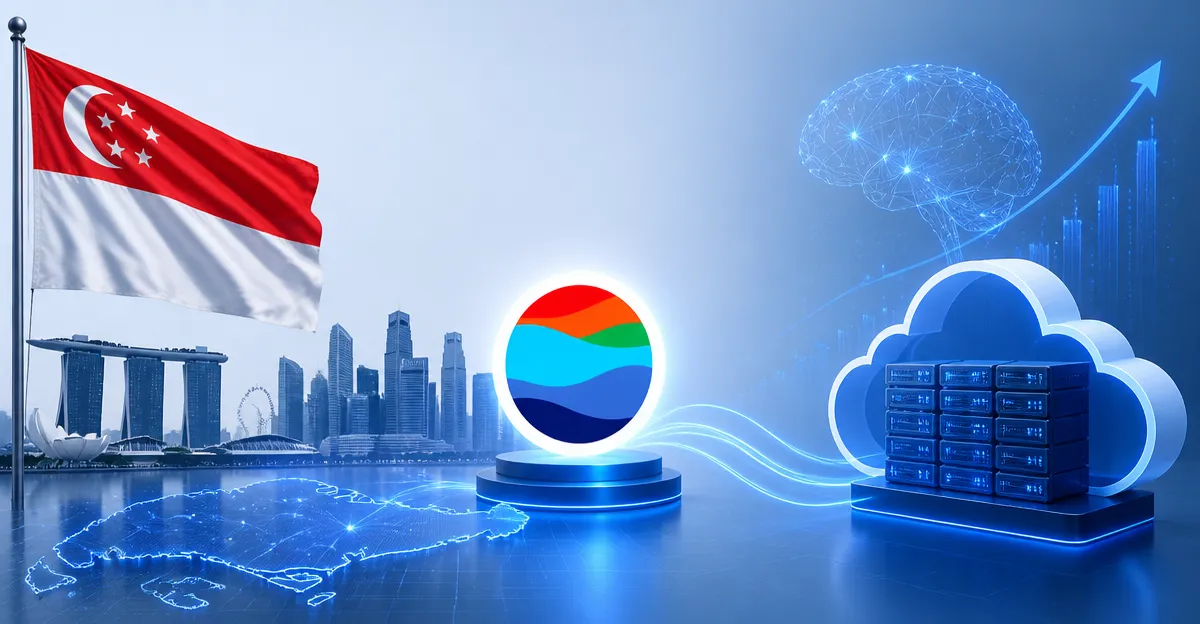
November 10, 2026, (Inside AI) — Singapore-based technology group Sea on Tuesday announced its entry into the cloud services market with a new unit called Sea Cloud, aiming to capture demand driven by artificial intelligence while keeping capital spending deliberately restrained. The company said the business will concentrate on software and customer-facing services rather than heavy infrastructure investment, according to sources familiar with the plan.
The move places Sea, best known for its e-commerce platform Shopee and gaming arm Garena, in direct competition with global cloud giants Amazon Web Services, Microsoft Azure, and Google Cloud, as well as regional players such as Alibaba Cloud. Sea Cloud's asset-light model contrasts with the capital-intensive approach typical of hyperscale cloud providers, which spend billions annually on data centers and hardware.
Why Sea Believes Software Beats Silicon
Sea's decision to avoid owning physical infrastructure reflects a broader strategic calculation. The company will likely partner with existing data center operators and hardware vendors, focusing instead on orchestration layers, developer tools, and AI-specific services. This approach reduces upfront risk and allows Sea to pivot quickly if demand shifts.
The cloud market in Southeast Asia is projected to grow rapidly, fueled by AI adoption across sectors such as finance, logistics, and healthcare. Yet profitability remains elusive for many providers due to price wars and rising energy costs. Sea's asset-light strategy may insulate it from these pressures, but it also limits control over performance and reliability.
Read: Wells Fargo AI Infrastructure Upgrade
Industry analysts note that Sea's existing ecosystem, including its e-commerce and digital payments arms, could provide a captive customer base for Sea Cloud. However, competing for external enterprise clients against entrenched players will require significant differentiation. Sea has not disclosed pricing, launch markets, or specific AI services planned for the platform.
The announcement comes as Sea faces slowing growth in its core businesses and increasing competition from TikTok Shop and Lazada. Diversifying into cloud services could open new revenue streams, but it also pits the company against far larger rivals with deeper technical expertise.
Sea's asset-light cloud push mirrors similar moves by regional telecoms and tech firms seeking to capitalize on AI demand without heavy capital expenditure. Whether this approach can scale remains uncertain, but it offers a test case for leaner cloud models in an industry dominated by hyperscalers.
Read: SoftBank AI Strategy Setbacks
Sea did not immediately respond to requests for comment on the financial details or timeline for Sea Cloud's rollout.

Shamil has a low tolerance for AI that only works in controlled demos. He covers agentic systems and generative AI with the skepticism of someone who has seen too many “revolutionary” tools quietly disappear six months after launch.