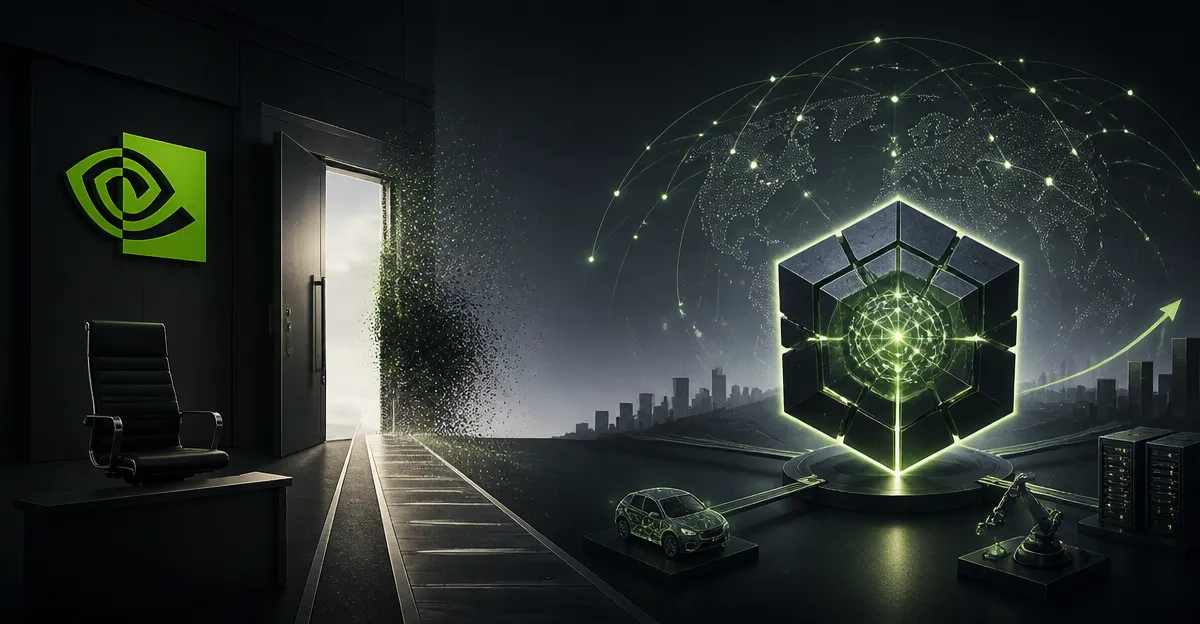
November 12, 2026, (Inside AI) — Jensen Huang has resigned as chief executive of Nvidia, the world's most valuable chipmaker, after reports of two extramarital affairs, one involving a woman suspected by U.S. intelligence agencies of spying for China. The Nvidia board named Chief Financial Officer Colette Kress as interim CEO while it searches for a permanent replacement.
The resignation, announced before U.S. markets opened on Thursday, caps a stunning fall for the executive who built Nvidia into the central supplier of computing infrastructure for the artificial intelligence boom. The scandal had already erased hundreds of billions of dollars from Nvidia's valuation before the board acted. The stock recovered 2.92% during regular trading on Wednesday, November 11, then plunged more than 8% in after-hours trading as reports surfaced that the board was weighing his removal.
Huang's exit lands at a fragile moment for the AI industry. Technology firms have committed hundreds of billions of dollars to data centers and ever-larger AI models, nearly all of which run on Nvidia chips. Nvidia alone accounts for roughly 6% of the S&P 500, so its share price swings touch index funds and retirement accounts far beyond direct shareholders.
The deeper concern is not chip sales but financing. Nvidia has evolved from a hardware supplier into a financier of the companies building infrastructure around its products. The company has disclosed approximately $164.5 billion in financial commitments, including an obligation capped at $105 billion tied to an OpenAI data center in Ohio, plus more than $50 billion in lease and capacity guarantees. These commitments have accelerated data center construction but also raised questions about a circular economy in which companies are simultaneously suppliers, customers and investors.
Who Benefits From Nvidia's Turmoil?
Rivals moved quickly to capitalize on the uncertainty. Shares of AMD, Nvidia's closest competitor in AI accelerators, rose more than 7% at market close, with pre-market trading pointing to further gains. Broadcom, a major supplier of custom chips and networking technology to cloud companies, climbed nearly 4%. In China, domestic GPU makers Moore Threads, MetaX and Cambricon each surged nearly 10% as investors bet that Nvidia's troubles could open doors for local alternatives.
Replacing Nvidia, however, is not a simple matter of swapping silicon. Its dominance spans GPUs, software, networking and integrated systems that form the technological backbone of most AI deployments. Morningstar has maintained its Wide Economic Moat rating for Nvidia and its $310 fair value estimate despite the investigation. The research firm said demand for computing capacity continued to exceed supply and did not expect the controversy to materially affect near-term or medium-term revenue.
Inside AI's analysis suggests the real test lies in Nvidia's investment strategy. Huang personally drove the company's aggressive dealmaking and its willingness to bankroll customers. A successor focused on financial discipline could slow the flow of capital that has helped sustain the AI buildout. That shift would not show up in chip order books immediately, but it could ripple through the financing arrangements that have kept smaller AI firms and data center projects afloat.
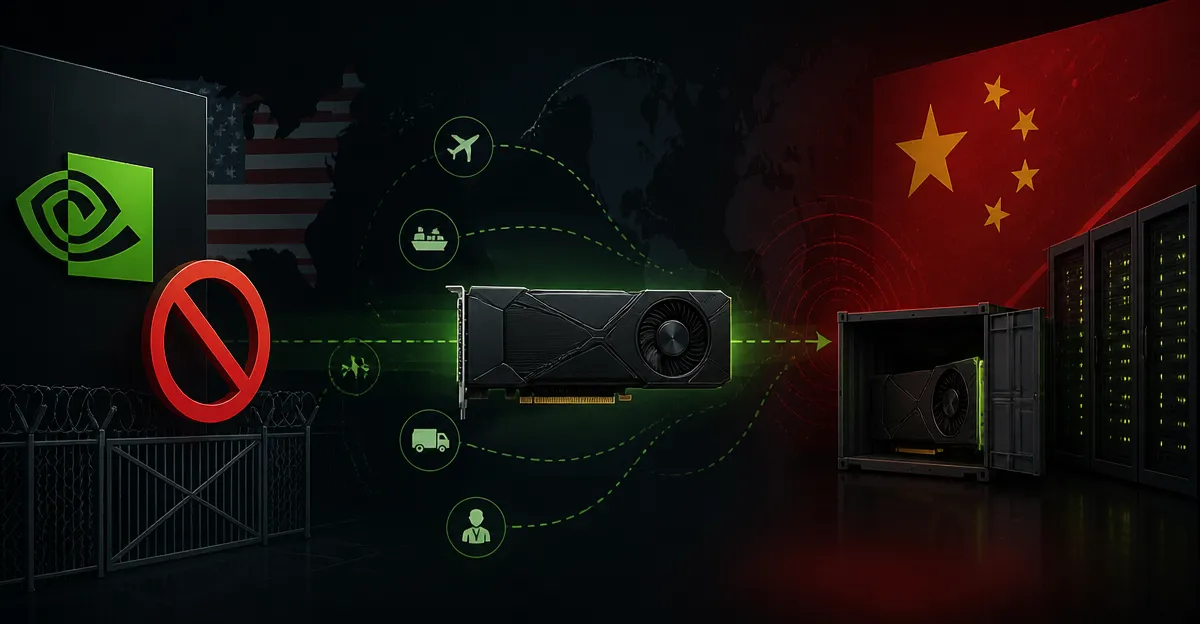
The scandal also carries political dimensions. U.S. intelligence agencies suspect Alice Huang, one of the women linked to the CEO, of spying for China. The allegation adds a national security dimension to a corporate governance crisis, and it could invite congressional scrutiny of foreign influence in the semiconductor supply chain. Huang had led Nvidia since its founding in 1993, and his personal relationships with customers and partners have been closely tied to the company's strategy of identifying emerging technologies and cultivating major buyers.
Morningstar said before the resignation: "We've long considered Nvidia and Jensen Huang to be at the center of the AI ecosystem; his departure could lead to less AI dealmaking and financing, greater regulation, and more political backlash around artificial intelligence."
The distinction between the leadership crisis and underlying AI demand will prove crucial. Nvidia's chips remain deeply embedded in infrastructure used to train and operate advanced models, and cloud providers and AI developers will not stop buying capacity overnight. The immediate risk is to investor sentiment and valuations. The longer-term risk is whether the industry can maintain its pace of expansion if Nvidia's new leadership pulls back from the financing role that Huang championed.
Nvidia is scheduled to report quarterly earnings on November 17. Investors will be watching not only the financial results but also whether the company's strategy of aggressively supporting the AI ecosystem remains intact under interim CEO Colette Kress and whatever board succeeds her.

Shamil has a low tolerance for AI that only works in controlled demos. He covers agentic systems and generative AI with the skepticism of someone who has seen too many “revolutionary” tools quietly disappear six months after launch.