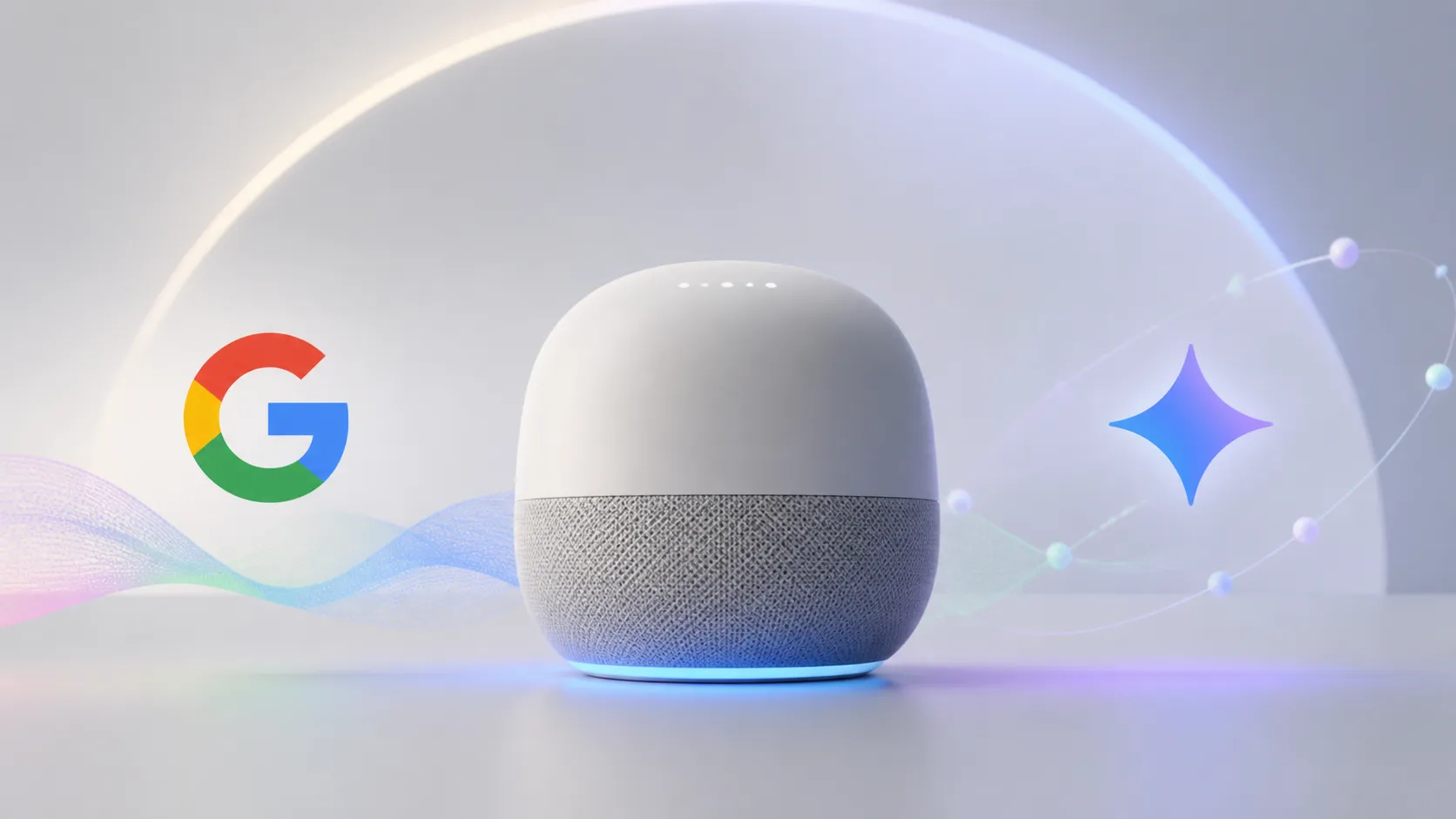
June 17, 2026, (Inside AI) — Google has launched a new Google Home Speaker, purpose-built for its Gemini AI assistant. The device, announced today, integrates advanced conversational capabilities into a sustainably designed smart speaker, now available for pre-order.
A Speaker Designed for the Gemini Era
The new Google Home Speaker arrives in four color options: Hazel, Porcelain, Jade, and a vivid Berry (the latter two exclusive to the US). Its exterior features a custom 3D-knit textile wrap, which the company says uses recycled materials. A novel light ring underglow provides visual cues when the device is listening, processing, or responding.
Privacy remains a focal point. A physical mute toggle on the device instantly disables the microphone, cutting off audio input without relying on software controls. This hardware switch addresses long-standing user concerns about always-listening devices.
Gemini’s Role in Daily Routines
The speaker’s core differentiator is its deep integration with Gemini, Google’s multimodal AI model. Unlike previous Nest speakers that relied on simpler commands, this device enables multi-step, context-aware interactions. Users can plan outings by asking Gemini to find a free weekend afternoon, block it on their calendar, and check the weather—all in one flow.
Read: Google Brings Gemini Spark to macOS in the US with App Integrations and Real-Time Tracking
In the kitchen, the assistant can suggest healthy school lunch ideas based on dietary preferences, then add missing ingredients directly to a shopping list. Entertainment discovery also gets a boost: a user might say, “Hey Google, recommend a good podcast about scientific breakthroughs with entertaining 30-minute episodes that I can listen to after a long work day.”
Privacy and Design Trade-offs
Google emphasizes the speaker’s sustainable build, but the company has not disclosed specific percentages of recycled content or repairability scores. The 3D-knit fabric, while visually distinctive, may raise questions about long-term durability and cleaning compared to rigid plastic enclosures.
The light ring underglow is a subtle but significant addition. It replaces the top-facing LEDs of older models with a downward-facing glow, potentially reducing visual clutter. However, its visibility from across a room remains unverified outside controlled demos.
Competing in a Crowded Market
The smart speaker market has matured, with Amazon Echo and Apple HomePod already offering generative AI features. Amazon recently updated Alexa with large language model capabilities, while Apple’s HomePod leverages on-device processing for privacy. Google’s advantage lies in Gemini’s ability to reason across Google’s ecosystem—Calendar, Maps, Shopping, and YouTube—without requiring third-party skills.
Still, past Google Assistant devices suffered from fragmented experiences across generations. The new speaker must prove that Gemini integration is seamless and consistent, not just a rebranding of existing functionality.
What’s Not Yet Clear
Google has not disclosed pricing, precise availability dates, or technical specifications like speaker drivers or wireless protocols. The company also hasn’t detailed how Gemini handles ambiguous requests or corrects errors mid-conversation—a known challenge for large language models in voice interfaces.
Pre-orders are open now, but shipping timelines remain vague. This cautious rollout suggests Google is testing demand before committing to mass production, a strategy that could limit initial supply.
Read: China’s Bold Plan to Embed AI in Every Home and Shop
Looking Ahead
The new Google Home Speaker marks a strategic shift toward AI-first hardware. If successful, it could redefine how users interact with smart homes—moving from simple commands to collaborative planning. But execution will be key: Gemini’s reliability, privacy safeguards, and real-world performance will determine whether this device becomes a household staple or another niche gadget.