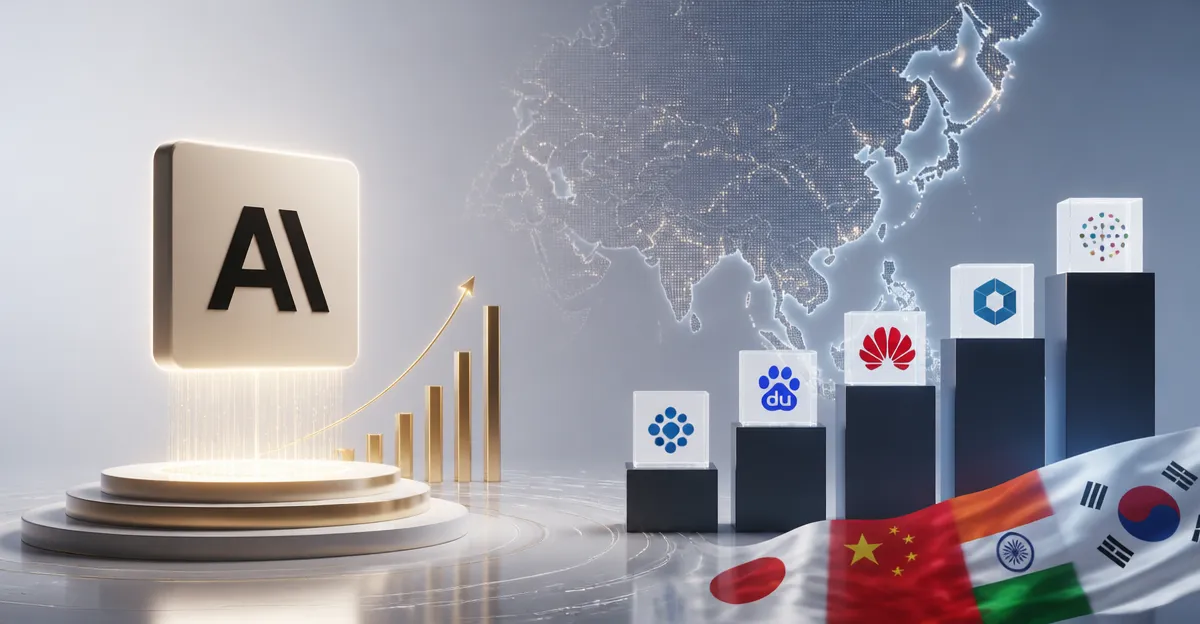
November 24, 2026, (Inside AI) — Anthropic's long-anticipated public listing has reset the valuation benchmark for artificial intelligence developers across Asia, forcing the region's leading labs to justify their own fundraising ambitions against a newly public US rival. The IPO, confirmed in a podcast segment from Nikkei Asia's Tech Latest, marks the first time a frontier AI model developer has moved from private venture backing to public market scrutiny at scale.
The listing matters far beyond one company's balance sheet. Asia hosts a dense cluster of well-funded AI labs, from Japan and South Korea to Singapore and China, many of which have spent the past two years raising private capital on valuations that were never tested by public investors. Anthropic's debut gives those labs a reference price and, more importantly, a disclosure standard.
Public filings expose revenue, losses, compute costs, and customer concentration in ways private rounds never do. That transparency now becomes the yardstick. Asian labs weighing their own listings will face questions their founders have so far avoided in private.
Why Public Markets Change the Valuation Math
The core tension is straightforward. Private AI valuations have rested on projected future revenue. Public markets price current earnings and discount uncertain futures more harshly. Anthropic's trading performance will tell Asian investors whether frontier model developers can sustain venture-era multiples once quarterly reporting begins.
Compute spending sits at the center of that calculation. Training and inference costs dominate the expense lines of every frontier lab, and public shareholders will demand a visible path to margin. Asian labs that raised on narrative will need to show unit economics.
Japan's SoftBank and its portfolio companies, along with state-backed initiatives in South Korea and Singapore, have poured capital into domestic model development. Those backers now have a public comparable to cite in boardrooms and to regulators.
The competitive dynamic also shifts. A publicly listed Anthropic can raise capital through equity markets repeatedly, giving it a funding channel that private Asian rivals lack. That advantage compounds over time as model training costs climb.
Anthropic's own trajectory has been closely watched since its founding in 2021 by former OpenAI researchers. The company built its reputation on safety-focused development and the Claude family of models, securing backing from Google and Amazon before pursuing public markets.
Those strategic investors now hold stakes subject to public disclosure and lockup schedules. Their exit timelines will influence how much capital flows back into the broader AI ecosystem.
The Disclosure Standard Asia's Labs Must Meet
Asian AI developers have largely avoided the granular reporting that US public companies must produce. Quarterly earnings calls, risk factor disclosures, and audited financials will become table stakes for any lab seeking a comparable listing.
Several regional players have signaled interest in public markets but have not committed to timelines. The Anthropic precedent gives them both a template and a warning about what scrutiny awaits.
Government-backed funds across Asia, which have financed much of the region's AI buildout, will likely reassess their positions. Public comparables make it easier to mark private holdings and to justify continued investment to taxpayers and legislators.
The broader signal is that AI development is entering a phase where capital discipline matters as much as model capability. Labs that cannot articulate a credible path to revenue will struggle to raise at previous valuations, whether public or private.
For now, the market waits to see how Anthropic's shares perform in early trading. That price will echo through boardrooms from Tokyo to Seoul to Singapore, setting the terms for Asia's next wave of AI fundraising.

Shamil has a low tolerance for AI that only works in controlled demos. He covers agentic systems and generative AI with the skepticism of someone who has seen too many “revolutionary” tools quietly disappear six months after launch.