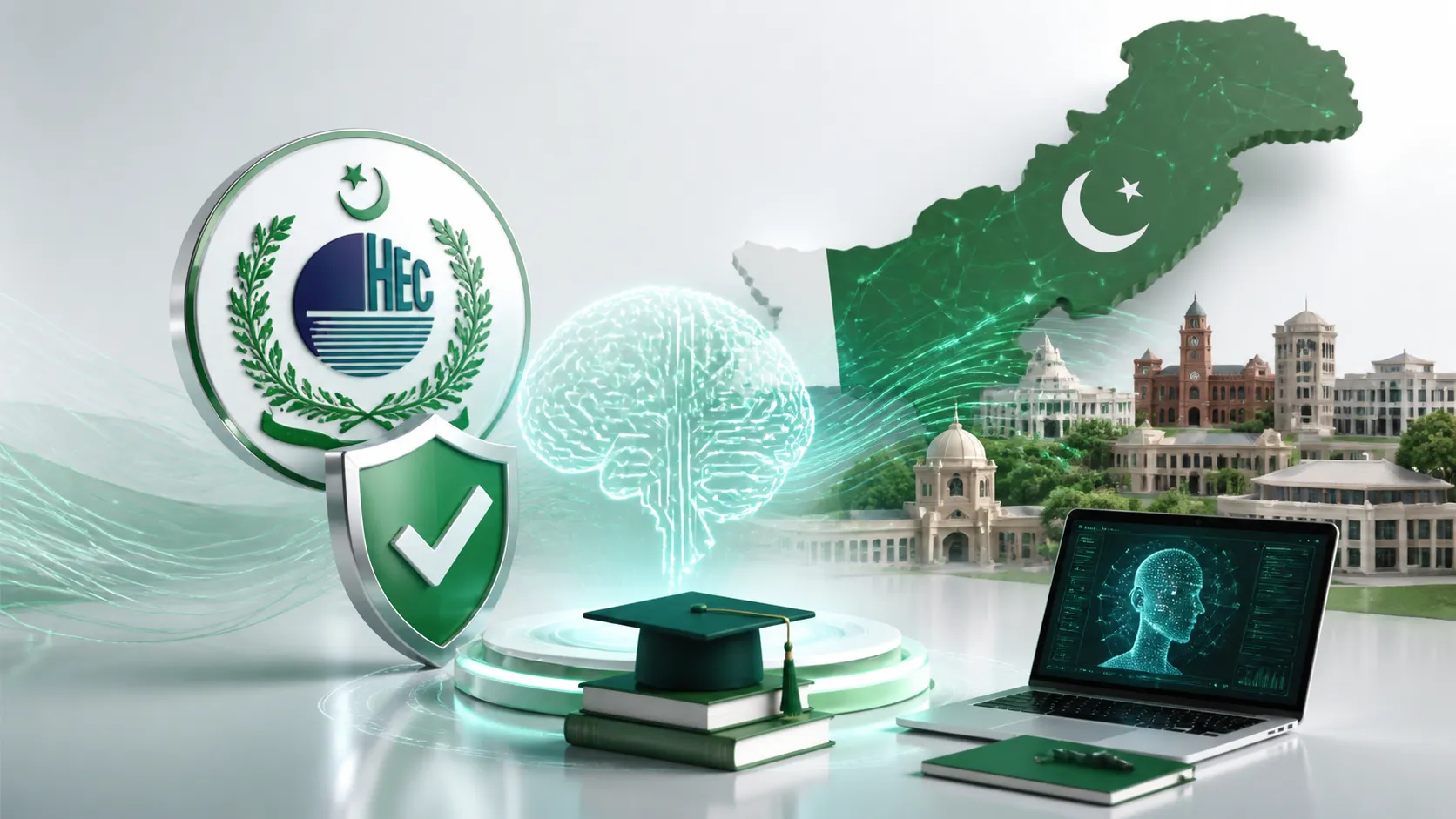
June 18, 2026, (Inside AI) — Pakistan’s Higher Education Commission (HEC) has mandated a 3-credit-hour artificial intelligence course for all public-sector university students. The directive, approved during the 45th HEC meeting, requires immediate curriculum integration across relevant degree programs.
A Nationwide Push for AI Literacy
The course, titled “Introduction to Artificial Intelligence,” aims to build foundational AI knowledge. HEC officials confirmed the decision followed a consultative meeting of vice-chancellors. It targets future-ready digital skills for graduates.
Implementation will occur in phases across academic disciplines. Information Technology University developed three proposed course modules now shared with public universities. A formal notification has been issued to Punjab institutions, urging accelerated adoption.
Why Now? The Global AI Imperative
This move reflects artificial intelligence’s growing economic importance. Education officials stated it prepares graduates for technology-driven workplace demands. The standardized course covers machine learning, data-driven technologies, and industry applications.
Read: Pakistan’s Punjab to Make AI a Compulsory Subject in Primary Schools by 2027
HEC officials emphasized this is part of a broader modernization strategy. The goal is to strengthen digital literacy and keep Pakistani graduates competitive. The policy also aims to spur interest in emerging technologies.
Behind the Curriculum: Modules and Mandate
The three ITU-developed modules provide a structured approach. Details remain limited, but they align with HEC’s vision for a skilled workforce. The course is mandatory, not elective, signaling a serious commitment.
Vice-chancellors endorsed the plan, but challenges loom. Resource disparities between universities may affect implementation quality. Faculty training and infrastructure gaps could slow the rollout.
Competing Perspectives on Top-Down AI Education
Some educators welcome the standardization. Others question a one-size-fits-all model. “Mandating a single course risks superficial learning,” said Dr. Ayesha Khan, an independent education policy analyst. “AI education needs integration across disciplines, not isolation.”
Industry voices echo this. Tech leaders argue for hands-on projects over theory. The HEC’s phased approach may address such concerns, but details on assessment and faculty development remain unclear.
What’s Missing: Faculty, Funding, and Follow-Through
No public funding plan has been announced for teacher training or lab setups. Past HEC initiatives faced delays due to bureaucratic hurdles. Without sustained investment, the mandate could become a paper exercise.
International benchmarks show successful AI education requires industry partnerships. Pakistan’s policy currently lacks explicit linkage to the private sector. This gap may limit practical exposure for students.
Read: Pakistan Bets Rs. 16.29 Billion on IT Parks and AI in 2026-27 Budget
Historical Echoes: From IT to AI
This isn’t Pakistan’s first curriculum overhaul. In the early 2000s, a mandatory IT course was introduced with mixed results. Then, as now, infrastructure and faculty readiness were critical bottlenecks. The AI mandate risks repeating history without systemic support.
Globally, countries like Finland and Singapore have integrated AI literacy from K-12 upward. Pakistan’s university-focused move is a late but necessary start. Its success hinges on execution beyond the notification.
The Road Ahead: Digital Transformation Goals
HEC officials link the course to Pakistan’s digital transformation ambitions. A skilled AI workforce could attract foreign investment and boost the innovation ecosystem. However, immediate focus must shift to teacher training and resource allocation.
Universities are now tasked with incorporating the course. Monitoring mechanisms will determine if this mandate translates into genuine skill development. For now, Pakistan joins a growing list of nations treating AI literacy as a core competency.