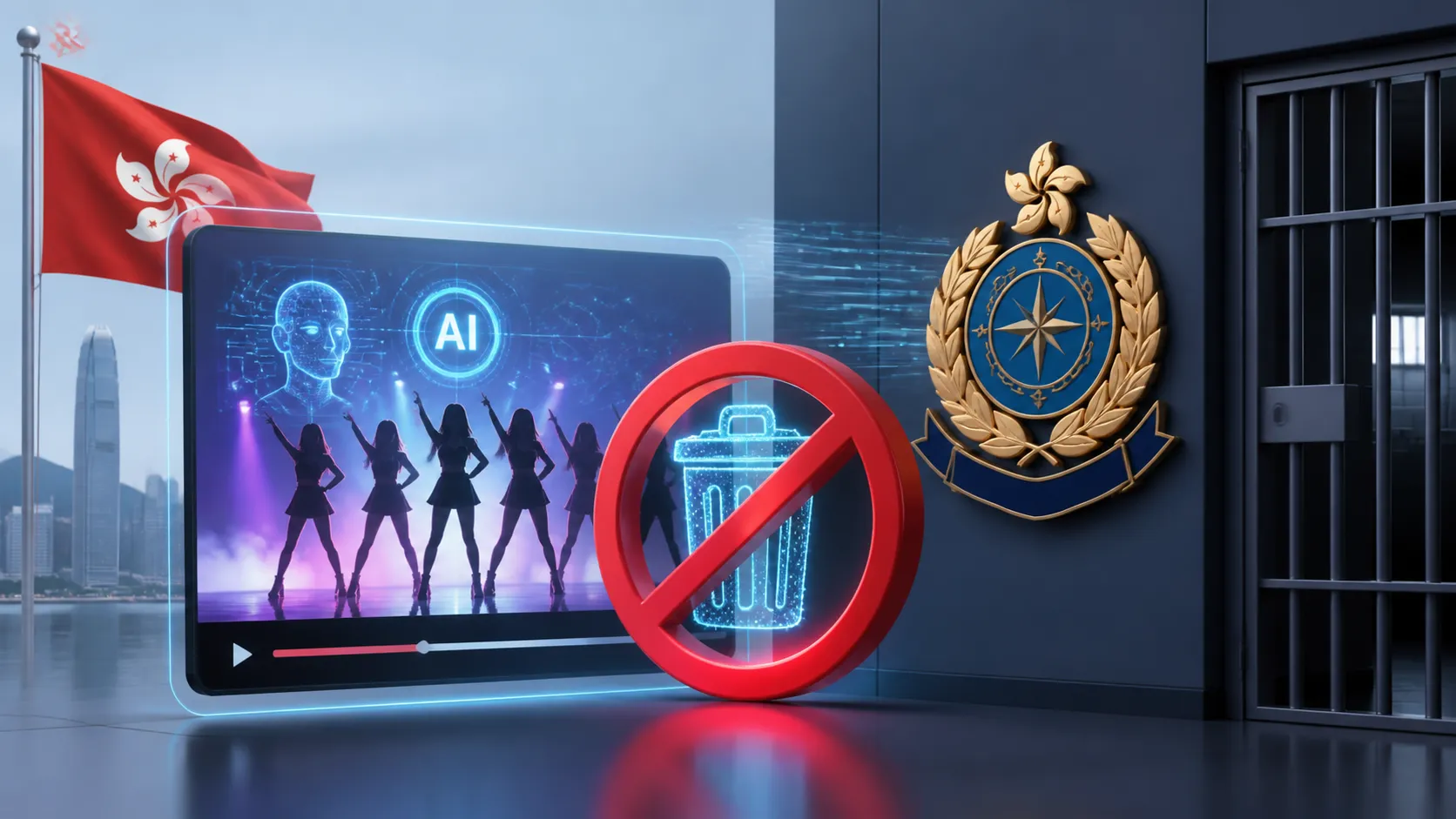
June 27, 2026, (Inside AI) — Hong Kong’s Correctional Services Department abruptly pulled an AI-generated anti-drug video from social media after viewers said it glamorized illegal substances. The clip, titled “Obsession: The Sugar-Coated Trap,” featured four virtual K-pop idols singing and dancing while delivering seductive lines about cannabis and methamphetamine.
The department released the video on Friday, aiming to warn youth about the dangers of drugs through a trendy format. Instead, it sparked backlash for what critics called a promotional tone. One character, named “Cannabis,” cooed: “With a romantic puff of smoke [from grass], only one stick will help you forget all worries. Very chilled.”
Another, “Ice,” promised: “guarantee you feel so good your soul leaves your body.” The department swiftly deleted the original and uploaded a revised version after online ridicule mounted. A spokesman defended the project, stating the AI-generated video was meant to show that “through a method popular with young people, that drug use is poison packaged in a sugar-coated form, reminding them not to be tempted by it.”
AI’s Seductive Trap: When Anti-Drug Messaging Mimics Promotion
The incident highlights the perils of using generative AI for sensitive public messaging without rigorous testing. The department leveraged AI to create hyper-realistic, attractive avatars and catchy lyrics, betting on K-pop’s youth appeal. But the execution blurred the line between warning and endorsement. Social media users noted the glossy production made drug use seem glamorous, not dangerous.
Experts in AI ethics point to a growing tension: as tools like Midjourney and Suno democratize content creation, institutions may rush campaigns without understanding cultural nuances. “The uncanny valley works both ways—if it’s too polished, the message gets lost,” said Dr. Li Wei, a Hong Kong-based media psychologist, in an interview. The department’s quick retraction suggests internal misalignment between creative ambition and regulatory caution.
This isn’t the first AI-generated public service announcement to misfire. In 2025, a Singaporean health agency pulled an AI-animated video after viewers said it trivialized mental health. The Correctional Services Department has not disclosed the specific AI tools used, but the video’s quality suggests advanced generative models for both visuals and audio. The revised version reportedly tones down the suggestive lyrics and adds explicit anti-drug warnings.
Generative AI’s Double-Edged Sword in Public Campaigns
Hong Kong’s strict drug laws carry severe penalties, including life imprisonment for trafficking. The department’s intent was to reach digitally native youth, but the backlash underscores a broader challenge: AI-generated content can inadvertently amplify the very behaviors it seeks to curb. The characters’ flawless appearances and catchy hooks may have overridden the intended cautionary tale.
Industry analysts argue for mandatory focus-group testing before deploying AI-driven campaigns. “When you anthropomorphize drugs, you risk making them relatable,” said Raj Patel, a digital policy researcher at the University of Hong Kong. The department’s spokesman added that the video was part of a larger initiative to modernize outreach, but no further AI projects are planned until a review is complete.
The revised video remains online, stripped of the most controversial lines. Yet the episode leaves a lingering question: can AI ever safely navigate the nuance of anti-drug messaging, or will it always teeter on the edge of unintended promotion? As generative AI becomes ubiquitous, regulators worldwide are watching Hong Kong’s misstep as a cautionary case study.