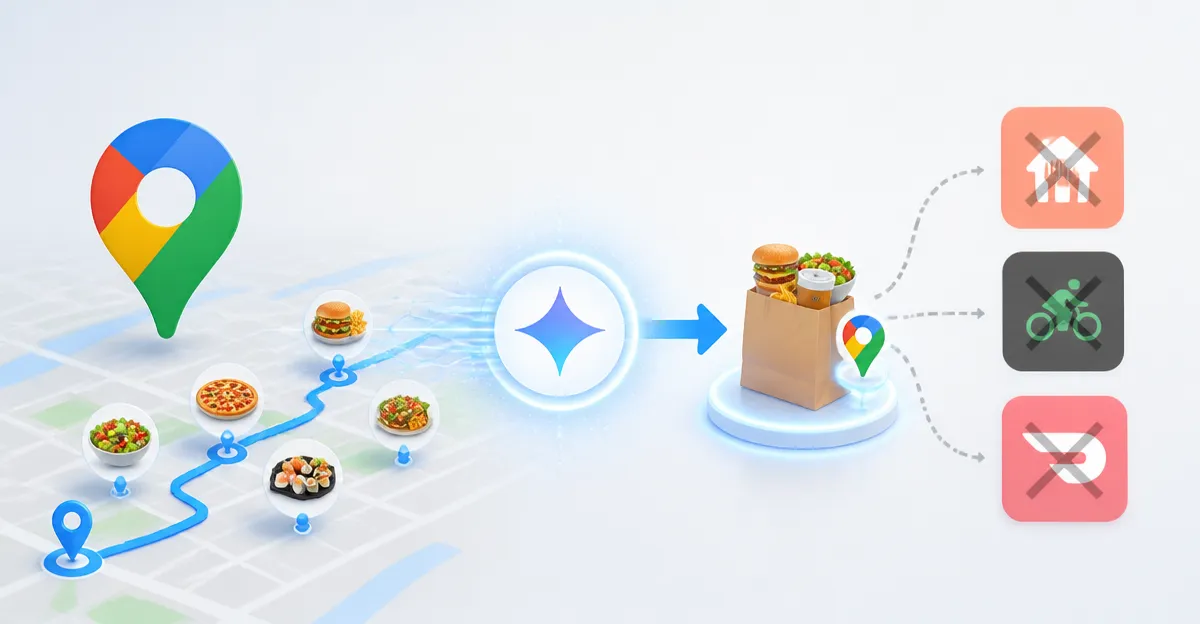
July 6, 2026, (Inside AI) — Google Maps is preparing to let users order food directly within its app, eliminating the need for third-party delivery services. Code discovered in the latest Android version reveals a conversational AI tool integrated with Ask Maps that handles meal orders end-to-end.
This isn’t a minor update. It’s a strategic move by Google to embed commerce into its mapping platform, leveraging its massive user base to challenge incumbents like DoorDash and Uber Eats. The feature, still in development, surfaced through interface elements and digital buttons found in the app’s code.
How the AI-Powered Ordering Works
Users will interact with an AI chatbot to browse menus, customize items, and complete purchases without leaving Google Maps. The system taps into restaurant data already present in Maps, streamlining the journey from discovery to delivery. A key component is a “Drive Up” service, allowing curbside pickup without exiting the vehicle.
This integration builds on Ask Maps, an AI assistant Google has been refining. By processing natural language, it can handle complex requests like “order a large pepperoni pizza from the nearest spot with a 4.5-star rating.” The code suggests real-time order tracking and payment processing are part of the package.
Read: Google Launches AI Agent Inside Search Ads in India, Expands Gemini-Powered Tools
Google confirmed the ambition in a recent blog post, stating food ordering would become a permanent feature. However, no launch date or regional rollout details have been announced. Reports indicate a trial in select markets may come soon.
The Battle for the Digital Storefront
This move intensifies the platform war over local commerce. Google Maps already dominates navigation with over 1 billion monthly users. Adding transactions could siphon revenue from delivery apps that pay hefty fees for customer acquisition. Industry analyst Sarah Tavel noted, “If Google can reduce friction in the ordering process, it could capture a significant share of the food delivery market overnight.”
Yet challenges loom. Delivery logistics—driver networks, real-time tracking, and restaurant partnerships—are complex. Google may rely on existing providers or build its own fleet, as it did with Google Express. The code hints at a “Drive Up” service, suggesting a hybrid model that leverages user location for pickup efficiency.
Privacy advocates raise concerns. Ordering food through Maps means Google could merge dining habits with location history, creating a richer profile for ad targeting. This data synergy is a double-edged sword: convenient for users, but potentially invasive.
Competitors are not standing still. Uber recently integrated AI trip planning, and DoorDash launched a voice-ordering system. The race to own the “super app” experience is heating up, with Google’s vast ecosystem giving it a formidable edge.
Read: Adyen Launches Agentic AI Tools for US Merchants to Simplify AI Shopping
The feature’s success may hinge on execution. A clunky interface or limited restaurant selection could deter early adopters. But if Google nails the integration, it could redefine how millions order food, making Maps a one-stop shop for navigation and nourishment.