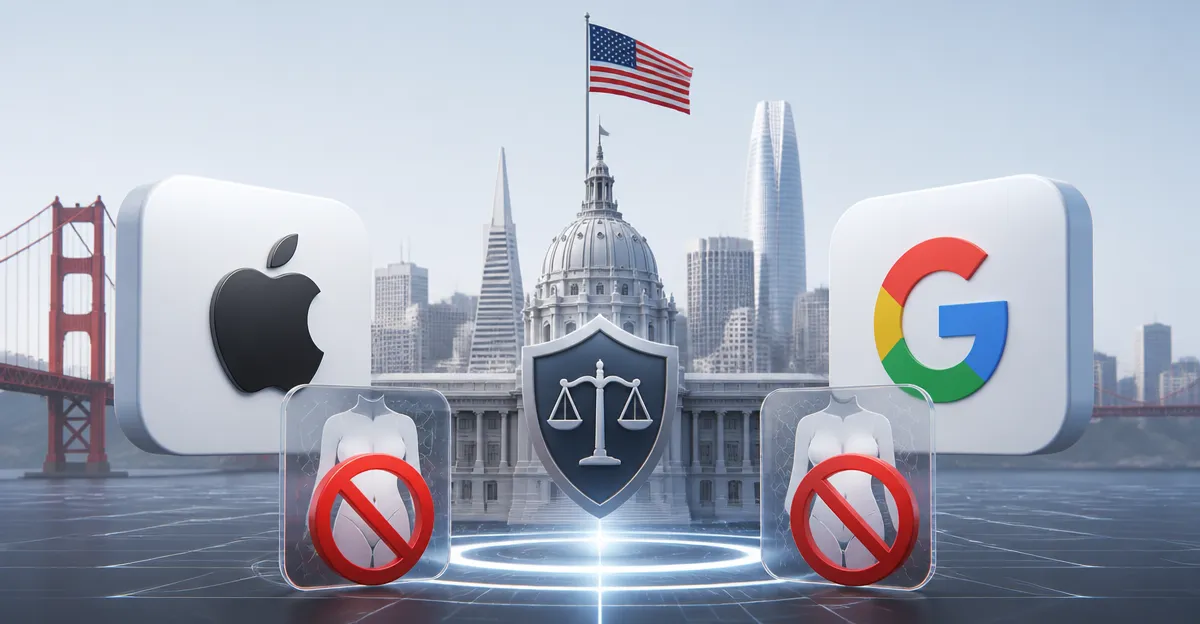
July 18, 2026, (Inside AI) — The City of San Francisco has formally ordered Apple and Google to purge AI-powered “nudify” apps from their app stores, escalating a year-long battle over deepfake pornography. City Attorney David Chiu dispatched cease-and-desist letters this week, targeting 13 specific apps that digitally undress people in photos without consent.
The demand arrives after repeated warnings went unheeded. The Tech Transparency Project (TTP) published reports in January and April 2026, flagging dozens of apps selling non-consensual intimate images (NCII). Both tech giants profit from these apps through payment processing, with Chiu estimating they’ve earned millions in fees.
Apple and Google have 28 days to respond. Failure to fully comply could trigger massive civil penalties under California law, which now explicitly allows victims to sue third-party facilitators. The move tests whether app store gatekeepers will finally be held liable for enabling sexual abuse at scale.
The Profit Motive and a Year of Inaction
Apple and Google were not caught off guard. The TTP’s earlier investigations accused both companies of actively steering users toward deepfake tools. One report stated they were “key participants” in spreading sexualized deepfakes. Yet, the apps remained available for months.
Read: Minnesota Defends AI Nudification Ban Against xAI Lawsuit
Chiu’s letter underscores the financial stake. By taking a cut of in-app purchases and subscriptions, Apple and Google directly benefit from illegal content. This goes beyond hosting; it’s a revenue stream built on exploitation.
The targeted apps use face-swap and generative AI to create realistic nudes from clothed photos. While female celebrities are high-profile victims, anyone with a public image is at risk. The technology has become frighteningly accessible, with some apps requiring just a single photo.
Apple told us it removed 3 apps and is terminating developer accounts. Google suspended all 5 Play Store apps named in the letter and restricted search terms like “nudify.” But critics argue these reactive steps are too little, too late.
Legal Exposure and a Shifting Landscape
California law already criminalizes knowingly facilitating deepfake pornography. A 2025 statute expanded liability to third-party facilitators, allowing civil lawsuits against platforms that host or profit from NCII. San Francisco’s action leverages this new legal weapon.
If Apple and Google don’t satisfy the city’s demands, they could face not just fines but also a precedent-setting courtroom battle. Legal experts note that Section 230 of the Communications Decency Act has historically shielded platforms, but recent rulings have carved out exceptions for content that violates federal criminal law.
This isn’t just about 13 apps. The TTP identified a broader ecosystem of AI exploitation tools, many of which remain online. The pressure on app stores to proactively screen for such content will only intensify. For now, San Francisco’s ultimatum signals that cities may step in where federal regulators have hesitated.
Read: South Korea Moves to Criminalize Fictional AI Porn After Acquittal
Meanwhile, victims’ advocates point out that removal is just one step. The images already created can circulate endlessly on the web. The real challenge is dismantling the infrastructure that makes non-consensual deepfakes a profitable business—and that means holding the biggest platforms accountable.