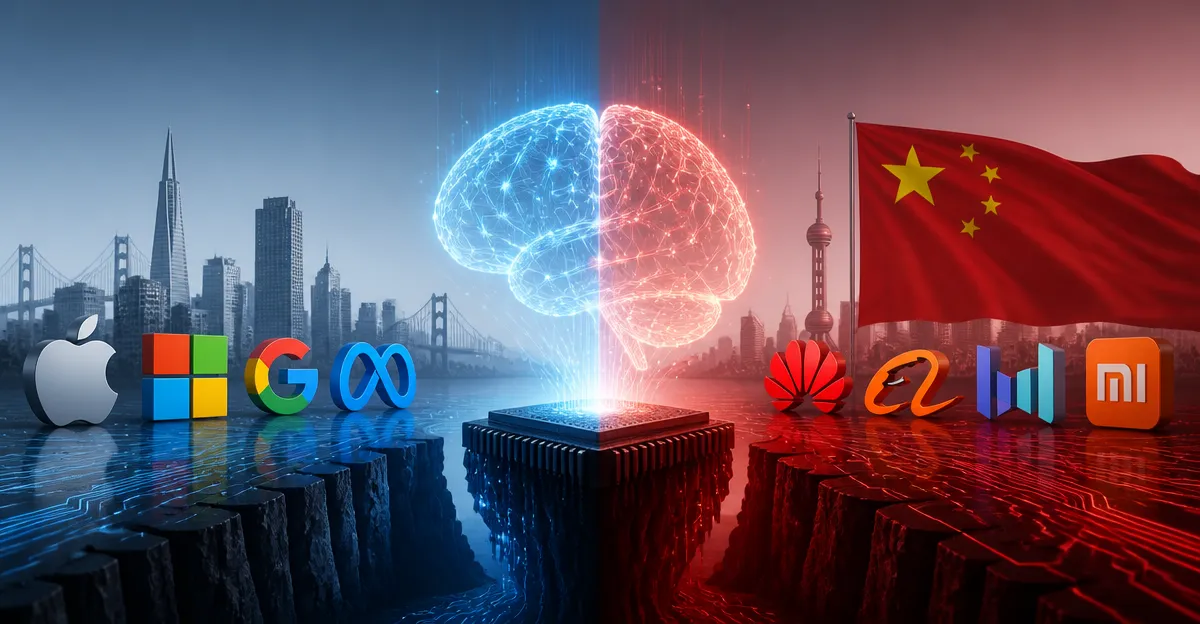
July 28, 2026, (Inside AI) — A fierce debate over open-source artificial intelligence is splitting Silicon Valley, ignited by the release of a powerful new Chinese model that rivals top American systems. The dispute pits tech leaders advocating for freely available, modifiable AI against those warning of safety risks and strategic threats.
Nvidia CEO Jensen Huang used his first-ever post on X to endorse an open letter from Microsoft, arguing that open models strengthen safety and cybersecurity. The letter, signed by SpaceX, Palantir, and Andreessen Horowitz, claims open-source AI is essential for innovation and national prosperity.
Notably, Anthropic refused to sign. The company maintains that open-source models are harder to regulate and pose inherent dangers compared to proprietary systems like its Claude chatbot. OpenAI signed but has previously echoed similar concerns; last week, its head of strategic futures, Dean Ball, warned on X that open-source policies could benefit China and lead to "full AI communism."
The catalyst is Kimi K3, a Chinese open-source model that matches leading U.S. counterparts. Its release has rattled both Silicon Valley and the White House, exposing a parallel divide within the Trump administration. Treasury Secretary Scott Bessent accused Chinese labs of stealing U.S. intellectual property and hinted at sanctions, yet no consensus has emerged on restricting models like Kimi K3, partly because some American firms now depend on cheaper Chinese alternatives.
Economic incentives are stark. Venture capital firms worry about soaring AI costs for businesses, while chipmakers like Nvidia profit from broader demand. In contrast, Anthropic and OpenAI have built substantial leads in the U.S. frontier market; open-source models threaten to erode their dominance by offering cheaper, accessible alternatives.
This tension echoes historical open-source battles, such as the Linux versus proprietary Unix wars of the 1990s, but with higher stakes. Research from a 2025 paper on open-source AI risks highlights that while open models democratize access, they also lower barriers for malicious actors. The debate now forces a reckoning: can the U.S. maintain its edge without stifling the collaborative ethos that fueled early AI breakthroughs?
In a related development, Google was fined roughly $1 billion by the European Union for violating the Digital Markets Act by favoring its own services. Yet the penalty barely dents Google's quarterly profit of $120 billion, a 24% increase. More alarming for investors was a 7% stock drop after the company raised capital expenditure forecasts to nearly $205 billion, pushing free cash flow into negative territory. The spending spree, largely on AI infrastructure, has Wall Street questioning if the returns will materialize.
Meanwhile, social media giants continue to sidestep courtroom battles over youth addiction. A lawsuit by a 15-year-old Florida boy was dropped after Meta, YouTube, TikTok, and Snap settled. Meta paid nothing; the plaintiff's lawyers cited the boy's desire to avoid a grueling trial and focus on recovery. Thousands of similar cases remain, with the first federal trial set for August 18 in Oakland, California.