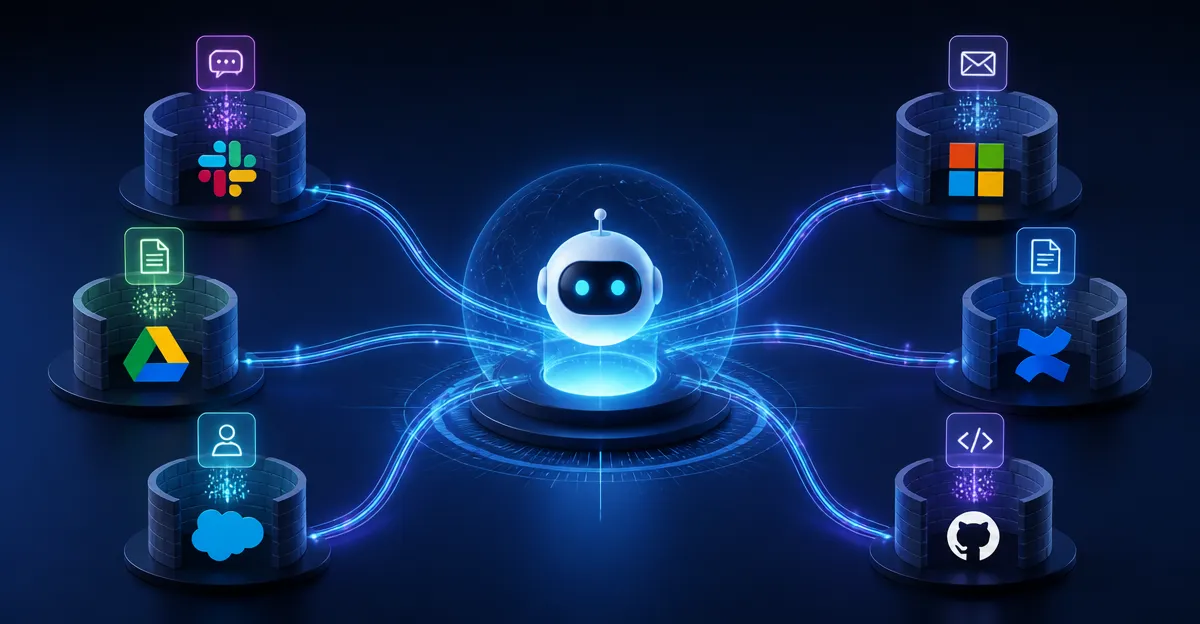
July 30, 2026, (Inside AI) — Artificial intelligence agents are being deployed to break down the organizational silos that often paralyze corporate decision-making, according to a new analysis from the MIT Initiative on the Digital Economy. The research highlights how autonomous AI systems can coordinate cross-functional workflows, preventing the kind of fragmented responses that cost companies millions in missed opportunities.
The study points to a common scenario: a CEO orders an inventory pull-forward to beat a looming tariff, but the directive gets bogged down in negotiations between procurement, logistics, finance, and other departments. By the time a compromise emerges, the tariff window has closed. AI agents, the researchers argue, can act as neutral orchestrators, aligning incentives and executing tasks without the friction of human territorialism.
“AI agents can serve as a coordination layer that transcends departmental boundaries, ensuring that strategic directives are executed with speed and fidelity.” Dr. Stephanie L. Woerner, principal research scientist at the MIT Center for Information Systems Research, said in the report.
The concept builds on the growing field of multi-agent systems, where specialized AI agents handle distinct tasks but communicate through shared protocols. In the tariff example, a procurement agent might immediately adjust purchase orders, a logistics agent reroute shipments, and a finance agent reallocate budgets, all within a unified framework that respects the CEO’s original intent.
This approach contrasts sharply with traditional enterprise software, which often reinforces silos by optimizing for departmental efficiency rather than company-wide goals. The MIT paper notes that siloed AI deployments can actually worsen fragmentation, as each function builds models that prioritize local metrics over systemic outcomes.
“Without a governing architecture, AI becomes just another tool for suboptimization.” Peter Weill, chairman of the MIT CISR, stated during a briefing on the findings.
The research draws on case studies from global manufacturers and retailers that have piloted agent-based orchestration. One unnamed Fortune 500 company reportedly reduced cross-functional decision latency by 60% after implementing a multi-agent system that automatically reconciled conflicting departmental plans.
Industry analysts have long noted that the gap between executive intent and operational reality is a major source of value destruction. A 2023 McKinsey survey found that only 20% of strategic initiatives achieve their intended results, with interdepartmental misalignment cited as a top barrier. AI agents could close that gap by enforcing real-time coordination that human managers struggle to maintain.
However, the technology is not without risks. Autonomous agents operating across silos require robust governance to prevent unintended consequences, such as supply chain disruptions from overly aggressive inventory moves. The MIT team emphasizes the need for “guardrails” that keep agents aligned with ethical and regulatory constraints.
The findings align with broader trends in agentic AI, where systems are designed to pursue complex goals with minimal human supervision. Startups like Cognition AI and tech giants such as Google are investing heavily in agent frameworks that can handle multi-step business processes.
Yet some experts caution that organizational culture may be the bigger hurdle. “Agents can optimize workflows, but they can’t fix broken trust between teams.” Dr. Arvind Narayanan, professor of computer science at Princeton University, commented in an unrelated interview about AI’s limits in social systems.
The MIT research suggests that successful deployments start with a clear mapping of decision rights and a phased rollout that builds confidence among human stakeholders. Companies that treat AI agents as collaborative partners rather than replacements tend to see better adoption.
As tariffs and trade disruptions become more frequent, the ability to act swiftly across silos is emerging as a competitive advantage. AI agents may soon be the standard solution for turning executive vision into operational reality, but only if organizations are willing to redesign the structures that created the silos in the first place.