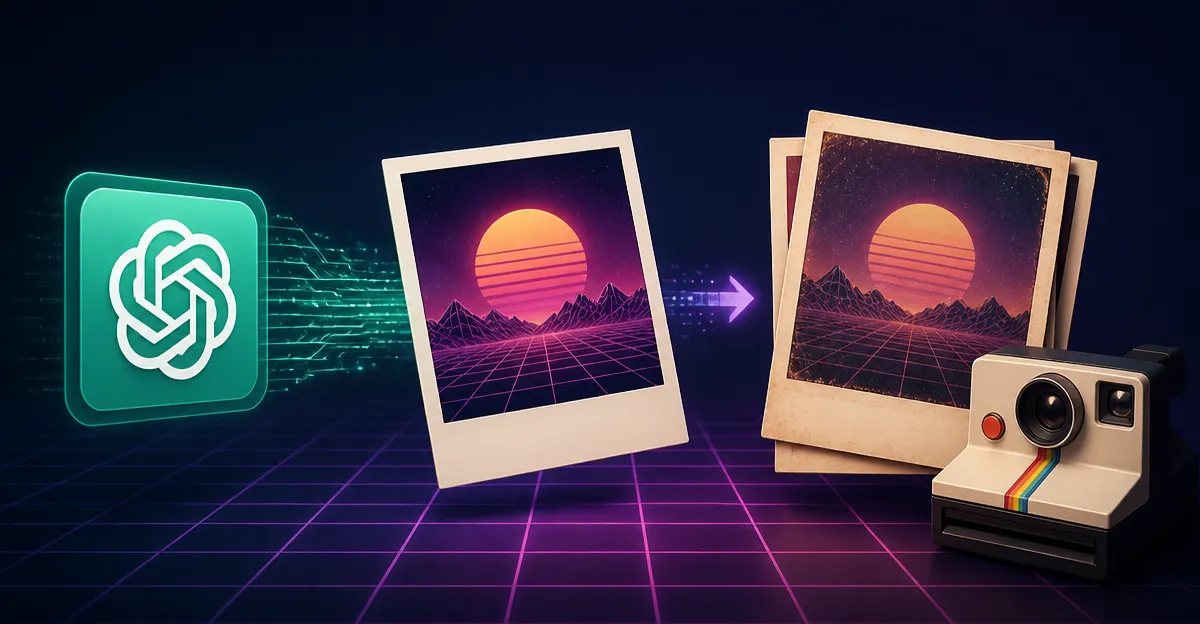
September 9, 2026, (Inside AI) — A wave of grainy, sepia-toned portraits is flooding Instagram and X, as users transform modern selfies into images that look pulled from a 1980s family album. The ChatGPT '80s photo trend has become the latest viral AI image craze, following earlier obsessions with Studio Ghibli-style portraits and AI-generated figurines.
The trend is hard to miss. Across social media, users are posting portraits featuring oversized hairstyles, vintage clothes, statement accessories, warm lighting, and the grainy finish associated with old film photographs. Instead of simply adding a filter, users ask ChatGPT to recreate their photograph while preserving their appearance and changing everything from the hairstyle and clothes to the setting and lighting.
The finished images often look like they belong in an old family album, magazine shoot, or Bollywood film archive. Bouffant hairstyles, aviator sunglasses, colourful outfits, sepia tones, studio backdrops, and subtle film grain are among the details users are adding to their pictures.
Public Figures Fuel the Nostalgia Wave
The trend has caught the attention of several well-known Indian personalities. Union Commerce and Industry Minister Piyush Goyal was among those who joined in, sharing an AI-created version of himself on X. In the image, Goyal appears in a sharp grey suit, white shirt, and aviator sunglasses, with the photograph styled to resemble a 1980s portrait. The faded tones and grainy finish give it the appearance of a photograph taken decades ago.
Minister of Parliamentary Affairs and Minority Affairs Kiren Rijiju also tried his hand at the trend. His AI portrait shows him standing beside a vintage car in an outfit that fits the era perfectly. Sharing the image, Rijiju wrote, "Why is everyone going back to the 80s vibes? I'm also forced to 80s nostalgia!"
Sports journalist Vikrant Gupta and writer Kumar Vishwas have also shared their own versions, joining the growing list of public figures experimenting with the retro makeover. Star Sports Kannada took the trend a step further by giving Indian cricketers, including Virat Kohli and K L Rahul, an imagined 1980s transformation. The images show how easily the same prompt can be adapted to create a completely different era and visual style.
The nostalgia has spread well beyond politicians and journalists, with several celebrities and public figures sharing their own AI-created retro portraits, including actors Tamannaah Bhatia, Dipika Chikhlia, Lin Laishram, and Anita Hassanandani.
How the Retro Transformation Works
You do not need Photoshop or advanced editing skills to try the trend. ChatGPT can handle most of the transformation if you give it a clear photograph and detailed instructions. Open ChatGPT and start a new conversation. Tap the plus icon and upload a clear photograph. A well-lit, front-facing picture with a relatively uncluttered background generally works best.
Tell ChatGPT what kind of 1980s look you want, including the clothes, hairstyle, accessories, setting and lighting. Ask it to preserve your recognisable facial features and natural skin tone while changing the styling and surroundings. Look at the result and make follow-up requests if you want to adjust specific details. You can refine the same image rather than starting over each time.
Once you have uploaded your photograph, you can use a prompt like this: "Reimagine this image as a glamorous 1980s Indian film portrait. Retain the subject's recognisable facial features and natural skin tone. Add voluminous, softly curled hair, a bold and colourful outfit, statement jewellery, warm studio-style lighting, rich cinematic tones and a subtle vintage film grain. Ensure the final image looks realistic, polished and elegant."
This trend highlights how AI image generation has moved beyond simple filters to full stylistic reinterpretation. Unlike early photo-editing tools that merely adjusted color and contrast, generative models can now reconstruct an entire scene while maintaining a person's identity. That capability has driven a series of viral aesthetics, from anime-style portraits to hyper-realistic figurines, each offering users a new way to reimagine themselves.
The 1980s aesthetic itself carries strong cultural pull. For many users, the era represents a mix of glamour, bold fashion, and analog warmth that contrasts sharply with today's polished digital imagery. The grain and faded tones evoke a sense of authenticity and nostalgia, even when the image is entirely synthetic. This emotional resonance likely explains why the trend has spread so quickly across different demographics and public figures.
As AI image tools become more accessible, such trends are likely to accelerate. The barrier to entry is now a simple text prompt, and the results can be shared instantly. That creates a feedback loop where each viral style encourages more experimentation, pushing the boundaries of what users expect from generative AI.