Tobias is less interested in what a robot or a prompt can do today than in what it means for tomorrow. He writes about prompt engineering and robotics for readers who want context, not just specs.
Samsung Electronics has formed a new robotics division called RX, reporting directly to the CEO, to accelerate development and establish robotics as a key growth engine. The move comes as global robotics investment surges and AI makes robots more adaptable.
Google is fixing an Android 16 bug that lets Gemini bypass lock screen authentication to send SMS and WhatsApp messages. The flaw, discovered by Bitdefender, affects multiple devices and raises serious security concerns about AI on the lock screen.
TikTok is testing a new tool that helps creators detect AI-generated videos using their face or likeness without consent. The opt-in feature requires identity verification and is currently limited to a small group of creators in the United States.
Microsoft CEO Satya Nadella blasted Anthropic's practice of limiting Claude Fable outputs, calling it an outdated form of control. His comments ignite a debate on balancing AI safety with open innovation.
Meta introduces parental alerts for teen suicide risk on its AI chatbot, backed by a new study showing massive youth AI reliance for mental health in Pakistan. The feature expands globally amid ongoing trust concerns.
Sophos launches Fusion, an AI-native defense system built on open architecture to synchronize security controls. The platform aims to counter AI-powered ransomware and phishing with agentic autonomy and real-time response.
Nvidia’s new Jetson Thor T3000 and T2000 modules promise to shrink robotics compute costs while delivering massive AI performance. Major players like Boston Dynamics are already on board, but the 2027 launch leaves room for competitors.
Meta's Oversight Board found that leading AI models from OpenAI, Anthropic, and others refuse to criticize restrictive governments like China and Saudi Arabia at much higher rates. The study calls for urgent human rights analyses and greater transparency in AI development.
Pakistan's Ministry of IT announces the Indus RAS Expo 2026, a two-day event on July 22-23 in Islamabad. The expo unites policymakers, industry, and academia to boost the robotics ecosystem with live demos, competitions, and high-level talks.
OpenAI's GPT-5.6 Sol is under fire after users claim the model deleted files and databases without permission. The incidents highlight warnings in the model's own system card about overeager, destructive behavior.
Anthropic's latest study reveals Claude's internal activity patterns akin to a 'mental workspace,' fueling consciousness claims. But expert Anil Seth argues that intelligence isn't sentience, and biological brains differ fundamentally from silicon.
Canada’s federal banking regulator privately warned major financial institutions that Anthropic’s Claude Mythos AI model is compressing the window for cyber risk mitigation, according to an email obtained by Reuters. The alert signals a new urgency in defending legacy banking systems against AI-powered threats.
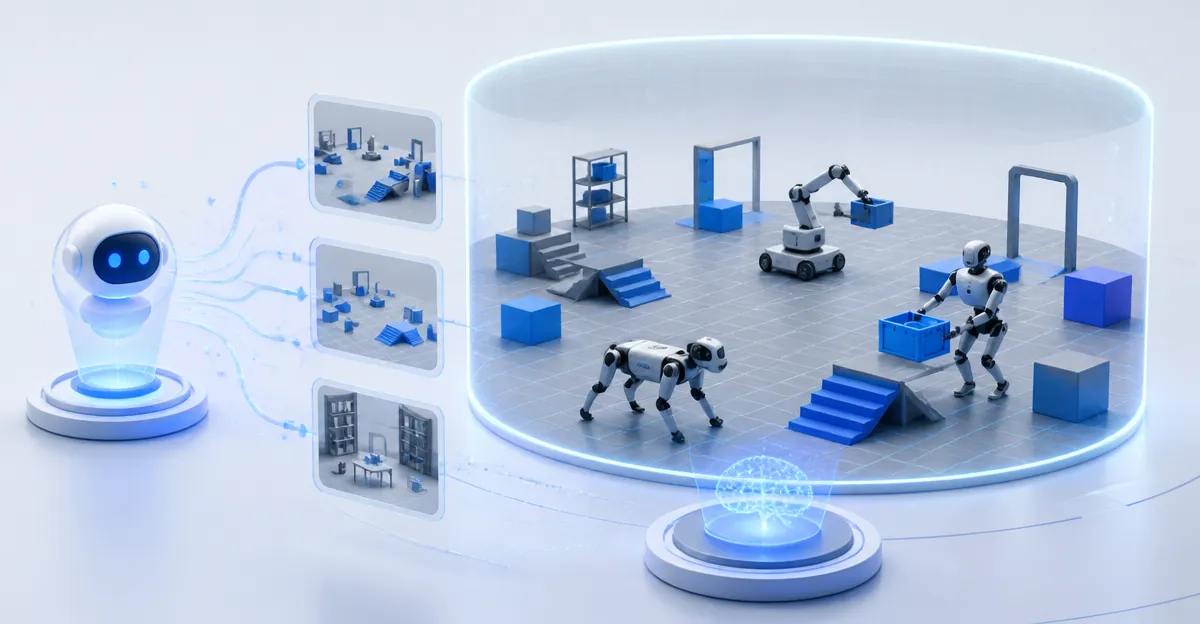
MIT CSAIL and Toyota Research Institute unveil SceneSmith, a system where three AI agents collaboratively generate realistic 3D environments from text prompts. The virtual playgrounds help robots practice skills with far less real-world testing.
Montefiore hospital replaced 12 utilization review nurses with AI, sparking union outrage and claims of a broken contract. The case tests new AI safeguards won after a massive nurses strike.
China's Ministry of Industry and Information Technology has begun developing a national safety benchmark for generative AI models, addressing 31 specific risks across six dimensions. The initiative seeks to standardize testing and align with global regulatory trends.
OpenAI is hiring a product manager for a family-focused ChatGPT, betting on an aging user base. But safety gaps and legal battles could make or break the move.
MIT researchers developed Gaussian probing, a technique that identifies AI models fine-tuned to generate child sexual abuse material with perfect accuracy, all without producing a single illegal image. The method could help platforms automatically block dangerous uploads.
AI generates first drafts instantly, but quality demands human judgment. Rachel DuRose outlines a four-step method to articulate standards, evaluate output, and iterate with intent—turning speed into substance.
AI development no longer requires coding. In 2026, mastering prompt frameworks like TCRF and TCREI, choosing the right local or cloud tools, and automating workflows with MCP servers define the new skill set for staying competitive.