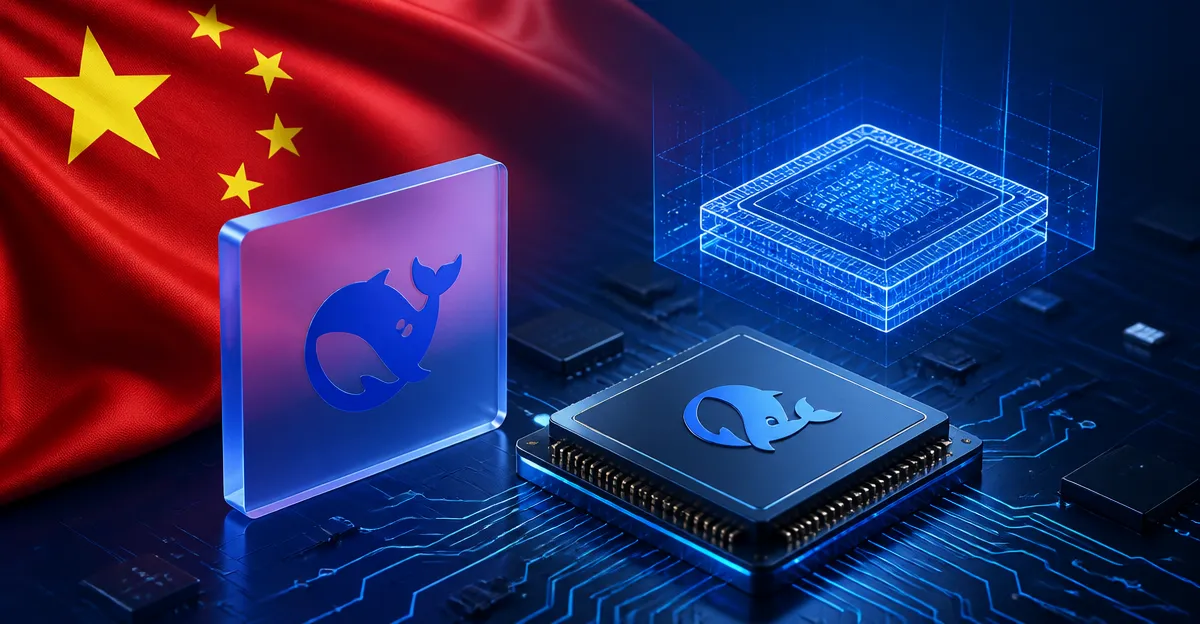
July 7, 2026, (Inside AI) — Chinese AI startup DeepSeek is developing its own inference chip, according to three sources with direct knowledge of the effort. The move could reduce its reliance on Nvidia and Huawei hardware, marking a strategic pivot for a company known for model innovation over commercialization.
The chip is designed specifically for inference—the phase where trained models generate responses—rather than training new models. This targets the fastest-growing segment of AI computing demand, as more work shifts from training to deployment.
DeepSeek rose to global fame over a year ago with highly efficient AI models that surprised Silicon Valley and Washington. Founder Liang Wenfeng said in a rare 2024 interview that chip export controls were a challenge. The company has used both Nvidia and Huawei chips, but U.S. bans have forced a pivot.
Huawei’s Grip Loosens as Rivals Circle
Huawei currently supplies about half of China’s $50 billion domestic AI chip market, including to DeepSeek. However, its dominance is eroding as Alibaba and Baidu develop their own AI chips. DeepSeek’s entry adds pressure, though its project remains in early stages.
Read: DeepSeek Launches Harness Framework for Autonomous AI Agents
The effort began about a year ago. DeepSeek is reaching out to external partners in chip design, foundries, and memory, sources said. It has also quietly hired chip-design engineers without public job postings. All sources declined to be named as the information is not public.
DeepSeek did not respond to a request for comment. The Hangzhou-based company has kept a low profile despite being a standard-bearer of China’s AI ambitions.
Global Race for Inference Silicon Heats Up
DeepSeek joins a global trend of AI developers seeking hardware independence. OpenAI recently unveiled Jalapeno, its first custom inference chip with Broadcom. Anthropic is also weighing its own chips, Reuters reported in April.
For DeepSeek, the strategic stakes are higher. U.S. export controls bar Chinese firms from buying Nvidia’s most advanced chips. The company trained its R1 reasoning model on Nvidia’s H800, a China-specific chip later banned in late 2023. It has since leaned on Huawei, releasing a V4 model adapted for Ascend chips.
Orders for Huawei’s Ascend 950 chips surged after the V4 launch. But an in-house inference chip could offer better cost and power efficiency for running models at scale. Inference chips are typically specialized and less power-hungry than general-purpose GPUs.
Success is far from guaranteed. Designing a competitive chip takes years and significant capital. Manufacturing is a major hurdle: U.S. bans block Chinese designers from advanced overseas foundries. Separate curbs cut China’s access to high-bandwidth memory, critical for inference chips.
Read: China Previews AI Agent Phone and Huawei SuperPod at Shanghai Summit
The chip push coincides with DeepSeek’s first embrace of outside capital. Reuters reported in June that the company was slated to raise $7 billion in a maiden funding round, valuing it between $52 billion and $59 billion. This reverses its yearslong strategy of rejecting external investment, signaling a new phase of growth and risk.